A CCC certifies that the building complied on the day it was signed. Bomba clearance for the fire systems is one of the inputs to it. It happens once.
A Fire Certificate is a different document, under a different Act, and it is renewable annually. It says somebody has checked, this year, that the systems still work.
A building can hold a perfectly valid CCC and no Fire Certificate at all. That is not a loophole. They answer different questions.
And there is a split underneath it that almost nobody explains: under the Fire Services Act 1988 the owner commits one offence and the occupier commits another. If you are taking a lease, one of those is yours.
Two documents, two laws, two different questions
The CCC comes from the Street, Drainage and Building Act, signed by the Principal Submitting Person at completion. I have written about it separately, including why alterations made afterwards are the usual problem.
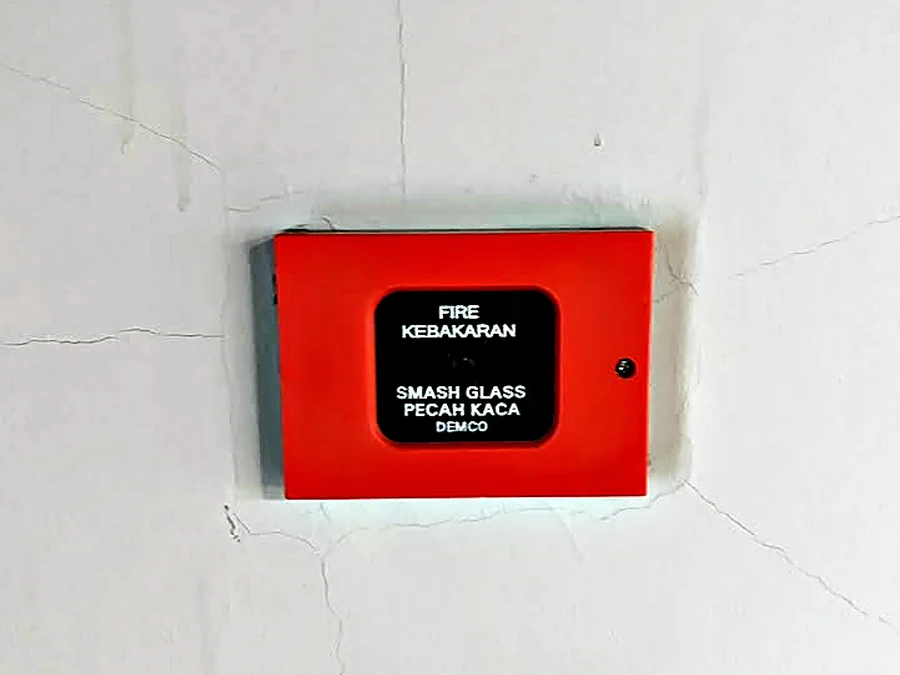
The Fire Certificate comes from the Fire Services Act 1988, Act 341. Section 28(1) is short: every designated premises shall require a fire certificate. Section 28(2) is shorter and matters more: it shall be renewable annually.
Read those two together and the practical consequence falls out. Bomba clearance at completion confirms the systems were installed and accepted. The Fire Certificate confirms they are still working. On an industrial building with racking, a sprinkler system and a hydrant ring, the second one is the document you want to see dated.
Is a fire certificate mandatory in Malaysia?
Only for designated premises. That is the whole answer, and it is why so many people get a straight yes or a straight no from someone who has not asked what the building is.
Section 28(1) of the Fire Services Act 1988 says every designated premises shall require a fire certificate. If your unit is not designated, there is no certificate to hold and nothing lapses. If it is, the obligation is continuous and it did not go away because the building is quiet.
So the mandatory question is really the designation question.
Which designated premises in Malaysia require a fire certificate?
Only designated premises need one. What counts as designated is set by the Fire Services (Designated Premises) Order 1998, amended in 2020, which the Director General makes by order in the Gazette under section 27.
Two thousand square metres is about 21,500 square feet. That is a mid sized unit in the Klang Valley, not a large one. Storage is lower again, at about 10,800 square feet or 7,000 cubic metres by volume, which catches a lot of warehousing that nobody thinks of as big.
And the hazardous process line has no threshold at all. If the process is hazardous, size stops being the question.
I want to be straight about the shop and office rows. I found published figures differing by a factor of six on one and a factor of ten on the other. I am not going to pick the one that reads better. If your unit is commercial rather than industrial, read the Order, or ask Bomba for the district.
The split nobody explains
This is the part worth knowing before you sign anything.
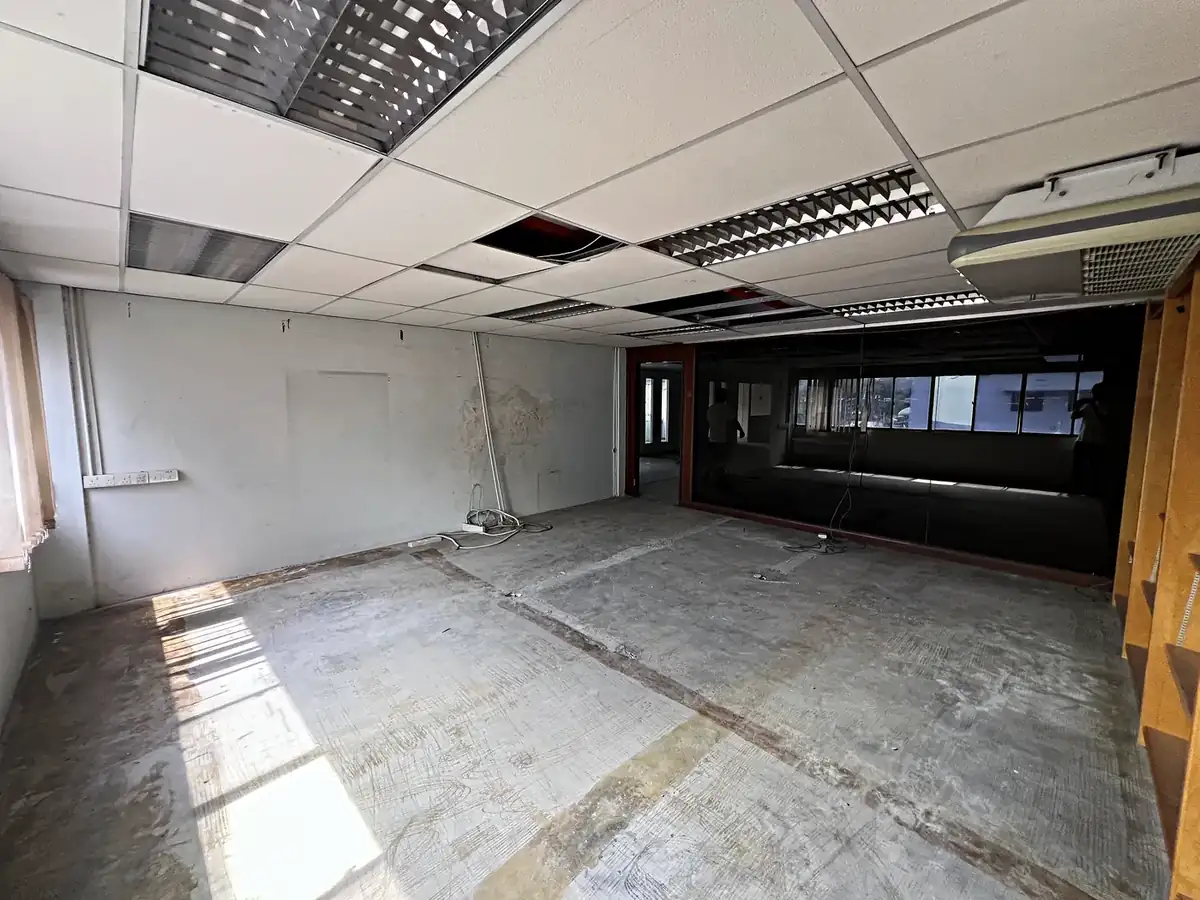
Section 33. Where there is no fire certificate in force in respect of any designated premises, the owner of the premises shall be guilty of an offence. Not the tenant. If you are renting and the landlord has let it lapse, the offence is his.
That is genuinely useful, and it is also the point where people stop reading, which is a mistake.
Section 32. Where a material change is proposed to designated premises that hold a certificate, the occupier must give notice to the Director General before the work begins. Failing to do that is the occupier's offence. If you are the tenant fitting the place out, that one is yours.
So the certificate is his problem and your alterations are your problem, and the two arrive in the same conversation looking like one thing.
One more thing that follows from section 32, and it is the expensive one. Under section 32(4) inadequate facilities can lead to the certificate being cancelled. A fit out that quietly makes the building non compliant does not just expose you under section 32. It can put the building's certificate at risk, and that is a conversation with a landlord you would rather have in advance.
The mezzanine, again
If you have read the piece on unapproved extensions, you already know a mezzanine is an approval problem and a floor loading problem. It is a fire problem too, and for three reasons at once.
- It changes travel distance to an exit, which is a designed number, not a judgement
- It changes the volume the sprinkler design was calculated against
- It usually changes occupancy, which changes what the escape provision has to carry
Each of those is a separate route to the same outcome. And each sits under a different authority: the local authority for the plan, the certificate for the building, and Bomba under section 32 for the notice. Clearing one does not clear the others. That is the whole reason this catches people who thought they had done the paperwork.
SPKA, the obligation people are still discovering
The 2020 amendment to the Designated Premises Order brought in a requirement for designated premises to install and maintain an automatic fire alarm monitoring system connected to Bomba's operations centre, usually called SPKA.
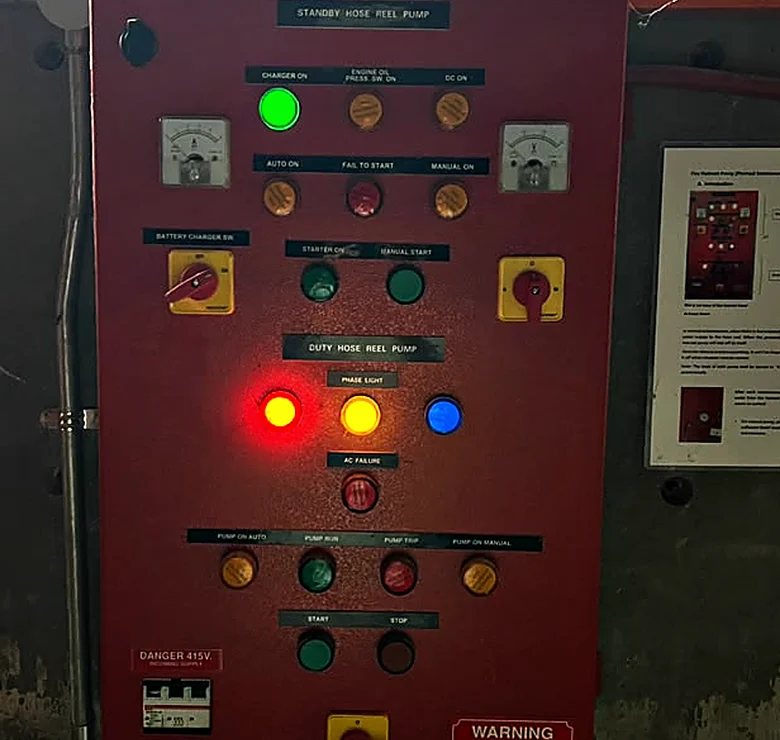
It is worth asking about early, for a dull reason. It is equipment, it is a connection, it has a lead time and a recurring cost, and on a building that has never had one it is not a small item. If you are taking a designated premises and there is no SPKA, somebody is paying for it. Settle who, before signing.
How do I renew my fire certificate in Malaysia?
The application goes in at least 30 days before the current certificate expires, and what Bomba wants to see by then is servicing records built across the year rather than assembled in the week before.
What the inspection covers is not mysterious. Active systems first: alarms, detectors, sprinklers, hydrants, hose reels, fire pumps. Then the passive side: protected staircases, exit routes unobstructed and correctly signed, emergency lighting, fire rated doors and compartmentation. Then the records.
Notice how many of those are things a tenant can break without meaning to. An exit route is unobstructed until somebody stacks pallets in it. Compartmentation is intact until somebody runs a cable through a wall and does not fire stop the penetration. A fire rated door works until it is wedged open in August because the unit is hot.
None of that shows up on a certificate. It shows up on the day.
How do you apply for one in the first place?
This article is written from the tenant's side, so the application is usually somebody else's job. It is still worth knowing the shape of it, because the answers tell you what state the building is in.
Under section 29 the application goes to the Director General in the prescribed form, and the Director General causes an inspection of the premises. What gets assembled for it is the same material the annual renewal needs: the fire plans, the servicing records for the active systems, and evidence that the passive provision is intact.
Section 29(5) allows a certificate to be refused. Section 32(4) allows one already issued to be cancelled where the facilities are inadequate. Neither is a formality.
On timing and cost I am going to disappoint you deliberately. Both depend on the district, on the condition the building is already in, and on how much remedial work the inspection turns up. Anyone quoting a flat figure or a fixed number of weeks without having seen the building is guessing, and the same is true of any article, including this one.
What to ask for before you sign
- Is this premises designated? If the answer is a shrug, that is your answer to work with
- The current Fire Certificate and its expiry date. A photocopy tells you the position on the day it was copied, same as a title search
- The servicing records for the active systems. Not the certificate. The records behind it
- Whether there is an SPKA connection, and who pays if there is not
- Who holds the fire safety manager role, if you are taking the whole building
- The approved fire plans, so you can walk the building against them the same way you would walk it against the building plans
- If you intend to fit out, alter, or put in a mezzanine: raise section 32 in the negotiation, not after the contractor is on site
Item three is the one that separates a serious landlord from a hopeful one. A building that is genuinely maintained has the records to hand, because somebody has been collecting them all year.
Related
- What does 1000 kVA mean on a factory?, the supply you cannot renovate around
- CF or CCC? What it means for a factory, warehouse or shop lot, what certifies the building, and what happened after
- The mezzanine nobody approved, the floor area that was never submitted
- Leasehold or freehold? Check the geran, not the flyer, the four fields on the title
- The loading bay question nobody asks, dock level against grade level, and the apron
- psf on land, psf on built-up, and the trap inside it, which square feet you are actually paying for
- Versi Bahasa Melayu: Leasehold 99 tahun
Frequently asked questions
What is the difference between a CCC and a Fire Certificate?
A CCC certifies that the building was completed and complied on the day it was signed, and Bomba clearance for the fire systems is one of the inputs to it. A Fire Certificate is a separate document under the Fire Services Act 1988, it applies only to designated premises, and it is renewable annually. One says the systems were installed. The other says somebody checked this year that they still work.
Does my factory need a Fire Certificate?
It needs one if it is designated premises under the Fire Services (Designated Premises) Order 1998. For industry the figures are reasonably consistent across published sources: a factory over about 2,000 square metres with sprinklers, a factory with a hazardous process at any size at all, and storage or warehousing over about 1,000 square metres or 7,000 cubic metres. Two thousand square metres is roughly 21,500 square feet, which is a mid sized unit, not a large one.
How often is a Fire Certificate renewed?
Annually. Section 28(2) of the Act says a fire certificate shall be renewable annually, and the application should go in at least 30 days before the existing one expires.
Who is responsible for the Fire Certificate, the landlord or the tenant?
Both, for different things. Section 33 says that where no fire certificate is in force on designated premises, the owner is guilty of an offence. Section 32 says the occupier must give notice before carrying out a material change to the premises, and failing to do that is the occupier's offence. So the certificate itself is the owner's duty and the alterations are yours.
Can a building have a valid CCC but no Fire Certificate?
Yes, and it is common. They are issued under different laws by different bodies for different purposes. A CCC from 2011 tells you nothing about whether a fire certificate has been renewed since, and a building that never triggered the designated premises thresholds will not have one at all.
What does Bomba inspect for a Fire Certificate?
Active systems first: alarms, detectors, sprinklers, hydrants, hose reels and fire pumps. Then the passive side: protected staircases, exit routes that are unobstructed and correctly signed, emergency lighting, fire rated doors and compartmentation. Then the paperwork, meaning the servicing records that show the systems have been maintained rather than merely installed.
Does putting in a mezzanine affect the Fire Certificate?
It can, and the Act deals with it directly. A mezzanine changes travel distances to an exit, it changes the volume the sprinkler design was calculated for, and it usually changes occupancy. Section 32 requires the occupier to notify the Director General before the work begins, not after. This is the same alteration that causes trouble with the CCC and with the local authority, and each is a separate matter.
What is SPKA?
An automatic fire alarm monitoring system linked to Bomba's operations centre. The 2020 amendment to the Designated Premises Order brought in a requirement for designated premises to install and maintain one. If you are taking a designated premises and there is no SPKA connection, that is a cost and a lead time somebody has to carry, and it is worth settling before signing rather than after.
What is a Fire Safety Manager, and do I need one?
Also called the OKK, the fire safety organisation. Designated premises are expected to have one appointed by the owner or whoever has full management control. The duties are practical: the emergency action plan, at least one fire drill a year, the maintenance schedule, hazard inspections, and being the point of contact for Bomba. If you are taking the whole building rather than a unit in it, ask who currently holds that role.
What is the penalty for not having a Fire Certificate?
Published figures vary a great deal, and you should not plan around any of them, including the ones in this article. The Act's own general penalty provision, section 58, reads as a fine not exceeding five thousand ringgit or imprisonment not exceeding three years or both. Higher figures are widely quoted elsewhere, and the Order has been amended since the reprint most sources rely on. Treat the number as unsettled and the exposure as real.
Is Bomba clearance at CCC stage the same as a Fire Certificate?
No, and this is the mix up that costs people money. Bomba clearance at completion is an input to the CCC, it happens once, and it confirms the systems were installed and accepted. The Fire Certificate is a recurring document under a different Act that confirms they are still working. On an industrial building with racking, a sprinkler system and a hydrant ring, the recurring one is the document you want to see dated.
What should I ask for before signing a tenancy?
The current Fire Certificate and its expiry date, if the premises is designated. The servicing records for the active systems. Whether an SPKA connection exists. Who holds the fire safety manager role. And the approved fire plans, so you can walk the building against them and see whether the exits, the compartmentation and the travel distances still match the drawing.
The unit has hose reels and extinguishers. Is that enough?
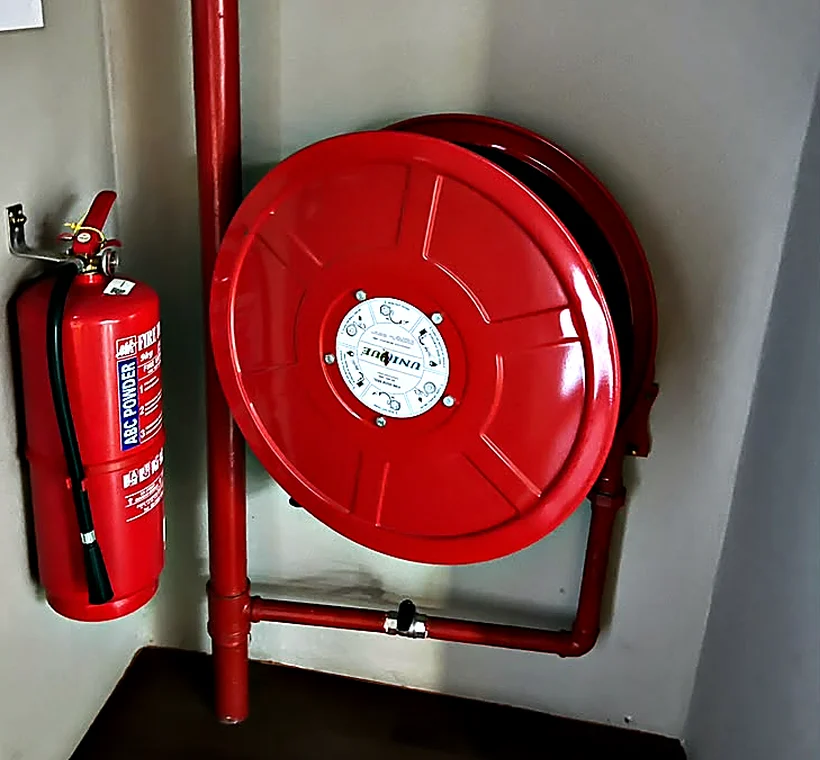
No. Equipment being present tells you a system was installed at some point. It tells you nothing about whether it works, when it was last serviced, or whether the certificate covering it is still in date. A fire device is built to be found by a stranger in smoke, so it is red, marked and obvious. That visibility is a design feature, not evidence of compliance.
Does a Fire Certificate transfer when the building is sold or relet?
The certificate attaches to the premises rather than to you, but the duties attach to people. A change of owner changes who commits the section 33 offence if it lapses, and a change of use or a fit out by a new tenant can be a material change under section 32. Do not assume that an existing certificate survives a change of occupancy and use untouched.
Where do I check whether my building is designated?
The Fire Services (Designated Premises) Order 1998, as amended in 2020, is the instrument that sets the thresholds. Read it, or ask Bomba directly for the district. Published summaries disagree with each other on the shop and office figures by a wide enough margin that relying on a summary is not safe.
How long does it take to get a fire certificate in Malaysia?
It depends on the district and on the condition of the building, because the time is mostly spent on remedial work the inspection turns up rather than on the paperwork. A building already maintained to the standard it was certified at is a different proposition from one that has not been looked at in five years. Treat any fixed number of weeks quoted without a site visit as a guess.
How much does a fire certificate cost?
For the same reason, there is no useful single figure. The certificate itself is not the expense. The servicing, the making good, and on a building without one the SPKA connection, are. Ask for the servicing records first, because they tell you more about the likely cost than any quoted fee.
References
- Fire Services Act 1988 (Act 341), PDF reprint. Sections 27, 28, 29, 32, 33 and the general penalty at section 58
- Fire Services (Designated Premises) Order 1998 [P.U.(A) 276/1998], as amended by P.U.(A) 289/2020
- Fire Services (Fire Certificate) Regulations 2001 [P.U.(A) 241/2001], and the 2020 amendment
- Street, Drainage and Building Act 1974 (Act 133), PDF. The 2007 amendment is the CCC comparison
Note on the figures. The section numbers and the wording attributed to them here are taken from the Act. The designated premises thresholds for shop and office differ sharply between published summaries, and the penalty figures quoted in circulation differ from the Act's own general penalty provision. Where this article could not reconcile sources it says so rather than choosing. For anything you intend to act on, read the Order and ask Bomba for your district.