Price per square foot is two different numbers on an industrial building, and nobody tells you which one you are looking at.
psf on land divides the price by the land area on the title. psf on built-up divides it by the floor area of the building. On a detached factory those are far apart, because a building never covers its whole site.
Same building, same price: RM 207 or RM 346. Both true. Sixty-eight per cent apart.
The trap is not that one is dishonest. It is that a list comparing one unit on land against another on built-up invites you to read down a column that means nothing.
One building, one price, two numbers
Neither figure is wrong. They answer different questions.
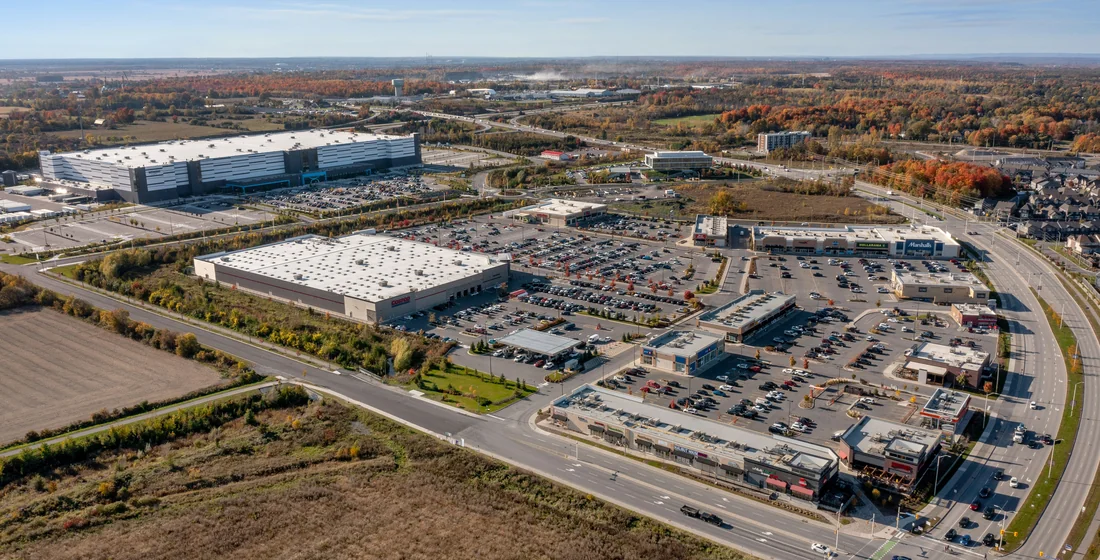
If you are buying land to build on, the land figure is the real one, and whatever is standing on it may be worth very little to you. If you are buying or renting space to operate in, built-up is what you occupy, rack, light, cool, insure and staff.
Most tenants think in built-up without ever saying so. Most detached factory sales are quoted on land. The mismatch is quiet and it is constant.
What is actually inside a built-up figure
Here is the part that surprises people: there is no single answer you can rely on.
A mezzanine is the big one. A covered loading area is the quiet one. A guardhouse and a covered walkway are small individually and add up.
So before you divide anything, ask one question: which of these does your figure include? If the answer is vague, the number is vague, and every calculation downstream of it inherits that.
The trap inside it
Now put the two previous sections together, because this is where money actually moves.
Four thousand square feet of mezzanine that was never submitted takes the example from RM 409 per square foot of approved built-up down to RM 346. The unit reads about fifteen per cent cheaper because of the one part of it that is a liability.
That is not usually a scheme. Whoever prepared the flyer measured the building as it stands, which is the obvious thing to do. But the effect is the same either way: you are paying for floor area, at a discount, on the strength of floor area that may have to come out.
The fix costs nothing. Ask for the approved building plans and compare them against the building, exactly as you would when checking the certificate. If there is floor area on site that is not on the plan, take it out of the denominator before you compare anything.
Land is not buildable, and buildable is not built
The other half of the confusion is that people quietly assume land area and floor area ought to be close. On industrial land they are not, and the gap is structural.
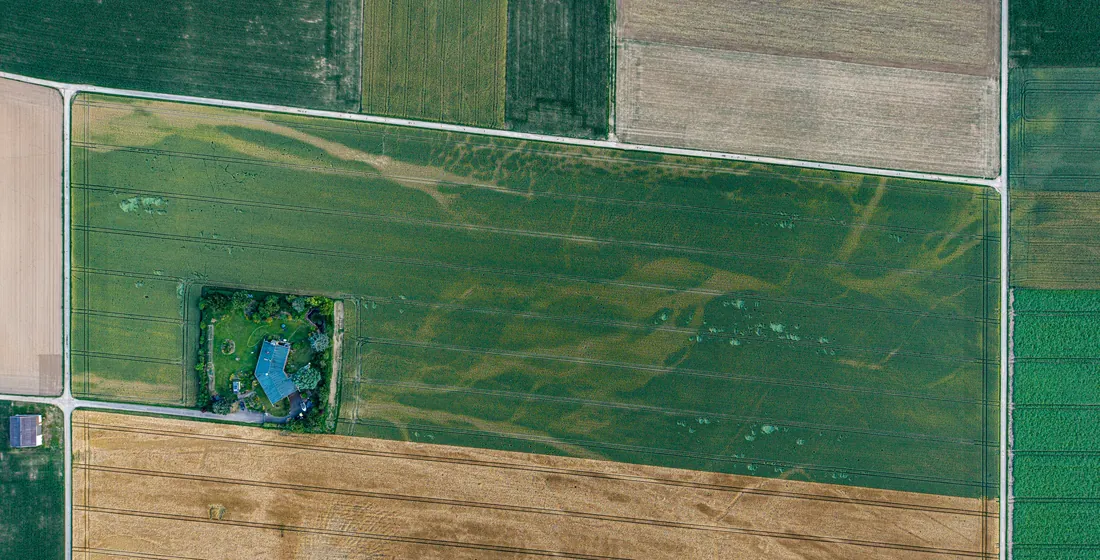
Plot ratio is total floor area divided by land area, under the Town and Country Planning Act 1976. It is a ceiling set by the local authority, and for light industry it commonly runs about 1:1 to 1.5:1, lower for heavy industry. It varies by state and by council, so treat any single figure as indicative.
But plot ratio is rarely what binds. Setbacks take a band off every edge before you start, and then the yard takes more.
And the yard is not slack space. On an industrial unit it is the apron, and a trailer needs roughly twice its own length to turn and reverse. Land you are paying for that is doing that work is land well spent. Land you are paying for because nobody worked out the manoeuvring is not.
The conversion that goes wrong on the way to the flyer
Titles are in hectares or square metres. Flyers are in square feet. A conversion happens somewhere between the two, and it is worth doing once yourself:

- 1 acre = 43,560 sq ft
- 1 hectare = 107,639 sq ft, or about 2.471 acres
- 1 square metre = 10.7639 sq ft
And one more thing to check on the title while you are there. If the area line says Luas Sementara, provisional area, the survey is not final, so the land figure is not final. I have written about that line separately. A provisional area makes a provisional price per square foot, and if the deal is priced on area it makes a provisional total as well.
How much is one acre of land in Malaysia?
This is the question underneath most psf searches, and it does not have an answer. Not a coy one, an actual one. Industrial land ranges across a span so wide, between states, between districts inside a state, between a corner lot on a main road and a rear lot behind it, that a national figure is not a useful number even as a starting point.
What you can do is work backwards, and it takes minutes:
- Take three or four recent transacted prices in the same district and the same land category, not asking prices
- Reduce each to both psf figures, land and built-up, using the method above
- Adjust for the things psf cannot see: remaining tenure, incoming supply, whether a trailer can turn in the yard, and whether the built-up on site is actually approved
Transacted prices are public. The Valuation and Property Services Department, JPPH, publishes them, and any registered valuer works from the same data. An asking price is one person's opinion. A transacted price is two people agreeing.
I am not going to print a figure here, for a reason that outlasts this article: any number I quote is wrong by the time you read it, and wrong by more in some districts than others.
Rent and sale are not quoted on the same basis
Rent is almost always per square foot of built-up, because you are renting space to occupy. Sale of a detached factory is often per square foot of land.
Which means a yield calculated by putting one over the other is wrong, and wrong in a direction that flatters. If you are working out what a building returns, convert both sides to the same denominator first. It is the same five minutes of arithmetic, and it is the one nobody does.
What to ask, and the five minutes that settles it
- The price. Obviously
- The land area, from the title, not from the flyer, and whether it says Luas Sementara
- The built-up area, and what it includes. Ground floor, office, mezzanine, covered loading area, guardhouse
- The approved building plans, so you can see which of that built-up is actually approved
- Then calculate both figures yourself, for every unit you are comparing
If a seller will give you the price but not all three of the other numbers, that is information as well. And if two units on the same shortlist turn out to have been quoted on different bases, you have just learned more from five minutes of arithmetic than from the viewing.
One last thing, because price per square foot invites it. A higher psf is not automatically a worse deal. A unit can be dearer per square foot and still be the right one, because it has the supply you need, the loading arrangement your trucks need, a fire certificate that is current, and a tenure and approval position that does not need fixing. Price per square foot is one number, and it does not know any of that.
Related
- What does 1000 kVA mean on a factory?, the supply you cannot renovate around
- CF or CCC? What it means for a factory, warehouse or shop lot, what certifies the building, and what happened after
- The mezzanine nobody approved, the floor area that was never submitted
- Leasehold or freehold? Check the geran, not the flyer, the four fields on the title
- The loading bay question nobody asks, dock level against grade level, and the apron
- The Fire Certificate a valid CCC does not cover, the document that has to be renewed every year
- Versi Bahasa Melayu: Leasehold 99 tahun
Frequently asked questions
What is the difference between psf on land and psf on built-up?
Price per square foot of land divides the price by the land area on the title. Price per square foot of built-up divides it by the floor area of the building. On a detached factory the two are far apart, because a building never covers its whole site. On the worked example in this article, RM 9 million on one acre with 26,000 square feet built up is RM 207 per square foot of land and RM 346 per square foot of built-up. Same deal, 68 per cent apart.
Which one should I be using?
Whichever matches what you are buying. If you are buying land to build on, the land figure is the real one and the building on it may be worth little to you. If you are buying or renting space to operate in, built-up is what you occupy and what you pay to heat, light, insure and rack. Most tenants think in built-up without realising the flyer may not.
Why do agents quote psf on land for factories?
Because on a detached factory with a large yard it produces a smaller, friendlier number. That is not necessarily dishonest, it is the convention for land-led industrial sales. It becomes a problem when the same list compares one unit on land and another on built-up and invites you to read down the column.
How do I convert between the units on a title and the units on a flyer?
One acre is 43,560 square feet. One hectare is 107,639 square feet, or about 2.471 acres. One square metre is 10.7639 square feet. Titles are usually in hectares or square metres and flyers are usually in square feet, so a conversion happens somewhere between the two and it is worth doing yourself once.
What counts as built-up area?
There is no single answer you can rely on, which is the point. The ground floor and the office block are always in. A mezzanine is disputed. A covered loading area, a guardhouse and a covered walkway are often left out, and sometimes left in. Ask which components the figure includes before you divide anything by it.
Does an unapproved mezzanine change the price per square foot?
Yes, and in the direction that flatters the seller. Counting a 4,000 square foot mezzanine that was never submitted takes the example from RM 409 per square foot of approved built-up down to RM 346. It reads about 15 per cent cheaper because of the one part of the building that is also a liability.
What is plot ratio?
Total floor area divided by land area, under the Town and Country Planning Act 1976. It is the cap the local authority puts on how much floor area you may build on a given site. Light industry commonly runs about 1:1 to 1.5:1 and heavy industry lower, though the figure is set locally and varies by state.
If plot ratio is 1:1, can I build a square foot for every square foot of land?
No. Plot ratio is a ceiling, not a target. Setbacks take a band off every edge before you start, typically 20 to 30 feet at the front, 10 to 20 at the sides and 10 to 30 at the rear. What is left is the buildable envelope, and you will not fill that either, because you need yard for manoeuvring and parking.
Why does the yard matter to the price per square foot?
Because you pay for the land under it and it will never become built-up area. On an industrial unit the yard is not slack, it is the apron a lorry needs to turn and reverse, and the rule of thumb is twice the length of the longest vehicle combination. Land you are paying for that is doing necessary work is fine. Land you are paying for twice, once in the psf on land and again in the psf on built-up, is worth understanding.
What is Luas Sementara and how does it affect psf?
Provisional area. It means the survey has not been finalised, so the area stated on the title is not final either. If the land area can still move, then so can your price per square foot of land, and so can the total consideration if the deal is priced on area. Check the tenure line and the area line together.
Is rent quoted on land or on built-up?
Rent is almost always quoted per square foot of built-up, because you are renting space to occupy. Sale of a detached factory is often quoted per square foot of land. So comparing a rental psf against a sale psf is comparing two different denominators, and the resulting yield will be wrong.
How do I compare two units fairly?
Convert both to the same basis and do it yourself. Take the price, the land area and the built-up area for each, and calculate both figures for both units. If a seller will not give you all three numbers, that is information too. It takes five minutes and it is the single highest value arithmetic in an industrial search.
The flyer and the title give different areas. Which is right?
The title, for land. A flyer is marketing material and the area on it may have been rounded, converted badly, or taken from an older document. For built-up, neither is authoritative. The approved building plans are, which is also how you find out whether the mezzanine is on them.
Does a higher price per square foot mean a worse deal?
Not on its own. A unit with a higher psf on built-up may have the power supply you need, the loading arrangement your trucks need, or a tenure and approval position that does not need fixing. Price per square foot is one number and it does not know anything about any of that.
References
- Town and Country Planning Act 1976 (Act 172), PDF, Laws of Malaysia. The plot ratio definition
- Local authority planning guidelines, which set plot ratio and setbacks and differ by state and council
- Standard area conversions: 1 acre = 43,560 sq ft, 1 hectare = 107,639 sq ft, 1 sq m = 10.7639 sq ft
Note on the figures. The worked example is illustrative and deliberately round. It is not a property, an asking price or a comparable, and no building is being described. The plot ratio and setback ranges are indicative of common practice and are set locally, so check them for your own council rather than relying on a range in an article.