Malaysian land has three categories of land use, and they are agriculture, building and industry. That is section 52 of the National Land Code, and the list has not changed.
Notice what is missing. Commercial and residential are not categories. Both of them sit inside the single category called building. So when someone asks whether a shoplot is commercial or residential, the honest answer at title-category level is neither. It is building.
The answer people are actually looking for lives one level down, in the express condition written on that individual title, and then again in the planning permission held by the local authority. Those are two different documents from two different offices, and either one can say no on its own.
A man I know took a five year lease on a shop unit for storage. Ground floor, roller shutter, rear lane, cheaper per square foot than anything on the industrial estate and ten minutes closer to his customers. He had the agent confirm it was commercial. It was. He checked the title said commercial. It did.
Eight months later the local authority wrote to him about his business licence, and the question on the letter was not whether the building was commercial. It was whether the use he was putting it to had ever been applied for.
Nothing he checked was wrong. He just checked one thing and there were four.
What is the difference between industrial and commercial property in Malaysia?
Industrial and commercial are different at the level of the land title itself: industry is its own category of land use, and commercial is not. Commercial sits inside the building category alongside residential, and the two are separated further down, by the express condition written on the individual title.
That asymmetry is the whole source of the confusion. People reasonably assume the three words they hear every day, industrial, commercial and residential, are three equivalent boxes. They are not equivalent and they do not sit at the same level.
Section 52 of the National Land Code is short and unambiguous about it. There are three categories of land use, and they are agriculture, building and industry. Residential and commercial development both fall under building.
So the practical difference between an industrial unit and a commercial one is not a matter of degree. Moving a piece of land from building to industry is a change of category, an application to the State Authority with a premium attached. Moving a shop unit from one commercial use to another is not a category change at all. It is a question about the express condition and about planning permission, which is a different problem with different offices and a different cost.
The four permissions people collapse into one
Ask five people what a property is "zoned for" and you will get answers drawn from four different documents, and they are not all held by the same office. Almost every argument about permitted use is really two people reading different layers and both being right.
Layer 1, tenure, is a separate question entirely and I have written about the difference between freehold and leasehold and what the remaining years actually mean. It tells you nothing about permitted use. A leasehold industrial lot and a freehold shoplot are answering different questions.
There is arguably a fifth layer, and it is the one most likely to be waved at you as proof: the CF or the CCC. That certificate says the building was constructed in accordance with the approved plans and is fit to occupy. It does not say your use of it is permitted. Those are two different statements and a valid certificate is routinely offered as evidence of the second when it only ever evidenced the first.
What is industrial land?
Industrial land is land whose category of land use is industry, one of the three categories set by section 52. It is not a description of what is standing on it and not a statement about the neighbourhood. A bare field inside an industrial park can be building category. A factory can sit on land that was never converted.
The category is the broad class. The express condition then narrows it, and on industry land it is usually narrowed quite specifically, to light industry, medium industry or heavy industry, or sometimes to a named activity. Those words are not interchangeable and the difference is not about the size of the building. It is about process, emissions, effluent, noise, hours and how much of each the surrounding area is expected to absorb.
The question that saves the most trouble. Not "is this industrial land", which an agent will answer yes to. Ask instead: what is the category of land use, and read me the express condition. Those are two separate lines on the title and you want both, word for word.
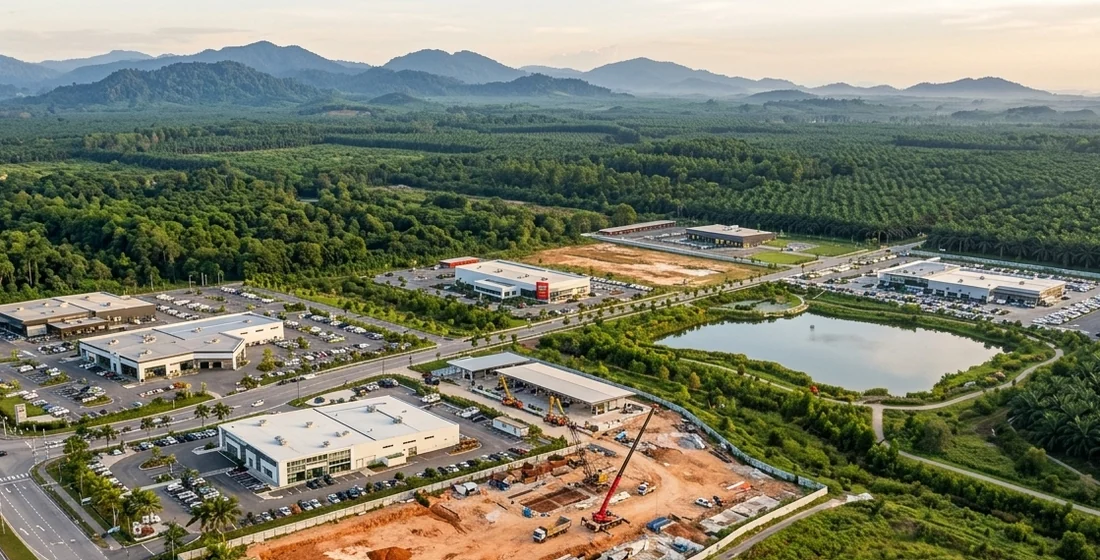
This matters more than it sounds because the category is expensive to change and the express condition is not always possible to change at all. Converting agriculture to industry is an application to the State Authority with a conversion premium attached, and the premium is set by the state, not negotiated with the seller. If a deal depends on conversion, the conversion is the deal.
What are examples of industrial property?
In practical Klang Valley terms, what sits on industry category land is some version of the following, and the labels get used loosely by everybody including me.
| Type | What it is | What people get wrong |
|---|---|---|
| Detached factory | Standalone building on its own lot, own yard, own substation | Assuming the power supply matches the floor area |
| Semi-detached factory | Two units sharing one party wall, each with its own lot | Shared access and shared drains are a negotiation, not a given |
| Terrace factory | A row, usually 1.5 storey, small office in front | Lorry turning circles in the shared service road |
| Warehouse or logistics unit | Built for storage and throughput rather than making things | Floor loading and dock height, both fixed at design stage |
| Flatted factory | Industrial units stacked over several floors | Upper floor loading is lower than ground, often much lower |
| Industrial land | The plot itself, with or without anything on it | Whether it is actually industry category, or building awaiting conversion |
Two of those traps have their own articles, because both are design-stage decisions you cannot buy your way out of afterwards: what the slab is rated to carry, and whether the bay is dock level or grade level. The flatted factory line in that table is the one that catches people most often, and it is the same arithmetic in both articles.
What are the different types of commercial property in Malaysia?
Commercial is the broadest and loosest of the three words, which is why it is the least useful one to be told. Everything below is building category. What separates them is the express condition and what the local authority has approved.
- Shop lot. A unit in a modern row, usually two to five storeys, built as commercial from the start
- Shophouse. The older form, shop below and originally living quarters above
- Shop office. Marketed for office use, physically much the same as a shop lot
- SoHo, SoVo and SoFo units. Small units in mixed developments, where the gap between the marketing name and the title condition is widest
- Retail lot in a mall. Usually a strata parcel with a management corporation above it
- Purpose built office and purpose built retail, where the whole building has one use
- Commercial land. Building category land with a commercial express condition and nothing built yet

Notice that storage and light workshop use appear nowhere on that list. That absence is the subject of the two sections below, and it is the single most common mistake I see.
What is the difference between a shoplot and a shophouse?
In everyday Malaysian use the two words are close to interchangeable, and plenty of agents use them that way. Where they do differ, it is about age and original design intent, not about a legal classification.
A shophouse is the older form: narrow frontage, deep plan, a business at street level and living quarters above, often with a five foot way at the front and an air well in the middle. A shoplot is the modern descendant, built in a row in a planned commercial development, usually two to five storeys, with the upper floors designed as lettable space rather than as a home for the shopkeeper.
In Malay, a shoplot is normally kedai lot or lot kedai, and a shophouse rumah kedai. There is a Bahasa Melayu version of this article if that is easier to pass on. The word rumah inside rumah kedai is a fossil of the original arrangement and not a statement that the building is residential today.
Neither word appears on your title. Shoplot and shophouse are market vocabulary. The title will say building category and then an express condition. If you are trying to work out what you may do in the unit, the distinction between the two words will not help you and the express condition will.
Is a shophouse commercial or residential?
At the level of land use category, neither. It is building, like every house and every mall in the country. The commercial or residential answer comes from the express condition on that particular title, and the only reliable way to get it is to read the title.
Older shophouses are where this gets genuinely interesting, because many of them were built for exactly the mixed arrangement the name describes, and some carry express conditions that reflect it. Two units in the same terrace, built in the same year by the same developer, can carry different conditions. Age is a reason to check rather than a reason to assume.
What you should not do is reason from the building. A unit being obviously commercial in appearance, in a row of shops, on a commercial street, with businesses either side, is evidence about the neighbourhood and no evidence at all about the line of text on your title.
Can you run a warehouse out of a shoplot?
Storing your own stock in a shop unit you trade from is usually unremarkable. Running the unit as a warehouse is a different thing, and it is the point at which four separate permissions start to matter at once. The reason this trips up so many small businesses is that the rent is genuinely better and nothing physically stops you on day one.
Under the Town and Country Planning Act 1976, "development" is defined to include the making of any material change in the use of any land or building, and section 19(1) says no person shall carry out development without planning permission. A material change of use is development even when you have not laid a brick. That is the sentence most people have never read, and it is the one the letter from the local authority will be built on.
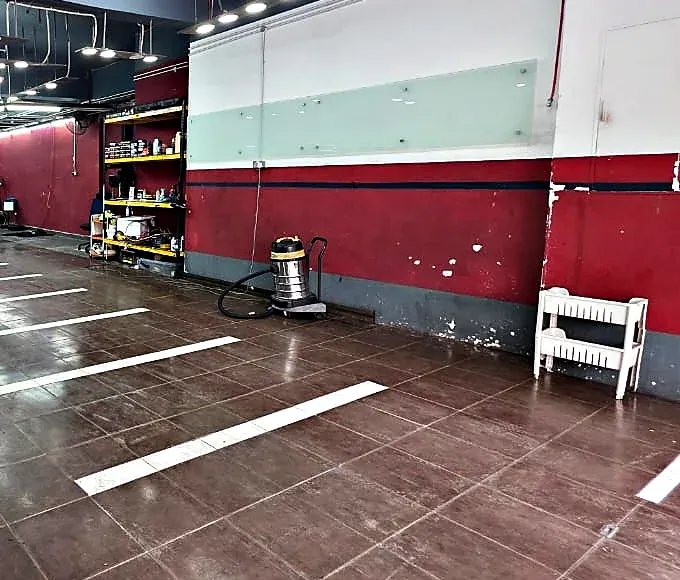
Here is what actually breaks, and the point is that each line has a different owner. You can satisfy three of them and still be stopped by the fourth.
| What can break | Where the answer lives | Who enforces it |
|---|---|---|
| Is this use permitted on this land | Express condition on the title | State Authority, via the land office |
| Has a material change of use been approved | Planning permission | Local planning authority |
| Is the business itself licensed for this activity | Business or trade licence | Local authority licensing |
| Will the floor carry racking and a stacker | Structural design figure for that floor | Physics, and then your insurer |
| Does the fire strategy still hold at this storage height | Fire requirements for the use and the load | Bomba |
The last two are worth dwelling on because they are not paperwork, and they are the ones that turn an administrative problem into a dangerous one. A shop unit floor is commonly a tiled slab designed for people and shelving. Loaded pallet racking concentrates weight onto a handful of baseplates, and the quoted floor figure describes an evenly spread load, not that. Upper floors in a shoplot are lower rated again.
On the fire side, changing what is stored and how high it is stacked changes the fire load, and the fire strategy a building was certified against assumed the original use. A Fire Certificate is a separate and recurring obligation that a valid occupation certificate does not cover, and it is tied to what the building is actually being used for.
There is also a quieter version of the same problem. Fitting out the unit for the new use, a mezzanine for storage, a roller shutter cut into the rear wall, a partition that changes the escape route, is itself work that may need approval. Unapproved alterations are their own category of trouble, and they tend to surface at exactly the wrong moment, when the building is being sold, refinanced or insured after an incident.
The honest summary. Plenty of businesses run storage out of shop units and never hear a word. That is not the same as it being permitted, and the gap between the two only ever matters on the day it matters: a complaint from a neighbour, a licence renewal, an insurance claim, or a buyer whose solicitor reads the title properly. Ask the questions while you still have the option of walking away.
What are the risks of industrial property?
Ignoring market and financing risk, which are not my subject, the risks that are specific to this asset class and specific to Malaysia come down to a short list. Every one of them is checkable before you sign and expensive after.
- Category and condition mismatch. The use you intend is not what the title permits, and the fix is an application with a premium rather than a conversation
- A fixed specification that does not suit you. Power supply, floor loading and dock height are set at design stage. Incoming supply in particular is slow and expensive to increase, if it is possible at all
- Unapproved work already standing. You inherit it, including the enforcement risk and the problem it creates on resale
- Area that is not what you were quoted. Land psf and built-up psf are different numbers and the same ringgit buys very different amounts of each
- Restriction in interest. Many titles cannot be transferred, leased or charged without State Authority consent, which is a timeline on your deal and occasionally a veto
- A narrower buyer pool. A unit suited to one process is suited to fewer tenants, and specificity that helps you on day one can work against you on exit
Where the industrial areas actually are in Klang Valley
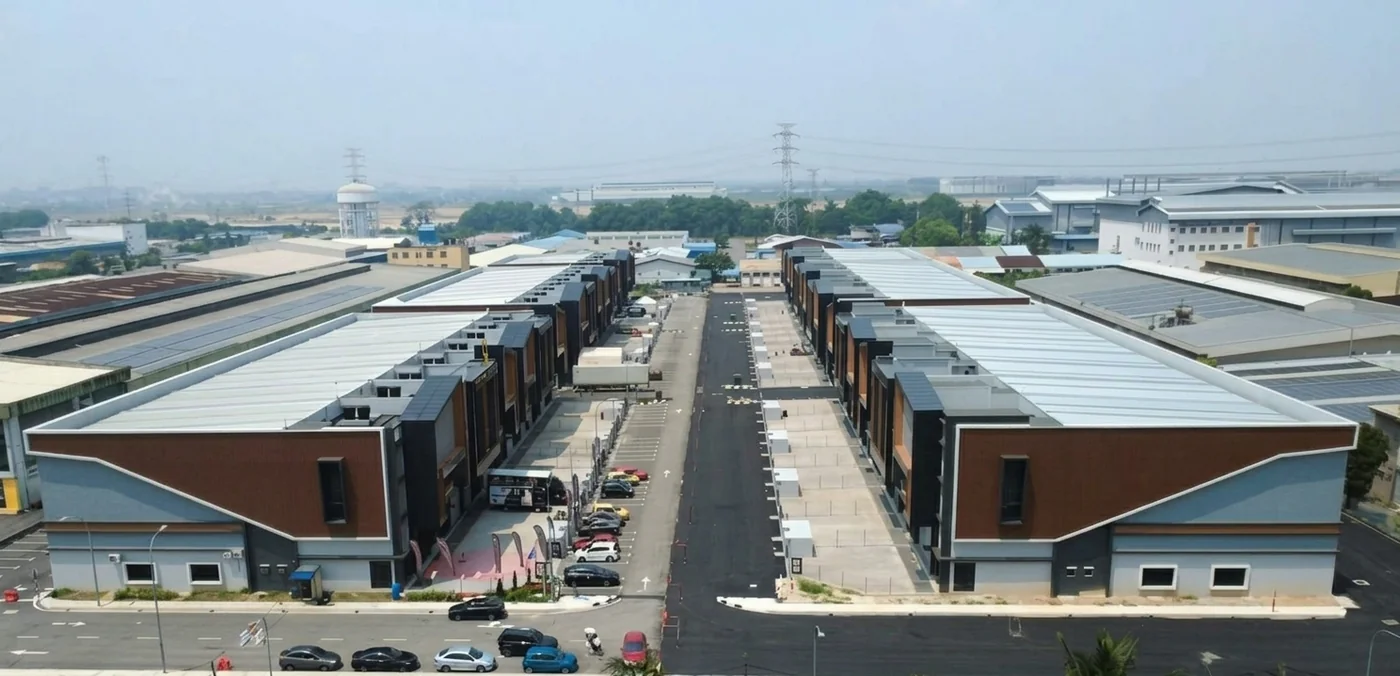
The established industrial belt runs broadly along the Klang corridor and the main expressways: Shah Alam and its numbered sections, Glenmarie and Temasya, Subang and Sungai Buloh to the north, Puchong, Seri Kembangan and Balakong to the south east, Klang and Port Klang to the west, and Rawang and Serendah further north where land is cheaper and the lots are larger.
What matters when you are choosing is less the name of the estate and more three practical things: how a forty foot container reaches your door, what the incoming power supply at that specific lot is, and whether the surrounding occupiers are doing something compatible with what you intend. An estate full of heavy process operations is a different neighbour from a logistics park, and the category and conditions in a given phase usually reflect that.
I would not choose an area from a map. The yards, the turning circles, the condition of the service roads and whether units are standing empty are all visible in an afternoon of driving and invisible in a listing.
What to ask for, before you sign
- A copy of the title. Not a summary. The document, so you can read the category of land use and the express condition yourself, word for word
- The express condition in full, and if it names a specific activity, whether your intended activity is that activity
- Whether there is a restriction in interest, and if so what consent is needed and how long it takes in that state
- The planning permission for the current use, and whether your use is the same use
- The occupation certificate, CF or CCC, and the approved plans, so you can walk the unit against them
- The design floor loading for the floor you will actually occupy, not the building's headline figure
- The incoming supply capacity in kVA, at the lot, confirmed rather than assumed
- Whether any alteration standing today was submitted and approved
If the answer to any of these is that the agent will find out, that is fine. If the answer is that it does not matter because everyone in the row does the same thing, treat that as information about the row and not as an answer to your question.
Frequently asked questions
What is the difference between industrial and commercial property in Malaysia?
Industry is one of the three categories of land use under section 52 of the National Land Code. Commercial is not a category. Commercial and residential both sit inside the building category and are separated by the express condition on each individual title. So moving land from commercial to industrial is a change of category with a premium payable to the State Authority, while moving between commercial uses is a question of the express condition and planning permission instead.
What are the categories of land use in Malaysia?
There are three: agriculture, building and industry. This is set by section 52 of the National Land Code. Residential and commercial development both fall under building. Land may also be held with no category expressly endorsed, in which case the conditions and any implied conditions on the title govern what may be done with it.
Is a shophouse commercial or residential?
At land use category level it is neither, because both commercial and residential sit inside the building category. The answer you are looking for is in the express condition written on that specific title. Two units in the same terrace can carry different express conditions, so the only reliable method is to read the title rather than reason from the building or the street.
What is the difference between a shoplot and a shophouse?
The difference is age and original design intent, not legal classification. A shophouse is the older form with a business at street level and living quarters above, often with a five foot way and an air well. A shoplot is the modern equivalent built in a planned commercial row, typically two to five storeys, with upper floors designed as lettable space. Neither word appears on a land title.
What is a shop lot?
A shop lot is a unit in a row of modern commercial buildings, usually two to five storeys, with a ground floor shopfront and upper floors above. It sits on building category land and the permitted use is set by the express condition on the title, not by the term shop lot itself.
What is shoplot in Malay?
A shoplot is normally called kedai lot or lot kedai in Malay. The older shophouse form is rumah kedai. The word rumah in rumah kedai reflects the original arrangement of living quarters above the shop and is not a statement that the building is residential today.
What is industrial land?
Industrial land is land whose category of land use is industry, one of the three categories under section 52 of the National Land Code. The category is the broad class. The express condition on the title then narrows it further, commonly to light, medium or heavy industry, or to a named activity. A building standing on a plot does not establish the category.
What are examples of industrial property?
Detached factories, semi-detached factories, terrace factories, warehouse and logistics units, flatted factories where industrial units are stacked over several floors, and industrial land itself with or without a building on it. The useful distinction between them is rarely the label and more often the floor loading, the dock arrangement and the incoming power supply.
What are the different types of commercial property in Malaysia?
Shop lots, shophouses, shop offices, SoHo SoVo and SoFo units in mixed developments, retail lots in malls usually held as strata parcels, purpose built offices, purpose built retail, and undeveloped commercial land. All of these are building category. What separates them is the express condition and what the local authority has approved.
Can you run a warehouse out of a shoplot?
Storing stock for a business you trade from in the unit is usually unremarkable. Operating the unit as a warehouse is likely to be a material change in the use of the building, which falls within the definition of development under the Town and Country Planning Act 1976 and therefore requires planning permission under section 19 of that Act. Separately it may breach the express condition on the title, it may fall outside the business licence, and the floor loading and fire strategy were set for the original use.
Does a material change of use need planning permission in Malaysia?
Yes. The Town and Country Planning Act 1976 defines development to include the making of any material change in the use of any land or building or any part of it, and section 19 of that Act prohibits carrying out development without planning permission. No building work is required for a change of use to count as development.
What is an express condition on a land title?
An express condition is a condition imposed by the State Authority and written on the document of title under that heading. It states the specific use permitted on that land, for example a type of crop on agricultural land or a category of building and use on developed land. Breaching it is a breach of the conditions of the title and can lead to enforcement action and in serious cases forfeiture.
What is a restriction in interest?
A restriction in interest is a limitation imposed by the State Authority on the powers of the registered proprietor. The most common form prevents the land being transferred, leased or charged without the written consent of the State Authority. It is recorded on the title and it affects the timeline of any transaction, so it should be identified early rather than during completion.
Does a valid CCC mean my use of the building is allowed?
No. An occupation certificate confirms that the building was completed in accordance with the approved plans and is fit for occupation. It is a statement about construction, not about permitted use. A building can hold a perfectly valid certificate while the activity being carried out inside it has never been applied for or approved.
References
- National Land Code, digital reference text, published by the Department of Director General of Lands and Mines, JKPTG. Section 52 is the source for the three categories of land use, agriculture, building and industry. PDF. The document carries its own notice that it is published for reference only and that the authoritative text should be used for any legal purpose, which is worth respecting
- Town and Country Planning Act 1976, Act 172, reprint hosted by Majlis Bandaraya Petaling Jaya. Section 2 carries the definition of development, including the making of any material change in the use of any land or building. Section 19(1) is the prohibition on development without planning permission. PDF
- What information can you gather from a land title, Raja Darryl and Loh. A practitioner summary of what appears on a Malaysian title: section 52 categories, express conditions under section 120, restriction in interest under section 5, and the geran and pajakan title forms
- Laws of Malaysia portal, Attorney General's Chambers. The Code was revised in 2020 and republished as Act 828, so the current citation is Act 828 and not the older Act 56 of 1965 you will still see quoted in a lot of places. Search the portal for National Land Code to reach the gazetted text. Section numbers in this article follow the JKPTG reference copy linked above, which carries the same numbering
- Premium for a change of category of land use is set by each state separately, so there is no national figure and any single number quoted here would be wrong for most readers. The application is made under section 124 of the Code through your state land office. Selangor publishes its process and current application fees at PTG Selangor, Permohonan Tukar Syarat Tanah, submitted through e-Tanah. Other states publish their own, and the Department of Director General of Lands and Mines lists every state branch. Note that the application fee and the premium are two different numbers: ask your state PTG or your solicitor for the premium on your title
Note. This article explains how the layers fit together. It is not legal advice and it is not a substitute for reading your own title. Express conditions, state premium rates and local authority practice vary, and the only document that tells you what is permitted on your land is your land title read alongside the approvals held by your local authority. Get a solicitor to read both before you commit.