Yes, and almost never in a personal name. A foreign interest acquiring industrial land at RM 1 million and above is directed to hold it through a company incorporated in Malaysia. The purchase is permitted. What changes is whose name goes on the title.
And a company is not a loophole. It has to be a local company, and it carries conditions of its own. Incorporating one is the start of the work, not the end of it.
Two approvals, not one. State Authority consent attaches to who you are. The Ministry of Economy guideline attaches to what the deal does.
RM 1 million is a floor, not your number. States set their own minimums, several are higher, and they change.
And check the date on whatever else you read. The guideline dated 1 March 2014, still quoted across most of the results for this question, was cancelled on 13 July 2022.
The short answer, and why the usual one is about condominiums
Search this question and almost everything that comes back is written for someone buying a home. Clear the state minimum price, get state consent, you may hold the title in your own name. That answer is broadly right for a residential unit and it is the wrong shape for a factory.
Industrial land has its own paragraph in the national guideline, and that paragraph does not say you may buy it above a certain price. It says a foreign interest acquiring industrial land at RM 1 million and above does so through a company incorporated in Malaysia. The purchase is still possible. The vehicle changes.
That single difference reorganises everything downstream. It means the first professional you need is not an agent, it is a company secretary and a solicitor. It means the company has conditions of its own to satisfy before it can hold anything. And it means the timeline starts earlier than most buyers expect, because you cannot sign as a company that does not exist yet.
Who counts as a foreign interest, and the fifty per cent line
Section 433A of the National Land Code sets out who the consent regime captures, and the guideline uses a definition in the same spirit. Three groups:
- An individual who is not a citizen of Malaysia
- A company incorporated outside Malaysia
- A company incorporated in Malaysia where non-citizens or foreign companies hold fifty per cent or more of the voting rights
The third one is where people get caught. A Sdn Bhd with a Malaysian name, a Selangor registered address and two Malaysian directors is still a foreign interest if the voting shares sit abroad. The test looks through the company at who controls the votes. Directors do not settle it, a local address does not settle it and the company name settles nothing at all.
It is a line rather than a gradient. Forty-nine per cent and fifty per cent are not nearly the same answer, they are different regimes. That matters more than it first appears, because a shareholding can move after completion. A company that was comfortably local when it bought the land can cross the line later through a share issue nobody connected to the property, and the land is still sitting underneath it.
Settle this in writing, early, with the company secretary. Not from memory and not from the cap table as someone remembers it.
State consent: section 433B, and why signature is not the finish line
Section 433B is the operative provision. Prior approval of the State Authority is needed before a non-citizen or a foreign company acquires land. Prior is the word doing the work.
Malaysia runs a Torrens system. The title passes on registration, not on the signing of the agreement and not on the payment of the money. So a transfer that the registrar will not accept is a transfer that has not moved the land, whatever the parties have agreed between themselves and whatever has already been paid. A buyer can be fully out of pocket and not be the proprietor.
Which is why consent belongs in the sale and purchase agreement as a condition precedent, with its own period, its own extension mechanism and its own consequence if it is refused. Not as an administrative step to tidy up after completion. If an agreement is drafted as though consent were a formality, that is the draft to send back.
What the precise consequences are if it goes wrong, and what can be recovered from whom, is a question for a conveyancing solicitor on the facts of the deal. It is not a question to research on a website, including this one.
The RM 1 million floor is a floor, not the number
RM 1 million is the figure the national guideline attaches to industrial land acquired by a foreign interest. It is quoted everywhere as though it were the answer. It is the bottom of the answer.
Minimum purchase prices for foreign buyers are set at state level. Several states sit above the national floor, some set different minimums for different property types, and at least one applies different figures to different zones inside the same state. They are also revised, which is why a number copied from an article written two years ago is worth nothing at all.
So there is no table on this page. A table would be the most shareable thing here and it would also be the thing most likely to be wrong by the time somebody acts on it. The useful move is narrower and more boring: ask the land office of the state you are actually buying in, and ask for it in writing. One state, one answer, dated.
Treat the national RM 1 million the way you would treat a speed limit sign on a motorway when you are about to turn into a school zone. It tells you something true and it is not the number that governs where you are going.
Selangor is the example closest to home, and it is also the proof. I work in the Klang Valley, so it is the first figure I would want. Published sources currently give it as RM 2 million split by zone, and as RM 3 million for industrial property, and the national guideline floor underneath both of those is RM 1 million. Negeri Sembilan is quoted at RM 2 million. Penang island and Penang mainland are not the same number as each other.
I am not going to pick one of those and present it as the answer. Three sources, three figures, different years, different property types. That disagreement is not a reason to search harder, it is the finding. If the published numbers for one state do not agree with each other, no article can be the source of truth for your transaction, and an article that prints a confident table is simply hiding the disagreement from you.
So the answer for Selangor, and for every other state, is a letter or an email from the state land office with a date on it. That is one errand. It is worth more than every table on the internet, including any I could put here.
Industrial land has its own paragraph, and it says company
Here is the part that makes this article different from every general guide to foreign property ownership in Malaysia.
The guideline deals with property types separately. Residential units sit in one paragraph, commercial units in another, agricultural land in another, and industrial land in its own. For industrial land acquired by a foreign interest at RM 1 million and above, the route described is acquisition held through a locally incorporated company.
Commercial units are treated the same way. Residential is the outlier, and residential is what everybody writes about, which is how the general answer became the wrong answer for factories.
Here is the operative wording, because on a point this load bearing a paraphrase is not good enough. Paragraph 2.2(c) describes the transaction:
perolehan tanah industri bernilai RM1,000,000 dan ke atas;
And paragraph 4 attaches the condition to it:
Syarat perolehan bagi transaksi di perenggan 2.2 (a), (b) dan (c), adalah hartanah tersebut hendaklah didaftarkan di bawah nama sebuah syarikat tempatan.
The acquisition of industrial land valued at RM 1 million and above, and the condition is that the property hendaklah be registered under the name of a local company. Hendaklah is shall, not may. It is the standard mandatory form in Malaysian drafting, and the same paragraph applies it to commercial units at 2.2(a) and agricultural land at 2.2(b) in exactly the same breath.
This matters because the English language summaries of this rule, including the one Google is currently showing above the search results, describe the local company as something foreign investors choose in order to streamline compliance. That is a condition of acquisition rewritten as a convenience. The guideline is in Bahasa Malaysia, the operative word is in Bahasa Malaysia, and somewhere between the two the obligation got downgraded into a tip.
The practical consequence is a change of sequence. On a residential purchase you find the unit, then handle the approvals. On industrial land you need the vehicle in place first, because the vehicle is the buyer. Incorporation, the shareholding structure, the paid-up capital and the equity condition all sit before the offer, not after it. A foreign buyer who falls in love with a unit on a Saturday and discovers on Monday that the purchaser does not exist yet has lost the unit.

The company carries its own conditions
Incorporating is not the end of it. The guideline attaches conditions to the local company that holds the property, and two of them bite early:
- Minimum paid-up capital. The threshold is higher where there is foreign interest in the company than where there is not. This is real cash in the company, not an aspiration in the constitution
- A Bumiputera equity condition. The guideline sets a minimum Bumiputera interest for companies within its scope. This is a structural requirement with a partner attached, which means it is a conversation and a negotiation, and conversations take calendar time that a conditional period does not care about
Neither of these is a form you file on the way to completion. They shape who owns the company, and therefore they have to be settled before anyone commits to a purchase price, because they change who is putting money in and on what terms.
The exact figures and how they apply to a particular structure come from the guideline itself and from the professionals reading it against your facts. The point to carry away is that the company is not a wrapper, it is a set of obligations, and budgeting for an industrial purchase that ignores them is budgeting for a different transaction.
The manufacturer route, which is the one most real buyers need
The guideline carries a schedule of exemptions, and one of them covers manufacturing companies acquiring industrial land.
This matters because it describes most of the genuine foreign demand for Malaysian industrial property. The typical foreign buyer of a factory is not an investor assembling a portfolio. It is a manufacturer that has decided to produce something here, has a project, and needs a building to do it in. That buyer is on a different path from the start, usually alongside an investment approval and the relevant licensing for the operation itself. In Malaysia that licensing sits with the Ministry of Investment, Trade and Industry under the Industrial Co-ordination Act 1975, administered through the Malaysian Investment Development Authority. Two names, one route, and they are not interchangeable in correspondence.
Whether a specific operation lands inside the exemption depends on how the company and the project are structured, and that is settled with professional advice against the current text of the guideline. The mistake to avoid is assuming the exemption applies because the building will have machines in it. Manufacturing in the ordinary sense of the word and manufacturing in the sense the exemption uses are not guaranteed to be the same set.
Establish which path you are on before the search starts. The search looks different on each one, and so does the shortlist.
The RM 20 million trigger, where the Ministry of Economy comes in
Separate from everything above, the guideline sets a value trigger for approval by the Ministry of Economy. Two routes reach it:
- Direct. An acquisition of property at RM 20 million and above that results in a dilution of Bumiputera or government ownership
- Indirect. An acquisition of shares that affects control of a company whose property exceeds half of its total assets, where that property exceeds RM 20 million
The indirect limb is the one worth reading twice. It means you can trigger a property approval without buying any property. Buy the company that owns the factory and, past those thresholds, you are inside the regime. Anyone structuring an industrial acquisition as a share deal to keep it simple should know that the simplicity is not automatic.
Most ordinary industrial purchases in the Klang Valley sit well under RM 20 million and never meet this trigger at all. They still need state consent, because state consent has no value threshold of that kind. One more reason the two approvals should never be collapsed into a single sentence.
What a foreign interest cannot acquire at any price
Some categories are closed, and no budget opens them:
- Malay Reserved Land. This is recorded on the title itself, which means it is readable before any money moves and before any viewing is arranged
- Bumiputera allocated units within a development
- Low cost and low to medium cost housing
The second and third rarely arise on industrial land. The first can, and it is the one to check, because it is a property of the land rather than of the scheme. It is also the easiest check on this entire page: it is a line on the document, and the document can be requested in advance.

Restriction in interest, the consent that applies even to Malaysians
There is a second kind of consent, and conflating it with the first causes a specific and avoidable kind of surprise.
A restriction in interest is an entry on the title stating that any dealing with the land requires the approval of the State Authority. It attaches to the land, not to the buyer. Plenty of industrial titles carry one, particularly leasehold titles in older estates, and it applies to a Malaysian purchaser exactly as it applies to a foreign one.
So a foreign buyer of a restricted industrial title may be looking at two consent requirements running in parallel: one because of who they are, one because of what the land is. And a Malaysian buyer who read a reassuring article about foreign ownership rules not applying to them can still be caught by the second, having concluded that consent was somebody else's problem.
Read the restrictions and the express conditions on the title at the same time as the category. They are four fields on one document, and you want all four before you form a view on anything.

What all this does to your timeline
The sequence for a foreign industrial purchase does not look like the sequence for a local one, and the difference is mostly at the front.
- Establish whether you are a foreign interest. Voting rights, in writing, confirmed by the company secretary
- Settle the vehicle. Incorporation, shareholding, paid-up capital and the equity condition. Before the search, not during it
- Establish which path applies. General industrial acquisition or the manufacturer route. They look different from here on
- Get the state minimum in writing from the land office of the state you are buying in
- Read the title for category, express conditions and any restriction in interest, before viewing
- Ask the land office for its current consent processing time, and build the conditional period around that answer
- Draft consent as a condition precedent, with an extension mechanism and a stated consequence if it is refused
Step six is the one most often skipped, and skipping it is how a standard conditional period gets agreed before anyone knows whether it is realistic. Ask for the current processing time first and let the agreement follow the answer. Doing it the other way round means discovering the real figure while the clock is already running.
What I would check before anyone spends money
Four documents and one conversation, in this order, and none of them requires a viewing:
- The title. Category of land use, express conditions, and any restriction in interest
- The shareholding. Where the voting rights sit today, and what is planned
- The state minimum, from the correct state land office, dated
- The current text of the guideline, not a summary of it and not a summary dated 2014
- And the conversation: a conveyancing solicitor, before the agreement is drafted, not after it is signed
Everything on this page is the shape of the problem. None of it is advice on your transaction, and the line between those two things is where expensive mistakes live. What I can do is make sure the question you walk into that meeting with is the right one, and the right one for industrial property is not can I buy this. It is who is the buyer, and does that buyer exist yet.
Related
- Terrace, Semi-D, Detached: what counts as industrial property, the category on the title and the six shapes you will be shown
- Leasehold or freehold? Check the geran, not the flyer, including the restriction in interest line
- Industrial, commercial or residential: what your title actually permits, the three categories and the two words that are not among them
- psf on land or psf on built-up?, which matters once a value threshold is in play
- CF or CCC? What it means for a factory, warehouse or shop lot
- The Fire Certificate a valid CCC does not cover, renewed every year
- The mezzanine nobody approved, floor area that was never submitted
- The floor load question nobody asks until the machine arrives, kN per square metre
- What does 1000 kVA mean on a factory?, the supply you cannot renovate around
- The loading bay question nobody asks, dock level against grade level
- Versi Bahasa Melayu artikel ini: Orang asing boleh beli kilang, tapi bukan atas nama sendiri
- Versi Bahasa Melayu: Kategori kegunaan tanah
- Versi Bahasa Melayu: Leasehold 99 tahun
Frequently asked questions
Can a foreigner buy industrial property in Malaysia?
Yes in principle, but not in the way most guides describe, because most guides are answering about condominiums. Under the Guidelines on the Acquisition of Properties that took effect on 13 July 2022, a foreign interest acquiring industrial land at RM 1 million and above is required to hold it through a company incorporated in Malaysia rather than in a personal name. On top of that, acquisition by a non-citizen or a foreign company needs the prior approval of the State Authority under the National Land Code. Two separate approvals from two separate authorities, and they are not alternatives.
Can a foreigner buy a factory in their own personal name?
For industrial land at RM 1 million and above the guideline points to a locally incorporated company, so the personal name route is not the normal path. This is the single biggest difference between industrial property and a residential unit, where a foreigner who clears the state minimum price can hold the title personally. If someone tells you a factory purchase works the same way as a condominium purchase, that is the point at which to get a conveyancing solicitor involved.
What counts as a foreign interest?
Three things. A person who is not a Malaysian citizen. A company incorporated outside Malaysia. And, the one that catches people, a company incorporated in Malaysia where non-citizens or foreign companies hold fifty per cent or more of the voting rights. The last one means a Sdn Bhd with a Malaysian name, a Malaysian registered address and Malaysian directors can still be a foreign interest, because the test is on voting shares, not on the letterhead.
Is a Malaysian Sdn Bhd with foreign shareholders treated as foreign?
It depends entirely on where the voting rights sit. At fifty per cent or more held by non-citizens or foreign companies, the entity is treated as a foreign interest and the whole approval regime applies to it. Below that, it is not. This is a line, not a gradient, and it is worth establishing in writing before anyone pays a deposit, because a shareholding change after completion can move a company across it.
What is the minimum price for a foreigner to buy industrial property in Malaysia?
RM 1 million is the national floor set in the 2022 guideline for industrial land acquired by a foreign interest. It is a floor and not your number. States set their own minimums and several set them higher, they differ by property type and sometimes by zone within the same state, and they are revised from time to time. The only figure worth relying on is the one the land office of the state you are buying in gives you today.
What is the minimum price for a foreigner to buy industrial property in Selangor?
Published sources do not agree, and that is the honest answer. Selangor is currently quoted at RM 2 million split by zone in one place and at RM 3 million for industrial property in another, over a national guideline floor of RM 1 million. The figures come from different years and describe different property types. Because Selangor is where most Klang Valley industrial stock sits, this is the state where guessing costs the most, so treat every published number as a prompt to ask rather than as an answer. Write to Pejabat Tanah dan Galian Selangor, state the property type and the district, and keep the reply with its date on it.
Do I need state consent as well as the Ministry of Economy approval?
They are two different things with two different triggers. State Authority consent under the National Land Code applies to acquisition by a non-citizen or a foreign company as such. The Ministry of Economy approval under the guideline is triggered at RM 20 million and above where the acquisition dilutes Bumiputera or government ownership, or by an indirect acquisition through shares in a company whose property exceeds half its assets. A deal can need the first and not the second. Very few need only the second.
What is section 433B of the National Land Code?
It is the provision that makes prior approval of the State Authority necessary before a non-citizen or a foreign company acquires land. Section 433A is the companion provision that defines who falls into those categories. Together they are the reason a foreign purchase is a two stage transaction rather than a one stage one, and the reason the conditional period in the sale and purchase agreement matters so much.
What happens if the transfer is completed without state consent?
You cannot register it. Malaysia runs a Torrens system, where the title passes on registration and not on signature, so a transfer the registrar will not accept is a transfer that does not move the land. Money can change hands and the buyer can still not be the proprietor. The precise consequences, and what can be recovered, are a question for a conveyancing solicitor on the facts, which is exactly why consent belongs in the agreement as a condition precedent rather than as something to sort out afterwards.
Is there an exemption for manufacturers?
The guideline carries a schedule of exemptions and one of them covers manufacturing companies acquiring industrial land. This is the route most genuine foreign industrial buyers are actually on, because they are not buying a factory as an investment, they are buying one to produce something in. Whether a particular operation falls inside that exemption is a matter of how the company and the project are structured, and it is worth settling before the search starts rather than after an offer is accepted.
What can a foreign interest never buy?
Land described on the title as Malay Reserved Land. Units set aside as a Bumiputera allocation in a development. Low cost and low to medium cost housing. These are not price problems that a bigger budget solves, they are categories that are closed, and the first of the three is recorded on the title itself, which means it is readable before any money moves.
How long does state consent take?
It varies by state and it is not a figure to guess at. Ask the state land office for its current processing time, in writing, before the sale and purchase agreement is drafted, and make the conditional period reflect the answer. The expensive version of this mistake is a standard conditional period agreed first and the real processing time discovered second.
Does a restriction in interest apply to Malaysians too?
Yes, and this catches people who assume consent is purely a foreigner issue. A restriction in interest is an entry on the title that makes any dealing subject to the approval of the State Authority, and plenty of industrial titles carry one regardless of who is buying. So there are two possible consent requirements running in parallel, one attached to the buyer and one attached to the land, and a Malaysian buyer can be caught by the second with no involvement from the first.
References
- Guidelines on the Acquisition of Properties, effective 13 July 2022, PDF, Ministry of Economy. This is the current text. It is in Bahasa Malaysia. The property type paragraphs are in section 2 and the exemptions are in Lampiran I
- Ministry of Economy, guidelines and procedures page. This is the page that states the 1 March 2014 guidelines are cancelled. Check here first for any version later than the one above
- Laws of Malaysia, Attorney General's Chambers. Search for the National Land Code and read sections 433A and 433B for the definitions and the consent requirement
- Companies Commission of Malaysia (SSM), for incorporating the local company and for confirming where the voting rights actually sit
- Malaysian Investment Development Authority (MIDA), the starting point for the manufacturing route and the approvals that sit alongside it
- Ministry of Investment, Trade and Industry (MITI), for the manufacturing licence under the Industrial Co-ordination Act 1975
- The Malaysian Bar, whose conveyancing practice circulars carry state orders and minimum prices. Search the site for the state you are buying in, and note the date on the circular you find
- Pejabat Tanah dan Galian Selangor, as the example of a state land office. Each state runs its own, and the state minimum and the consent application belong to the state the land sits in, not to the state you live in
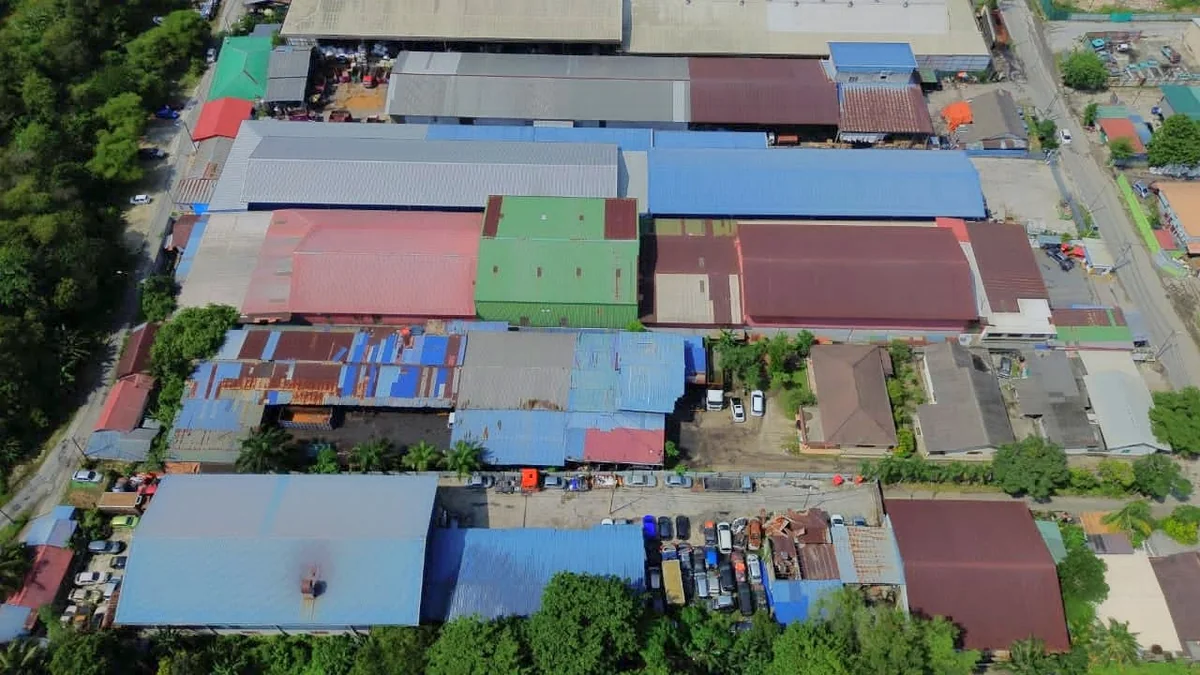
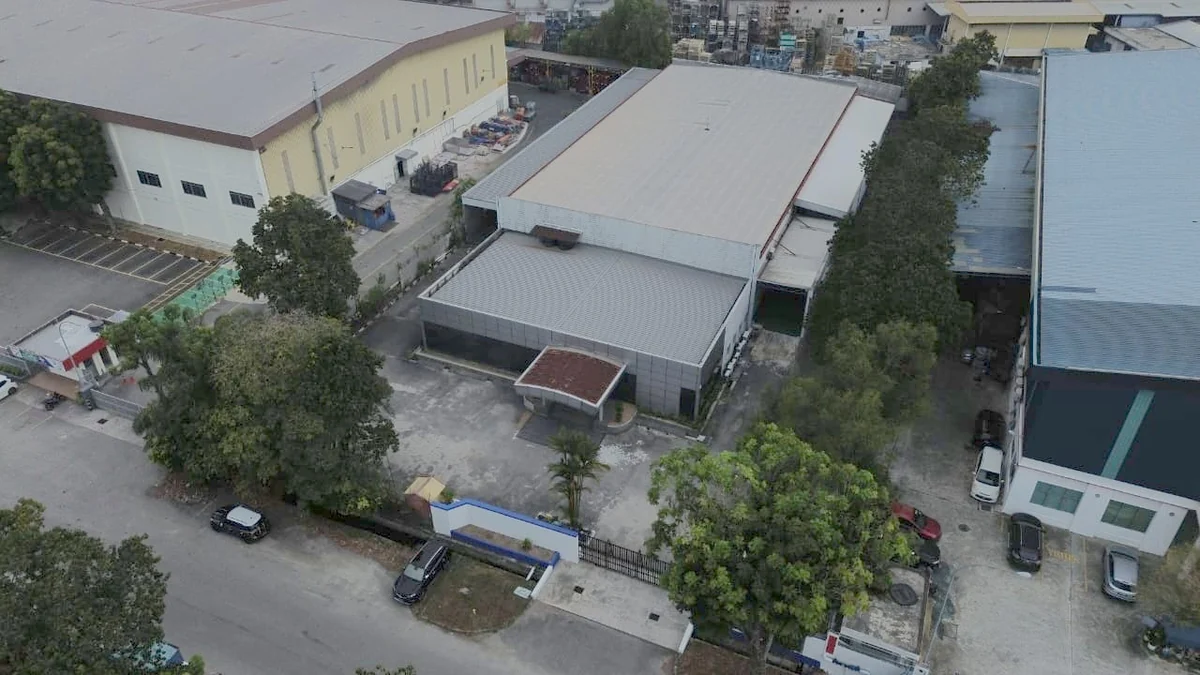
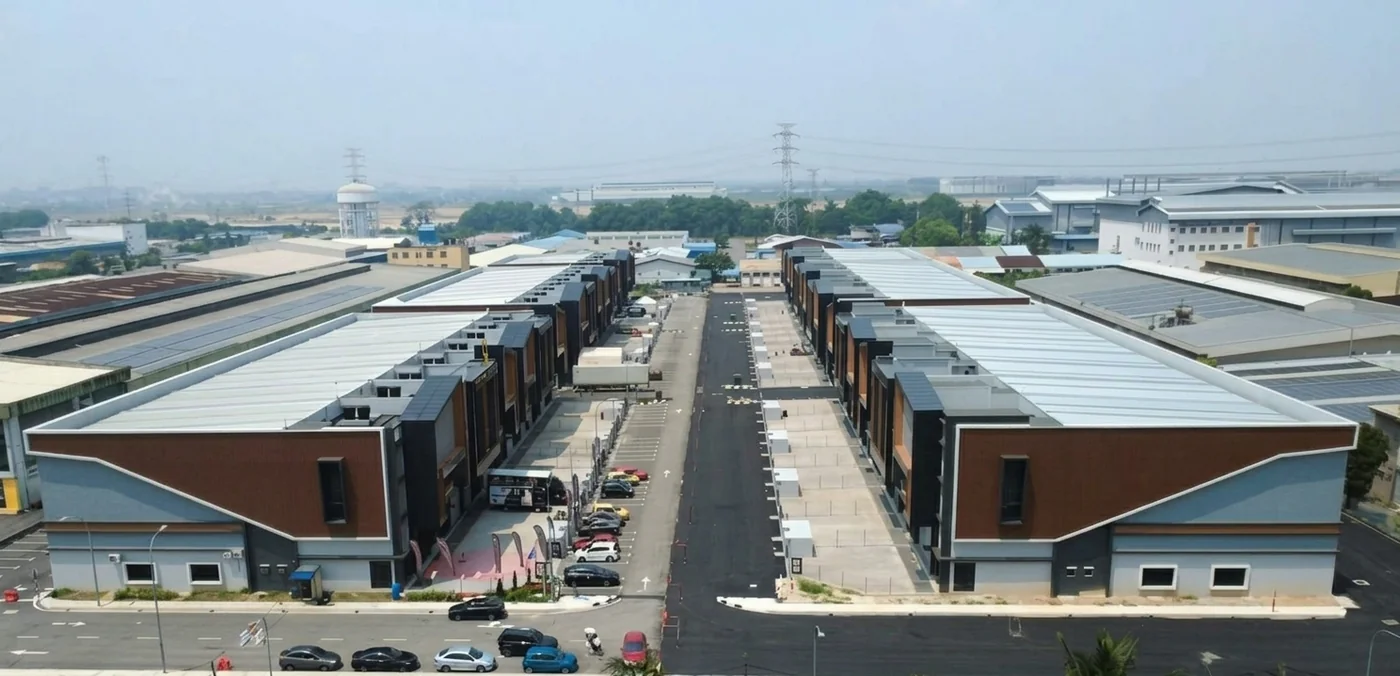
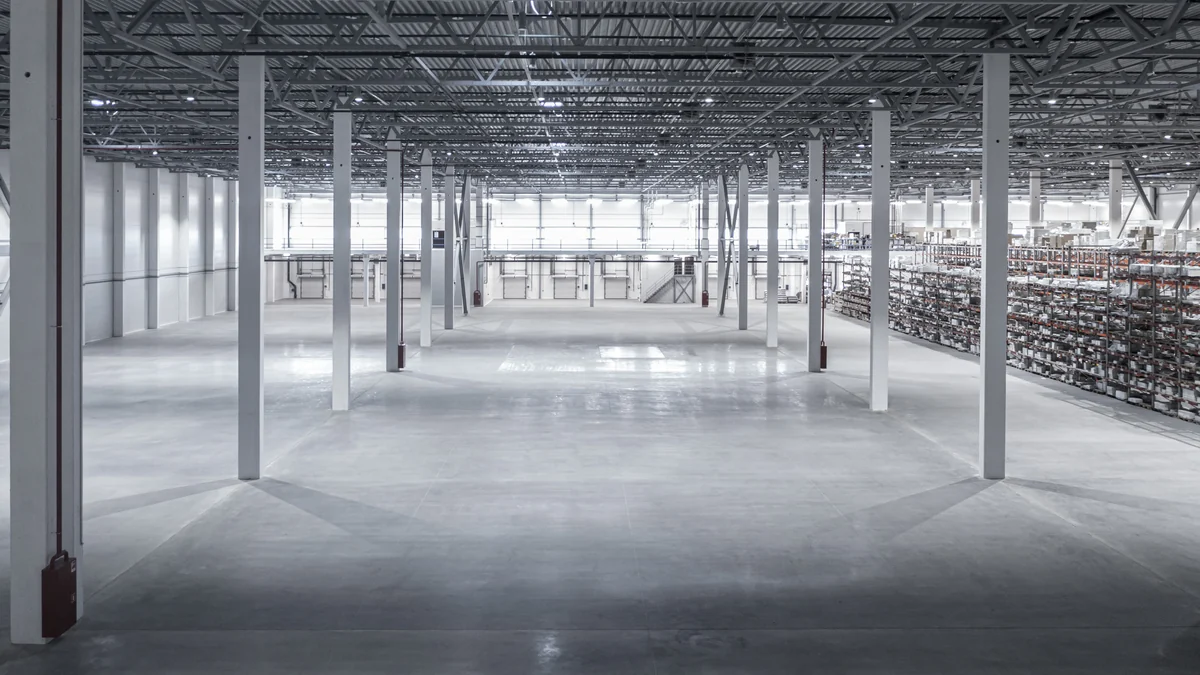
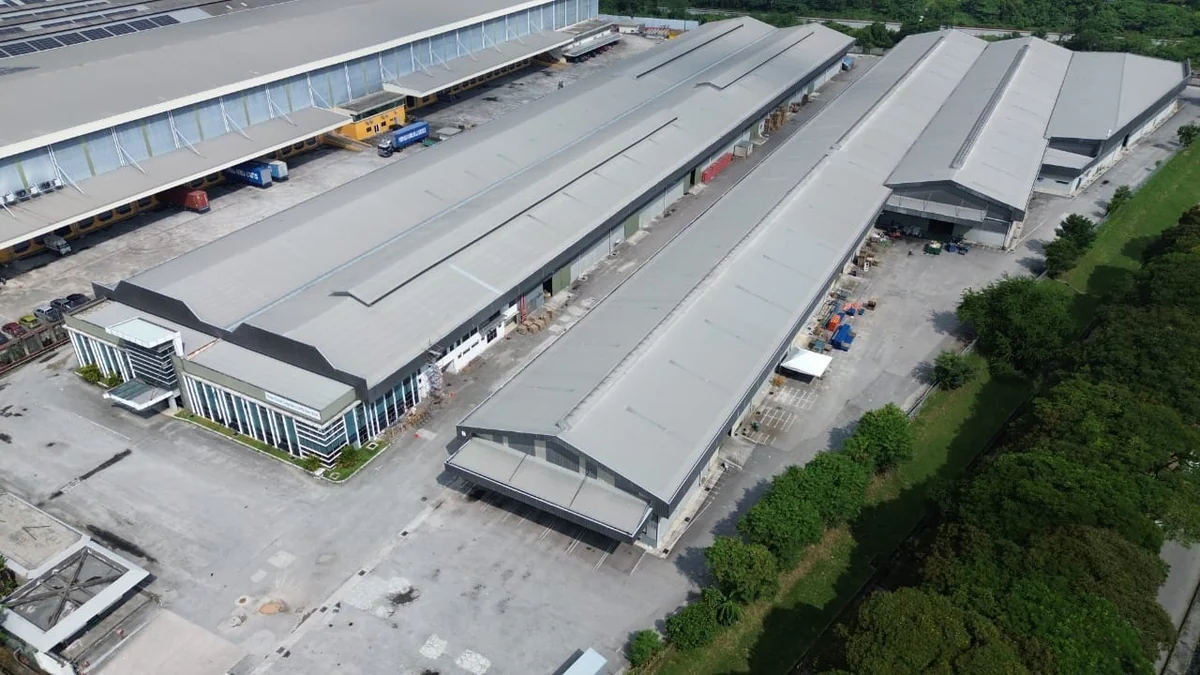
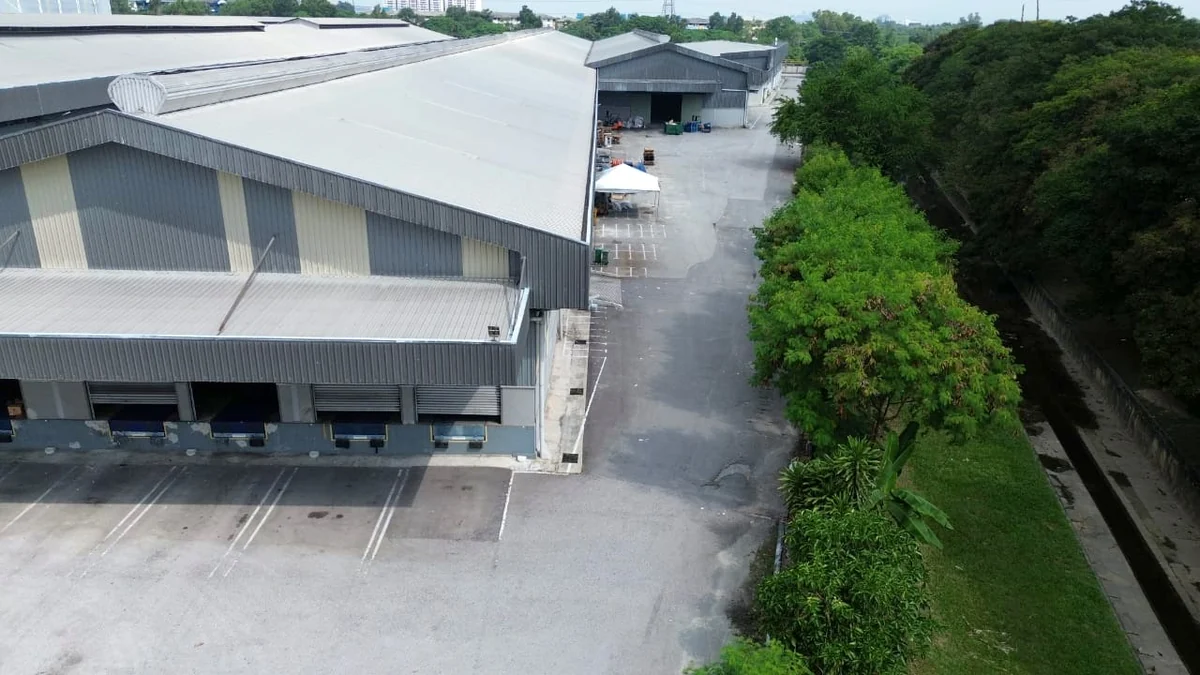
Note on this article. It describes a regulatory framework in general terms, for industrial property, as at 7 October 2026. No specific property, estate, price or transaction is being described. The aerial photographs are my own, cropped so that no building, business, person or vehicle is identifiable. The four interior and structural frames are licensed stock, captioned as such where they appear, and none of them shows a Malaysian building or any property connected to anything described here. Minimum purchase prices are set by each state and are revised, so no state figures are listed here on purpose. The thresholds and conditions summarised from the guideline are a reading of it and not a substitute for the document, which is linked above. Nothing here is legal, financial, tax or valuation advice, and a foreign acquisition of Malaysian land should not be structured without a conveyancing solicitor and proper corporate advice.