Almost every defect in an industrial building is water, movement or neglect. Usually water. Find which one you are looking at and the rest of the questions answer themselves.
The defect you can see is the end of the process, not the start. Concrete on the floor under a beam means the steel inside it has been corroding for years. The spall is the receipt.
Follow water upward, not down. A stain tells you where water arrived. The fault is above the top of the stain, and it is usually a gutter, an outlet or a downpipe rather than the thing that is stained.
And know where to stop. Reading symptoms is free. Deciding whether a structure is safe is a Professional Engineer's job, and nothing on this page is a substitute for one.
Three causes, and almost everything is one of them
Walk round enough buildings and the variety stops being frightening. Nearly every defect you will meet in an industrial building comes back to water, movement, or nobody doing anything for a long time. Usually water, and often all three in sequence, because water causes the movement and neglect gave it the years it needed.
That is not a simplification to make the subject easy. It is the question to ask at every single thing you look at. Not what is this, but which of the three is this, and what has it been doing since.
Once you ask it that way, a stain stops being a stain and becomes a drainage fault with a date on it.
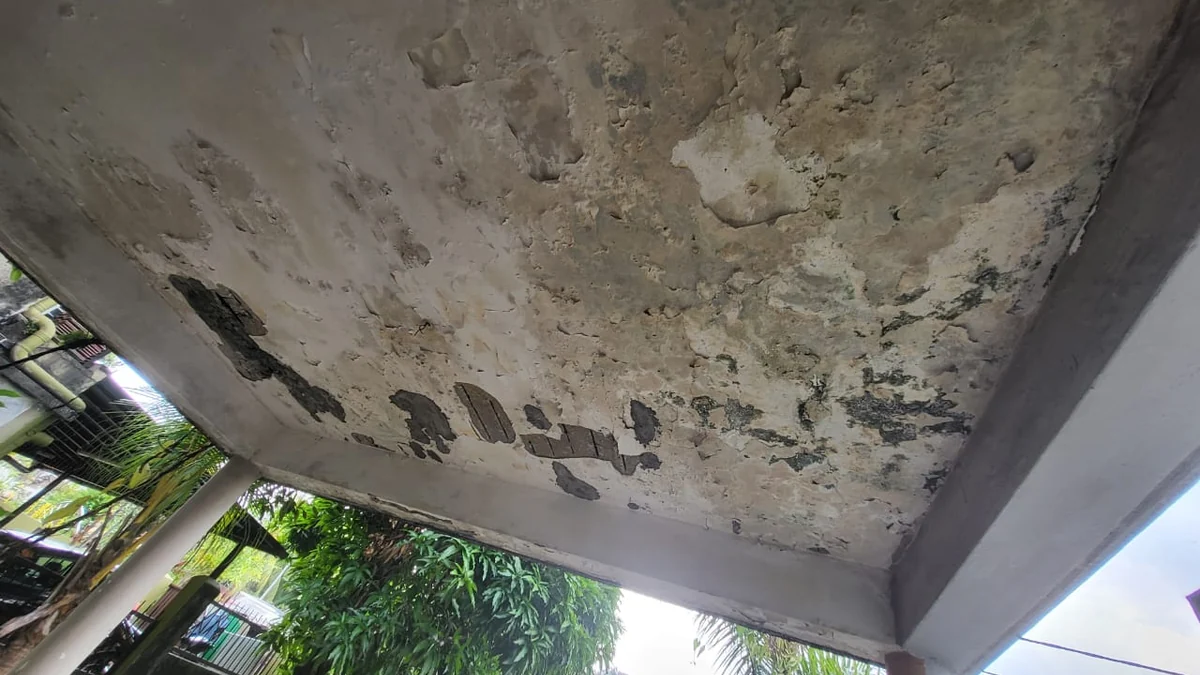
Rust jacking: why concrete comes off in plates
This is the one worth understanding properly, because it explains a lot of what you see and because it is almost always older than it looks.
Reinforced concrete works because the steel inside it is protected. Fresh concrete is strongly alkaline, and that alkalinity holds a thin passive film on the surface of the bars that stops them corroding. The steel is safe as long as that film survives.
Two things in a tropical climate take it away. Carbonation, where carbon dioxide works slowly into the concrete and lowers its pH until the film no longer forms. And chlorides, which matter near the coast and anywhere the air carries salt, which along the Klang estuary it does. Either one depassivates the steel, and then it rusts.
Here is the part that does the damage. Rust occupies several times the volume of the steel it came from. The bar swells inside a material that cannot stretch. Concrete is strong in compression and weak in tension, so it splits along the line of the bar, and then the cover breaks off in plates.
So the concrete on the floor is not the event. It is the receipt for an event that started years earlier, when the water first got in.
Follow the water upward, not down
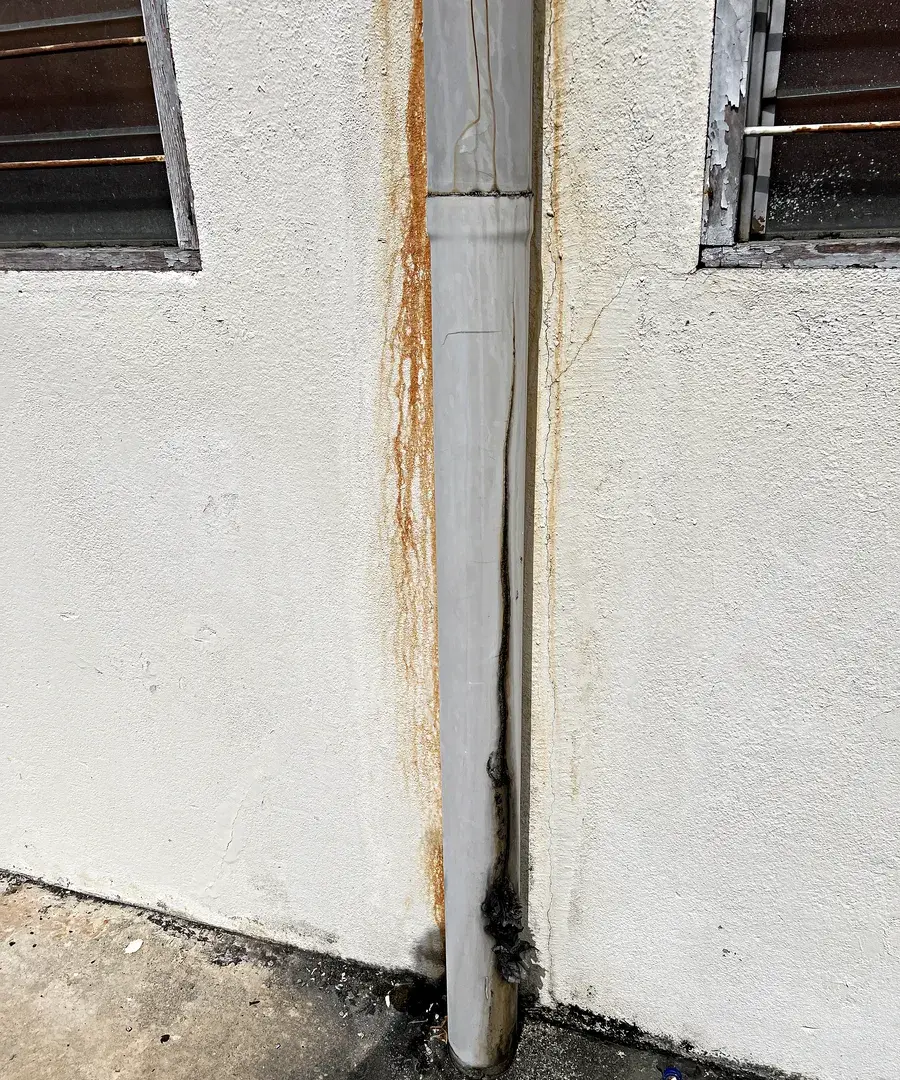
The single most common mistake is to treat a stain as a problem where the stain is. Water arrives at the bottom of a stain. It left from somewhere above the top of it.
So when you see a dark run down an external wall, do not look at the wall. Look up, and keep looking up until you reach the thing that let it out. In practice it is almost always one of four: a gutter that has silted up and is overflowing at the back edge, an outlet blocked with leaves, a downpipe split at a joint or sheared off, or a flashing that has failed where the roof meets something else.
All four are cheap. What they have been doing to the wall and to whatever is inside it, for however many monsoon seasons, is not cheap, and it is not visible from the yard.
This is also why the gutter is the most under inspected part of an industrial building. It is above head height, it looks like nothing, and it is where the money goes.
The roof is rarely the sheet
People say the roof leaks. The sheet itself is usually the last thing to fail.
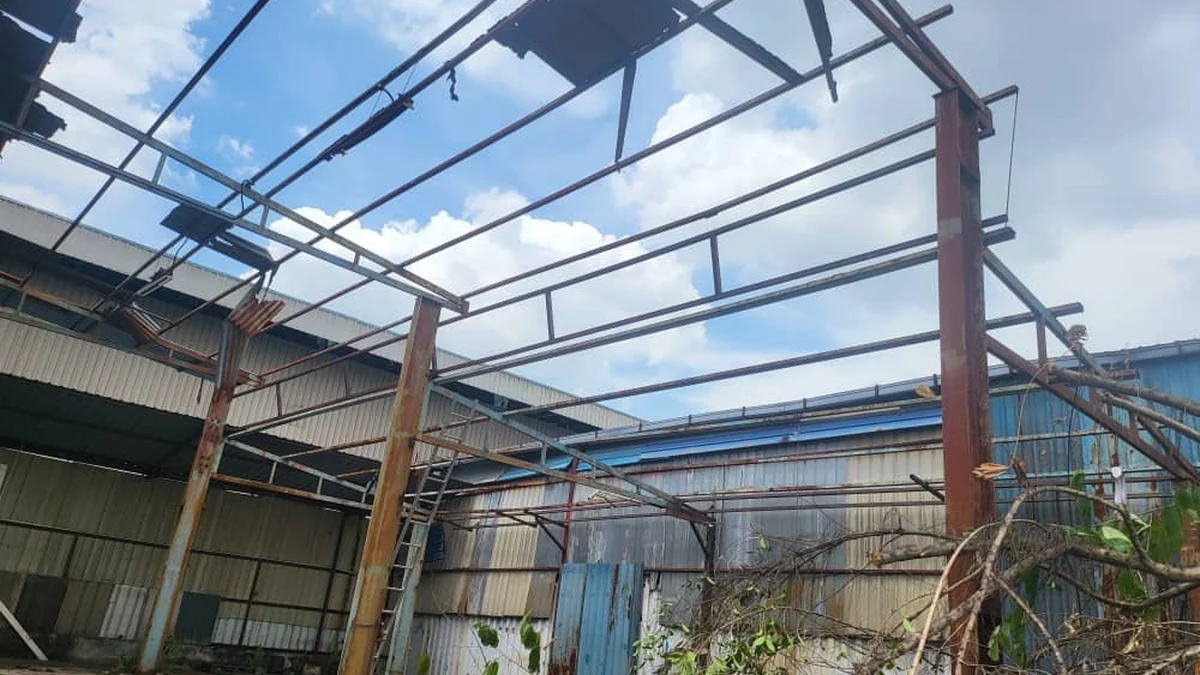
What fails first is everything holding it together. Fixings and their washers perish and let go, and the hole stays. Laps work open as the roof expands and contracts through a hot day and a cool night, every day, for twenty years. Flashings fail at the joint where the roof meets a wall, a ridge or an upstand, because that is where two materials move against each other. Rooflights go brittle and craze and then crack.
And then there is the one that is not the roof at all. A gutter that cannot drain will back water up above the line of the lap and push it inside the building. From the floor that looks exactly like a leaking roof. It is a leaking gutter, and re-sheeting the roof would not have fixed it.
So when somebody tells you a roof has been re-sheeted, the next question is what was done about the gutters and the flashings at the same time. If the answer is nothing, the roof has been re-sheeted over the fault.
Ponding is a question about the ground
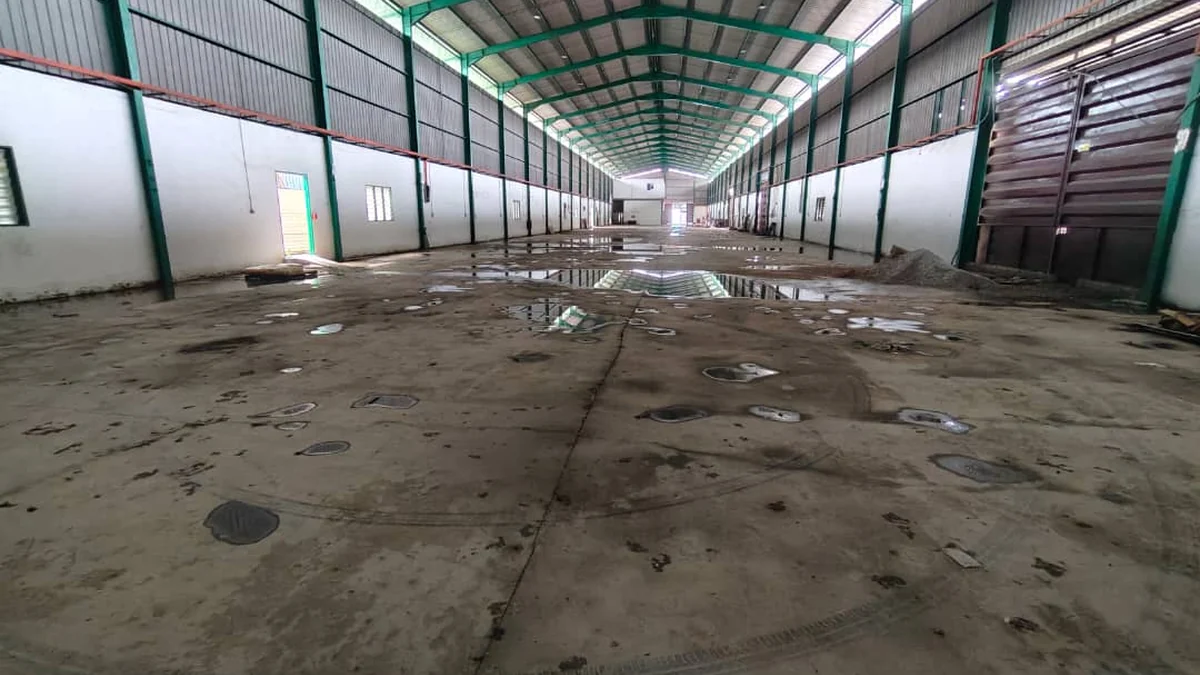
Water standing on a slab after the rain has stopped means the falls are not carrying it away. There are two reasons for that and they are not the same size of problem.
It may simply have been built that way, with falls that were always too flat or an outlet in the wrong place. That is an inconvenience and it is a known quantity.
Or the slab is dishing because the ground underneath it has settled. That is a different conversation entirely, because a slab that is still moving will go on moving under racking legs, under wheel loads and under whatever you are about to put on it. Settlement does not stop because you bought the building.
You cannot tell which from a puddle. What you can do is note where the water sits, go back after another rain and see whether it sits in the same place, and ask whether anything heavy has stood there. And it is worth saying plainly: standing water on a floor that people walk and drive on every day is a safety matter before it is a structural one.
Vegetation is a clock
A plant growing out of a building is the most useful thing you can see from the ground, and it costs nothing to look up.
A seed needs three things to get started in a gutter, on a parapet or in a crack: standing water, trapped debris to root into, and time. All three. So a plant up there is not telling you that the building is dirty. It is telling you roughly how long water has been sitting in that spot with nobody dealing with it.
Then it stops being evidence and becomes a cause. Roots widen the crack they started in, hold more water against the structure, and lift what they grow under. The thing that was a symptom last year is doing damage this year.
If you take one habit from this page, make it looking up at the gutter line from the yard before you go inside.
Cracks: read the pattern before you measure the width
Everybody reaches for a ruler. The width is worth knowing, but the pattern tells you more, and the change over time tells you most of all.
A crack that runs along the line of a reinforcing bar, often with rust staining at its edges, is telling you about corrosion. That is the first half of this article arriving at the surface.
A diagonal crack running from the corner of a door, a window or an opening is telling you about movement, because corners concentrate it.
A fine map of shallow cracks across a slab surface is usually shrinkage from how it was cured, and is usually cosmetic.
A crack at the junction between two parts of a building, especially where an extension meets the original, is usually differential movement, because the two halves are sitting on different things.
And the honest part. One visit cannot tell you whether a crack is live. What tells you is the same crack measured twice with time in between, or a tell-tale fitted across it. A crack that is wider than it was six months ago is a live one, and that is a Professional Engineer's question, not a tape measure's.
What a long vacancy actually does
An empty building does not decay because it is empty. It decays because nobody is doing the small things.
In a working building a blocked gutter gets noticed because somebody parks under it. A drip in the corner gets reported because somebody stores stock there. A seized pump gets found because somebody needed it. Take the people out and none of those happen, and the building goes through two monsoon seasons with nobody looking up.
So when you are told a building has been vacant for three years, hear two separate things. One is the obvious commercial point about demand. The other is that three years of gutters, drains, flashings and small leaks have gone unattended, and that none of it will be visible from the road.
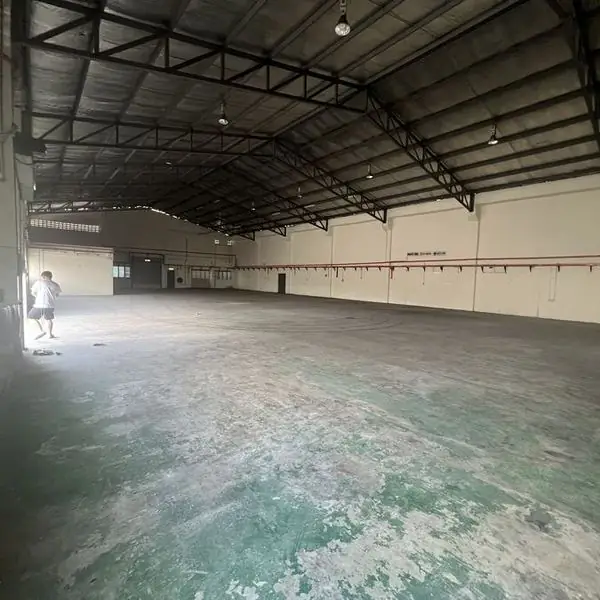
This is also why an empty building can show very well in photographs. Photographs are taken from the places that look good, and the places that look good are not where the water has been.
What you can read, and where you must stop
I am not a structural engineer and this page does not make you one either. What a careful walk round gives you is a list of questions, and some of them are worth paying somebody to answer.
The line is reasonably clear. If the question is what would it cost to patch this, that is a contractor. If the question is is this safe, or is it getting worse, that is a Professional Engineer registered with the Board of Engineers Malaysia under the Registration of Engineers Act 1967.
Spalling with reinforcement showing. A crack that is widening. A slab that is dishing. A frame member that is bent or out of line. Anything that looks like settlement. Those are all on the engineer side of the line, and no amount of looking will move them across it.
Getting the order wrong is how people pay twice, once to render over something and once to open it up again.
The checklist, in the order I use it
Outside in and top down, because that is the order water travels.
- From the yard, look up. Gutter line, parapet, anything growing. Before you go in
- Roof, from whatever vantage you can get. Missing or lifted sheets, laps, rooflights, flashings at every upstand
- Downpipes. Every joint, and where each one discharges. Follow one to the ground
- External walls. Staining, and where each stain starts at its top edge
- Inside, soffits and beam undersides first. Patching, spalling, any crack following a straight line
- The slab. Falls, ponding, cracking pattern, and anything that looks like dishing
- Junctions. Wherever an extension meets the original, and wherever two materials meet
- Doors, shutters and tracks. Whether they run, and whether the opening is still square
- Drains and the yard. Silted, ponding, or running
Photograph as you go, put something in frame for scale, and keep the dates. A photograph of a defect is worth very little on its own. The same photograph taken twice, six months apart, is worth a great deal.
What to ask before you pay for a survey
A survey is worth commissioning once you know it is worth commissioning. Several of these cost nothing and some of them end the exercise.
- The approved plans, and the as-built drawings if they exist
- The certificate, CF or CCC
- The current Fire Certificate, which is annual and separate
- Any engineer's report that already exists, and the date on it
- What has been repaired in the last five years, and by whom
- How long it has been empty, and who was maintaining it while it was
That last one tells you more than the rest put together, and it is the one most people forget to ask.
Related
- The mezzanine nobody approved, because an unapproved structure is also an unmaintained one
- Floor load capacity and what kN/m2 means, if the slab is what worries you
- CF or CCC, and what each one certifies, which is the building on the day it was signed and not today
- The Fire Certificate, annual, separate, and the one people forget to ask for
- Terrace, semi-D, detached: what counts as industrial property
- Versi Bahasa Melayu: kerosakan bangunan kilang, bumbung bocor dan retak
Frequently asked questions
What should be on an industrial building defects checklist?
Work outside in and top down, because water moves that way. Roof covering and flashings. Gutters, outlets and downpipes. External walls and the staining on them. Soffits and beam undersides, which is where reinforcement corrosion shows first. The slab, including falls and ponding. Doors, shutters and their tracks. Then the drains and the yard. Note what you see, photograph it with something in frame for scale, and date the photographs. The list is not there to let you price repairs. It is there to tell you which of them needs somebody qualified to look.
What is rust jacking?
Steel reinforcement inside concrete corroding, and the rust taking up far more room than the steel it came from. Iron oxides occupy several times the volume of the parent metal, so the corroding bar pushes outward against the concrete covering it. Concrete is strong in compression and weak in tension, so it cracks along the line of the bar, then the cover breaks away in plates. The spall on the floor is the end of that process, not the beginning. By the time the concrete lets go, the steel has usually been corroding for years.
What causes concrete to fall off a ceiling or a beam?
Two usual routes, and in a tropical climate both run faster. Carbonation, where carbon dioxide works into the concrete and lowers its pH until the alkaline film that protects the steel stops protecting it. And chlorides, which matter near the coast and along the Klang estuary. Either one depassivates the steel and corrosion starts. Thin cover to the reinforcement, from poor placing or poor compaction when it was built, brings both arrival dates forward. Water is the carrier for all of it, which is why a leak above a beam is not a roof problem.
Are structural cracks in a warehouse serious?
Some are and some are not, and the honest answer is that you usually cannot tell by looking once. What you can read is pattern. A crack that follows the line of a reinforcing bar, with rust staining at its edges, is telling you about corrosion. A diagonal crack near a corner or an opening is telling you about movement. A fine map of shallow cracks across a slab is usually shrinkage and often cosmetic. Width matters, but change matters more. A crack that is wider than it was six months ago is a live one, and that is a question for a Professional Engineer, not for a tape measure.
What causes water ingress through a factory roof?
Most often not the sheet itself. Fixings and washers perish before the sheeting does, laps open up as the roof moves with temperature, flashings at ridges, valleys and upstands fail at the joint, and rooflights go brittle and crack. Then there is the part nobody inspects, which is the gutter. A gutter that cannot drain backs water up above the lap line and pushes it inside the building, and from the floor that reads as a roof leak when it is a drainage leak.
Is ponding water on a warehouse floor a problem?
It is a question rather than an answer. Water standing on a slab means the falls are not taking it away, which can be how it was built, or it can be the slab dishing where the ground beneath it has settled. The first is an inconvenience. The second matters, because a slab that is still moving will go on moving under racking legs and wheel loads. Standing water also tells you something about the roof above it and the drainage around it. And it is a slip risk on a floor people work on every day.
What does a stain running down an external wall mean?
That water has been running down that wall for a long time, and that it is coming from above the top of the stain, not from where the stain is darkest. Follow it upward. It usually ends at a blocked outlet, a split downpipe, a failed joint or a gutter that has dropped out of level. The stain itself is the cheapest thing in the chain to put right. What it has been doing to the wall and to the structure behind it for the last few years is the number that matters.
Why does vegetation growing on a building matter?
Because it is a clock. A seed needs standing water, trapped debris and time, so a plant growing in a gutter, on a parapet or out of a crack is telling you roughly how long that water has been sitting there without anybody dealing with it. Then it becomes a cause in its own right, because roots widen the crack they started in and hold more water against the structure. Vegetation is the most useful single thing you can see from the ground, and it costs nothing to look up.
Can I tell from photographs whether a defect is structural?
No, and neither can anybody else. A photograph flattens depth, loses scale and hides whatever is behind the surface. It is good for recording that something exists, on a date, and for comparing against the same spot later. It is not a diagnosis. If a photograph is all you have been given, treat it as a reason to go and stand in front of the thing yourself, and put a tape or a coin in the frame when you do.
When do I need a structural engineer rather than a contractor?
Whenever the question is whether something is safe or whether it is getting worse, rather than what it would cost to patch. A contractor prices a repair. A Professional Engineer registered with the Board of Engineers Malaysia assesses the structure and signs off on it. Spalling with exposed reinforcement, a crack that is widening, a slab that is dishing, a frame member that is distorted, any sign of settlement: those are engineer questions. Getting the sequence the wrong way round is how people pay twice, once to cover it up and once to open it again.
Does a long vacancy damage an industrial building?
Yes, and mostly through things that are not the building's fault. Nobody clears the gutters, so they silt up and overflow. Nobody runs the pumps or the drains, so they seize and block. A small leak that would have been reported in a working building goes unreported for two monsoon seasons. Vegetation gets its chance. None of that is dramatic on any single day, which is exactly why an empty building can look fine from the road and cost a great deal once you are inside it.
What should I ask the seller before I pay for a survey?
The approved plans and the as-built drawings. The certificate, CF or CCC. The current Fire Certificate. Any engineer's report that already exists, and the dates on it. What has been repaired in the last five years and by whom. And the one that tells you most: how long the building has been empty, and who has been maintaining it while it was. None of that costs you anything, and the answers decide whether a survey is worth commissioning at all.
What is a shrinkage crack?
A crack that forms as concrete loses water and gets slightly smaller, restrained by whatever it is cast against. On a slab it shows as a fine map of shallow cracks across the surface, or as straight cracks running between the saw cuts that were supposed to control where it happened. Most drying shrinkage occurs in the first months, but concrete goes on shrinking at a decreasing rate for a long time after that, so a crack that appeared in year one and has not moved since is behaving normally. The question is never the crack. It is whether it is still opening.
What are settlement cracks in a building?
Cracks caused by part of the structure moving downward relative to another part, because the ground under it has compressed or washed out. They typically run diagonally, start near a corner or an opening, and are wider at one end than the other, which tells you the direction of the movement. The important difference from shrinkage is that settlement can be ongoing. Shrinkage finishes. Ground movement does not have to, and a slab or a wall that is still moving is a question for a Professional Engineer rather than a filler and a coat of paint.
Who is responsible for water seepage in a rented industrial unit?
The lease decides it, and the answer is usually split. In most Malaysian industrial tenancies the landlord carries the structure, the roof and the external envelope, and the tenant carries what is inside and whatever the tenant installed. Where it gets argued is when a tenant's own roof penetration, extract fan or equipment caused the leak, or when the tenant knew about a drip and did not report it. If the unit is strata titled there is a third party, because common property including the main roof usually sits with the management body. None of that is decided by what is reasonable. It is decided by the words in the tenancy, so the useful thing is to have the repair and maintenance clauses read before there is a leak rather than after.
What happens if a roof leak is left untreated, and is a faulty roof a structural issue?
A leak is not structural on the day it starts. It becomes structural by what it does over time. Water running onto a steel member corrodes it. Water reaching reinforced concrete starts the process that ends in spalling. Water into a slab or into the ground below it changes how that ground behaves. So the honest answer is that a roof fault is a building envelope problem that turns into a structural one if it is left long enough, and the thing that decides which you are looking at is how many years it has been running. That is also why the age of a stain matters more than its size.
References
- Board of Engineers Malaysia, which registers Professional Engineers and lets you check whether somebody is one before you engage them
- Laws of Malaysia, Attorney General's Chambers. The Registration of Engineers Act 1967 is the Act behind that registration. As with the other articles on this site, I was not able to open this from my own machine, so I am sending you to the source rather than quoting it as read
- The corrosion mechanism described here, carbonation and chloride ingress removing the passive film on reinforcement and the resulting expansion breaking the cover away, is standard reinforced concrete durability theory and is set out in any structural materials text. It is described here from general principle, not quoted from a named study
- Department of Occupational Safety and Health, for the part of this that is a workplace safety question rather than a building one, which standing water on a working floor is
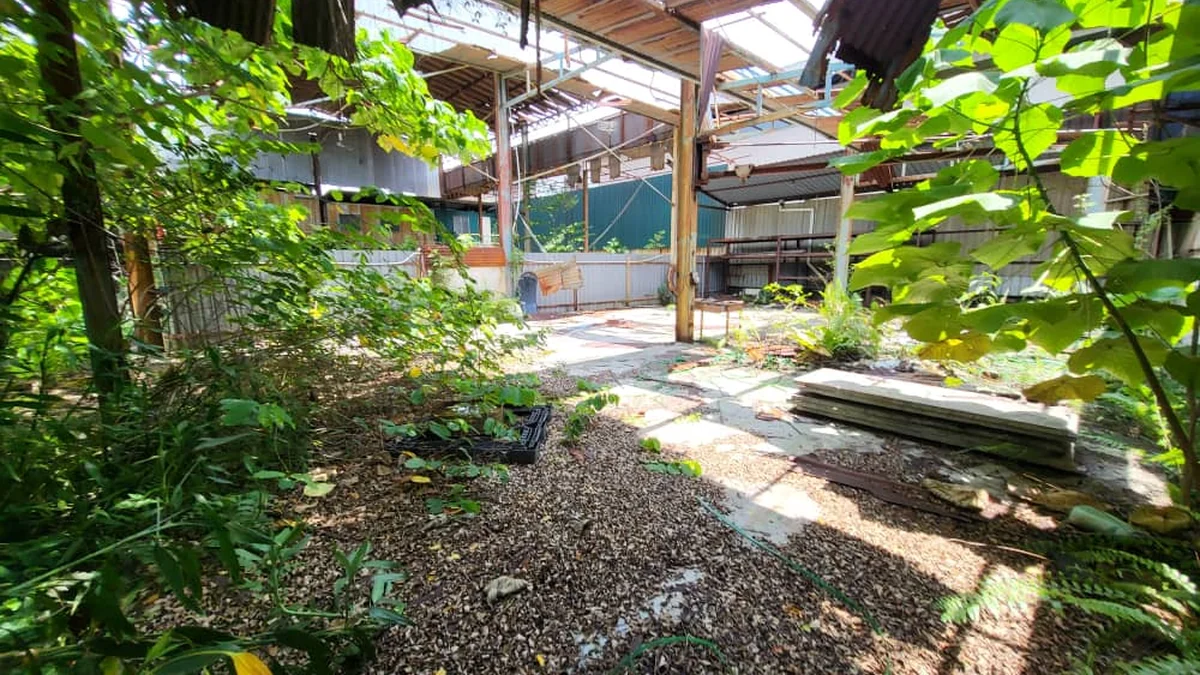
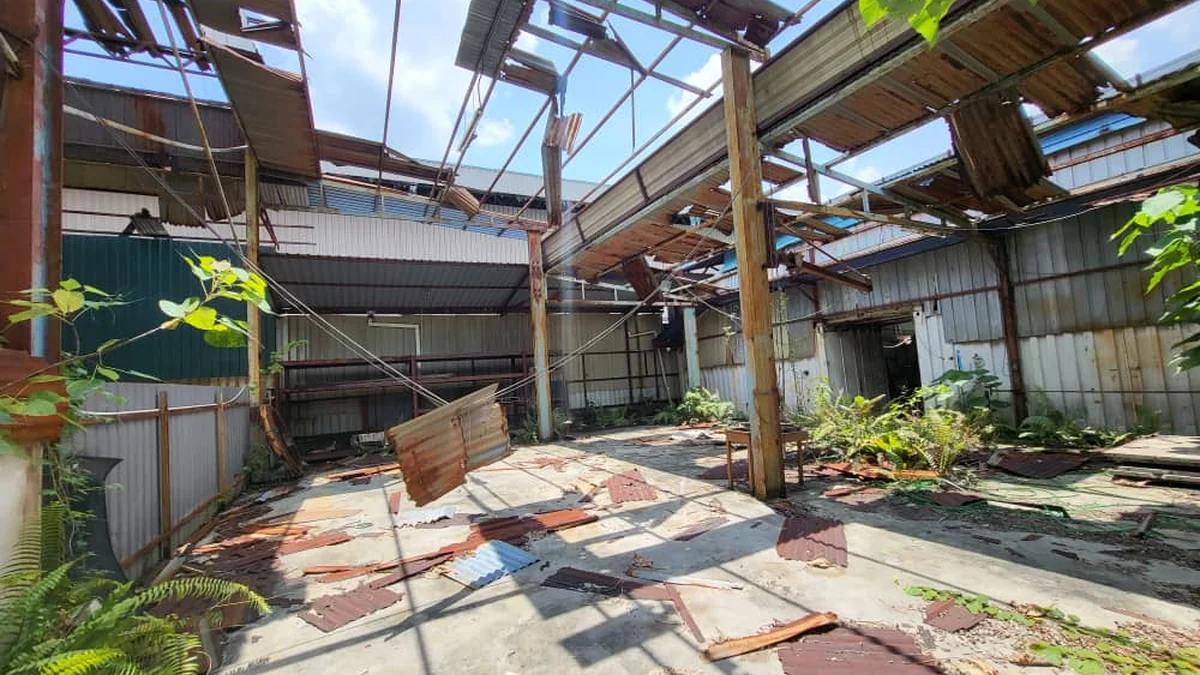
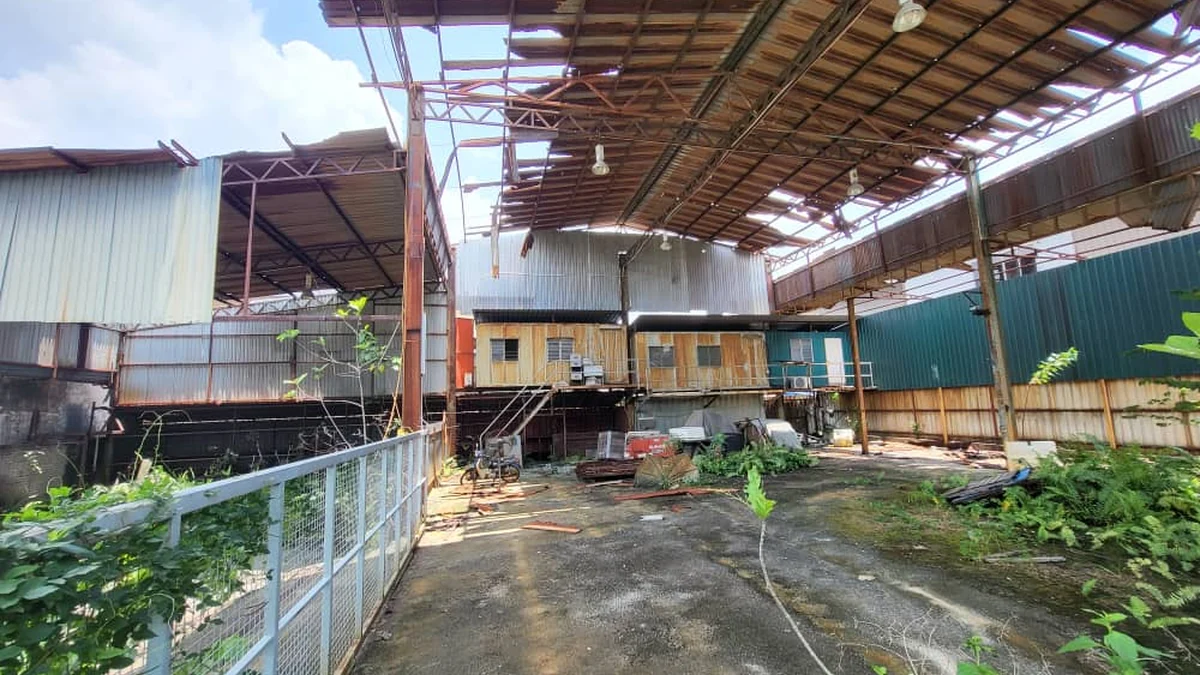
Note on this article. It describes how to read common defects in industrial buildings in general terms, as at 9 October 2026. Nothing here is a diagnosis of any building, including the ones in the photographs. The photographs record what was visible on the day they were taken and are used to illustrate a type of defect, not to assert what is wrong with that particular structure. They are my own, cropped so that no building, business, person or vehicle is identifiable. I am not a structural engineer, a building surveyor or a licensed valuer. Whether a defect is structural, whether it is getting worse, and what it will cost to put right are questions for a Professional Engineer and for a contractor, in that order, and nothing here is legal, engineering, valuation or financial advice.