Buildings almost never sit empty because nobody wants the space. They sit empty because something about the property makes a transaction hard to finish, and that something is usually paperwork rather than brickwork.
There are five places the answer is normally hiding. Title, land use category, approvals, utilities, and a price nobody has corrected. None of the five is visible from the road.
A long vacancy is evidence, not a verdict. Some of the soundest buildings on the market have been empty for years for a reason a buyer can fix in a month. Others have been empty for a reason a buyer cannot fix at all.
So the question is never whether it is empty. It is why, since when, and who decided. Nothing on this page is advice on a particular building, and the checks below are the start of due diligence, not a substitute for your solicitor and your engineer.
Emptiness is the symptom, not the condition
Drive round any established industrial estate in the Klang Valley and you will pass units that have been shut for years. Grass through the apron, a gate chained from the inside, a signboard for an agent who has long since moved on. The instinct is to read that as decline, and sometimes it is.
More often it is not. A building that has been empty for four years in an estate where everything around it is occupied is not suffering from a lack of demand. Demand clearly exists, fifty metres away in both directions. Something about that specific unit is stopping the transaction that the market is otherwise ready to do.
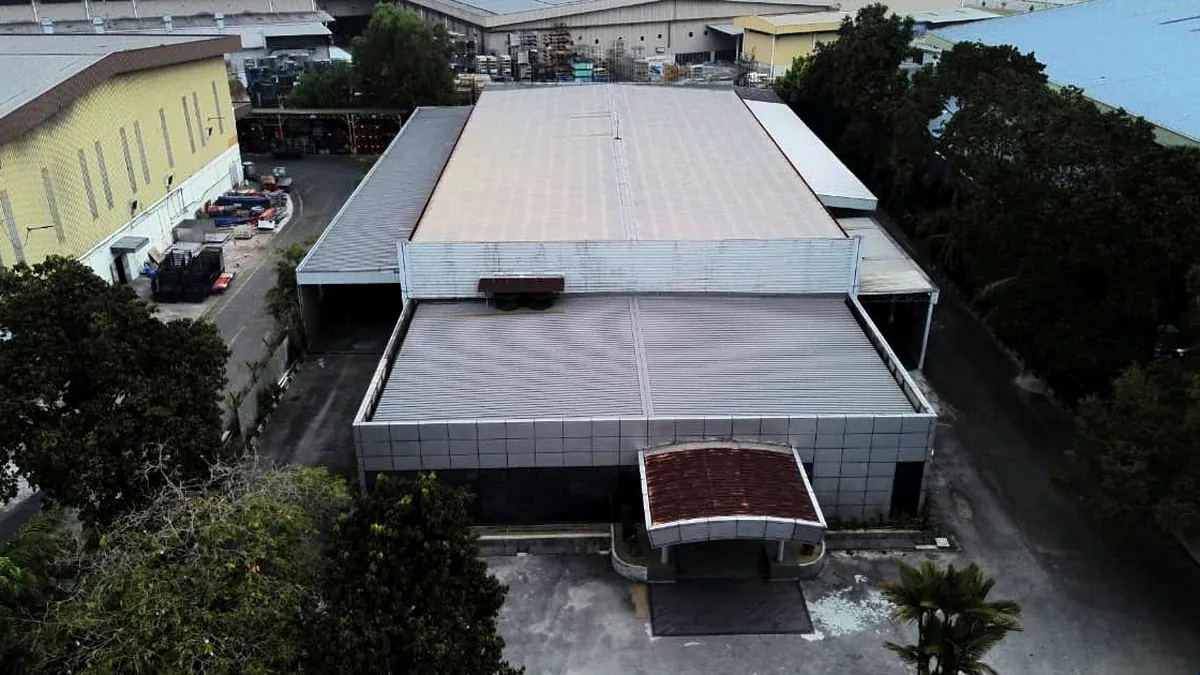
That is the useful way round to think about it. Vacancy is not the problem. Vacancy is the visible end of a problem, in exactly the way a stain on a wall is the visible end of a drainage fault. The question is what is upstream of it.
And the awkward part, which is why this article exists, is that the thing upstream is usually invisible from outside. You can walk the perimeter of a building, photograph every elevation, and learn almost nothing about why it is empty.
The five places the answer is usually hiding
Over and over, when the reason for a long vacancy does eventually surface, it is one of five things. They are worth knowing by name because each one has a different cost, a different timescale, and a different answer to the only question that matters, which is whether you are the person who can solve it.
One. The title will not move
This is the most common single reason and the one least visible from outside. The building is fine. The title is the thing that cannot be transferred, or cannot be transferred quickly.
It takes several forms. A leasehold with a short balance of term left, where a buyer can see the end of the lease from here and a bank can see it more clearly still. A restriction in interest on the title requiring state consent before any dealing, which adds months and an uncertain outcome. A caveat somebody lodged years ago over a dispute that was never tidied up. A charge to a bank for more than the building is now worth.
Then the one that quietly accounts for a great many long vacancies, which is an owner who died. The property sits in an estate that has not been distributed, there are beneficiaries who do not all agree, and until that is resolved nobody has the authority to sign. The building is not for sale in any practical sense, whatever the signboard says.
None of this shows. A title search shows it, and that is the single most informative thing you can do about a long vacancy before you spend money on anything else.
Two. The category of land use does not match the plan
A building can look industrial, be built as industrial, be surrounded by industrial, and still sit on land whose category of land use says something else. Or it can be properly industrial but in a use class that does not permit what a particular buyer wants to do inside it.
The effect is that the building keeps nearly selling. A buyer views it, likes it, takes it to their consultant, finds out what would be involved in converting the category or obtaining the approval they would need, and withdraws. That cycle can repeat for years and leaves no trace on the building at all.
It is worth being precise here, because it is the same mechanism that makes a conversion expensive rather than merely slow. If what you intend to do needs the category changed, you are looking at a premium set as a percentage of land value and a process with a state authority at the end of it. That is a real number and a real timescale, and it belongs in the price rather than in the hope column.
Three. The approvals were never closed out
Buildings get occupied before their paperwork is finished more often than anyone would like, and when the occupier leaves, the gap stays behind.
The usual version is a Certificate of Completion and Compliance that was never issued, or issued for the original building and not for what is standing there now. An extension at the rear, a mezzanine inside, an office block added across the front. Each one was built, each one works, and none of them appear on the approved plans.
That is a financing problem before it is a legal one. A bank valuing the property for a loan is valuing what can be certified, and a buyer who cannot borrow against the full building is a buyer who either pays cash or walks. Most walk. The unapproved mezzanine that the last occupier built in a weekend becomes the reason the building takes four years to sell.
The Fire Certificate belongs in the same paragraph for a different reason. It is annual, it is separate from the completion certificate, and on a building that has stood empty it has almost certainly lapsed. That is usually recoverable, but it is recoverable through work and inspection rather than through a form, and the scope of that work is not knowable from the car.
Four. The supply has gone, and going back is not the same as staying
This is the one that catches people with the biggest single number, and it is specific to long vacancies because it is a function of time.
When a factory closes, the electricity account is usually closed with it. There is an important distinction between a supply that was disconnected and a supply that was surrendered. A disconnection leaves the arrangement in place. A surrender releases the approved capacity back, and getting it again is a new application, priced and scheduled as new work. On a building whose whole value proposition is that it already had a substantial supply, that is not a detail.
It gets worse if the equipment went too. Transformers and switchgear have scrap value, and on a building that stood empty and unwatched for years, it is not unusual to find a substation room that is now an empty room. What the building had on paper and what is physically present are then two different things, and only one of them is yours.
Water and sewerage follow the same logic at a smaller scale. And underneath all of it, assessment and quit rent have been accruing the entire time the building was doing nothing, because those charges do not pause for vacancy.
Five. The price is from a year that has gone
The least dramatic reason and possibly the most common. Nothing is wrong with the building. The number is wrong, and nobody has made the owner confront it.
This happens for understandable human reasons. A valuation was done for a refinancing in a stronger year and became the figure in the owner's head. A neighbouring unit sold well once and the owner anchored to it. Or the owner has no pressure at all, holds the asset outright, and would genuinely rather leave it empty than accept less than a number that has become a matter of principle.
These are often the best opportunities on the market, because the building is sound and the obstacle is not structural, legal or administrative. It is a conversation. The difficulty is that from outside, this vacancy looks exactly like the four more serious ones above, which is the whole point of doing the work to tell them apart.
The sixth one, which is not a problem with anything
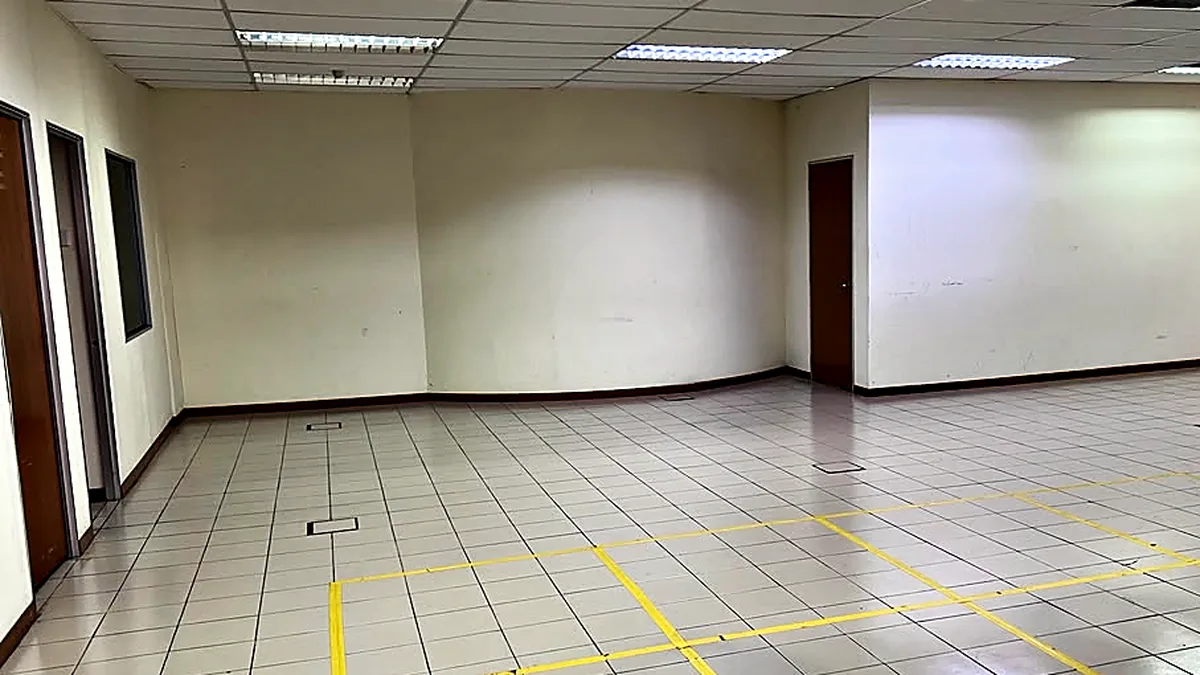
Worth separating out, because it is not a fault and cannot be fixed by paperwork. The building is sound, the title is clean, the approvals are in order, and it still does not sell, because it no longer does what the market now wants.
Eaves height set for how goods were stored two decades ago. A floor loading sized for lighter work. A yard that a modern trailer cannot turn in. Column spacing that eats usable floor. A power supply that was generous for its original occupier and is ordinary now.
Nothing here will show up on an inspection as a defect, because nothing is broken. It shows up as a building that is viewed often and taken never. For a buyer whose own requirement happens to match what the building actually is, this is the most straightforward kind of long vacancy there is.
What the last occupier did, and whether they left anything behind
One question that deserves asking early rather than late, because the answer changes the shape of the due diligence rather than just the price.
Storage and light assembly leave a building behind. Processes involving solvents, plating, oils, fuels or scheduled waste can leave something else behind as well. Stained ground, bunded areas that were used hard, drainage that goes somewhere nobody can explain, a tank that was buried and then forgotten.
If the previous use points that way, the environmental question stops being optional and becomes part of the cost of finding out. That is a specialist assessment, and it is better commissioned before a price is agreed than discovered after.
What to ask, in the order I ask it
The order matters, because the early questions are cheap and can stop you spending on the later ones.
- How long has it been empty, and who was the last occupier. Ask for a date and a name, not an impression. Vague answers are information in themselves
- Why did they leave. A lease ending, a business closing and a business being forced out are three different stories with three different implications for the building
- Is the vacancy specific to this unit or general to the estate. Look at the immediate neighbours. This single comparison isolates the variable better than anything else you can do for free
- A title search. Tenure, balance of term, restriction in interest, caveats, charges, and whether the registered owner is a person who is still alive and able to sign
- The category of land use, against what you intend to do
- Approval history. Whether a Certificate of Completion and Compliance exists, whether it covers what is standing there now, and what has been added since
- Utility status. Disconnected or surrendered, what capacity is still allocated, and whether the substation equipment is physically present
- Outstanding assessment and quit rent, from the council and the land office rather than from the seller
- Previous use, and whether it suggests an environmental question
- Who actually has to agree to a sale. One owner, several beneficiaries, a company in dispute, or a bank that has to release a charge
Nine of those ten are answered by documents and by registries. Only the first one depends on anybody's memory, which is why it is the one to verify rather than the one to rely on.
What you can read, and where you must stop
Reading a vacancy is reading a pattern, and a pattern can be read by anyone willing to look carefully and ask in order. That part is free and it is most of the value.
Deciding whether a structure is sound is a Professional Engineer's work. Deciding what a property is worth is a licensed valuer's work. Deciding whether a title can be transferred and on what terms is a solicitor's work. None of those three is something to reason your way to from the pavement, and the purpose of the questions above is to tell you which of them you need and in what order, not to replace any of them.
The honest summary is that a long vacancy is one of the most informative things a building can tell you, and one of the least conclusive. It says something is in the way. It never says what.
Related
- The repair is cheap, the cause is not, for what a long vacancy does to the fabric once it has started
- Leasehold or freehold, check the geran not the flyer, which is where most stalled transactions actually stall
- CF or CCC, and what each one certifies
- The mezzanine nobody approved, the single most common financing obstacle on an older unit
- What 1000 kVA actually means on a factory, if the supply question is the one that worries you
- The fee buys a decision, the premium buys the category
Frequently asked questions
Why do industrial buildings in Malaysia stay empty for years?
Rarely because nobody wants the space. The usual reasons are that something about the property makes a sale or a tenancy hard to complete. A title that cannot be transferred without consent, a category of land use that does not match what a buyer wants to do, approvals that were never closed out, a power supply that has been surrendered, or an asking price set against a valuation nobody has revisited. Each of those stops a transaction without leaving any mark you can see from the road.
Is a long vacancy a reason to avoid an industrial property?
No. It is a reason to find out why. Some long vacancies are purely a pricing problem and those can be the best buildings on the market, because the fabric is sound and only the number is wrong. Others are a title or approvals problem that will cost more to unwind than the discount is worth, and a few cannot be solved by the buyer at all. The vacancy itself tells you nothing until you know which kind it is.
Can a factory look fine from the road and still have a serious problem?
Easily, and this is the normal case rather than the exception. From the road you see the elevation, the roofline, the fence and the gate. You cannot see the title, the land use category, whether a Certificate of Completion and Compliance was ever issued, whether the extension at the back was approved, what the slab is doing, whether the supply is still connected, or how much is owed in assessment and quit rent. Every one of those can stop a sale, and none of them are visible from outside.
What does it mean if the electricity supply has been disconnected from a vacant factory?
It means you need to find out whether the supply was disconnected or surrendered, because those are different problems. A disconnection for non-payment is usually recoverable. An account that was terminated and the capacity released is a new application, with a new lead time and a new cost, and if the substation equipment was removed as well then the number can be substantial. Ask what the previous approved capacity was, whether it is still allocated, and get the answer from the utility rather than from the seller.
Do unpaid assessment and quit rent transfer to a new owner in Malaysia?
Arrears attach to the property, which is why they matter on a building that has been empty for years and nobody has been paying. Quit rent is a state land charge and assessment is a local authority charge, and both can accumulate quietly through a long vacancy. These are routinely dealt with on completion through the solicitors, but the figures have to be obtained and apportioned, not assumed. Ask for current statements from the land office and the local council before you agree a price.
Why would a seller refuse a reasonable offer on an empty building?
Usually because the person who has to accept it is not one person. A deceased owner whose estate has not been distributed, several beneficiaries who do not agree, a company in a dispute, or a charge to a bank that will not release at the offered figure. From the outside this reads as an unreasonable seller. It is more often a seller who is not able to sell yet, and the difference matters because one of those resolves with time and the other does not.
What is functional obsolescence in an industrial building?
The building is sound but it no longer does what the market now wants. Eaves height too low for modern racking, a floor loading set for lighter use, a yard too tight to turn a trailer, a power supply sized for an earlier occupier, or column spacing that wastes the floor. None of that shows as a defect because nothing is broken. It shows as a building that keeps being viewed and never taken, and it is one of the most common reasons a sound property sits empty.
Should I ask why a property has been vacant, and will I get an honest answer?
Ask, and ask it as a question with a date in it. How long has it been empty, who was the last occupier, and why did they leave. Vague answers are themselves information. Then verify the parts that can be verified independently, because the title search, the land use category, the approval records, the utility accounts and the rates statements do not depend on anyone's memory. Where the account and the documents disagree, the documents are the ones to work from.
Is contamination a risk when buying a previously used industrial site?
It can be, and it depends entirely on what the previous occupier did. Processes involving solvents, plating, oils, fuels or scheduled waste leave a different question behind than storage and assembly do. Find out what the building was used for, look for stained ground, buried tanks, bunded areas and drainage that goes somewhere unexplained, and if the previous use suggests it, treat an environmental assessment as part of the cost of due diligence rather than an optional extra.
How long is a long vacancy for an industrial property?
There is no official threshold, and the useful comparison is local rather than national. A unit standing empty while similar units on the same estate let within months is telling you something specific about that unit. The same unit empty while the whole estate is empty is telling you something about the estate, the access or the market. Compare it against its neighbours first, because that is the comparison that isolates the variable.
References
- Laws of Malaysia, Attorney General's Chambers. The National Land Code governs title, restrictions in interest, caveats and charges, and the Street, Drainage and Building Act 1974 sits behind the completion and certification regime. As with the other articles on this site, I was not able to open these from my own machine, so I am sending you to the source rather than quoting it as read
- Board of Engineers Malaysia, for checking that a Professional Engineer is registered before you engage one
- Board of Valuers, Appraisers, Estate Agents and Property Managers, for the register of licensed valuers and estate agents
- Department of Environment, for the scheduled waste and contaminated land side of a previous industrial use
- Tenaga Nasional Berhad, for supply status, allocated capacity and what a new application involves. The distinction between a disconnected and a surrendered supply described here is a general one and the position on any particular premises has to be confirmed with the utility directly
Note on this article. It describes, in general terms and as at 13 October 2026, the reasons an industrial building may stand empty for a long period and the checks that help tell them apart. Nothing here refers to or diagnoses any particular property. No building, estate, owner, price or transaction is described. I am not a solicitor, a licensed valuer, a structural engineer or a licensed estate agent, and nothing on this page is legal, valuation, engineering or financial advice. Title, approvals and value are questions for a solicitor, the relevant authority and a licensed valuer respectively.