They are two different taxes, from two different authorities, under two different Acts. Quit rent, cukai tanah, is a land charge paid annually to the state land office. Assessment, cukai taksiran or cukai pintu, is a property rate paid to your local council, usually twice a year.
Cukai pintu and cukai taksiran are the same thing. Cukai petak is parcel rent, which is quit rent restructured for strata, and it rarely touches a landed industrial lot.
Quit rent on industrial land is not a small bill. It is charged on area, so a lot of a few acres carries a four or five figure annual charge. The figure is printed on the face of the geran as Cukai Tahunan, and the end of not paying it is forfeiture of the land to the state.
And on a leased factory, enforcement for assessment lands on movable property at the premises. Which is usually the tenant's machinery, not the landlord's. Nothing here is legal or tax advice, and the figures that matter are the ones on your own bills.
Two bills, two authorities, two Acts
Most of the confusion about these charges comes from the fact that they arrive looking similar. Both are small relative to the value of the property. Both are about the same piece of land. Both turn up once or twice a year and get paid without much thought.
They have almost nothing else in common.
Quit rent, cukai tanah, is rent owed to the State Authority by the holder of alienated land, under the National Land Code. You are paying the state for holding land that ultimately belongs to it. It goes to the Pejabat Tanah dan Galian for the state the land sits in, and it is annual.
Assessment, cukai taksiran, is a rate levied by the local council under the Local Government Act 1976, calculated from the value of the property. It pays for local services. It goes to the council for that area, and it is usually billed twice a year, in advance.
So the fastest way to tell which bill you are holding is to look at who sent it. Land office, quit rent. Council, assessment. Cukai pintu is just another name for the council one, and the two terms are used interchangeably across Malaysia.
Quit rent on industrial land is not pocket money
This is the part that surprises people, and it is the reason this article exists rather than a table.
There is a persistent idea that quit rent is a trivial sum. That comes from residential property, where a terrace house on a small plot genuinely is billed in the low hundreds. It does not survive contact with an industrial title.
Quit rent is charged on land area. So it scales with the lot, and industrial lots are large. On a Selangor industry category lot the rate can work out in the region of a ringgit per square metre a year, which means a lot of two or three acres carries an annual charge in the thousands, and a larger site comfortably into five figures. That is an operating cost, not a rounding error, and it recurs every year you hold the land.
You do not have to ask anyone what it is. The annual figure is printed on the face of the title itself, as Cukai Tahunan, near the title number. If you are handed a copy of the geran you can read the number before you ask the agent a single question. Very few buyers know to look there.
Rates are set by each state and vary by category, so the ringgit per square metre on an industry title is not the figure on an agriculture or building one, and Selangor is not Johor. The number on the title is the one that counts.
The National Land Code treats rent for a calendar year as falling due at the start of that year, and as being in arrears from 1 June. Once it is in arrears the state may serve a notice under section 97, in Form 6A, demanding payment within three months. Pay the full sum demanded inside those three months and that is the end of it. Ignore it, and section 100 opens the way to forfeiture, after which the land reverts to the state.
So the shape of it is this. A real recurring cost, on a charge most buyers never check, and the far end of not paying it is losing the land itself. Not a penalty, not a charge on the title. Forfeiture, and the land reverts to the state.
Assessment works the other way round. The number is larger, often substantially so on an industrial building, but the enforcement route is commercial rather than existential. The council attaches, and if that does not produce the money, the property is sold and the surplus after arrears and costs goes back to the owner.
Neither of these happens overnight and neither happens without notice. But the severity is inverted from the amounts, which is not what anyone assumes.
The part industrial tenants should read twice
Section 148 of the Local Government Act 1976 lets a council issue a warrant of attachment and seize movable property on the premises to cover assessment arrears.
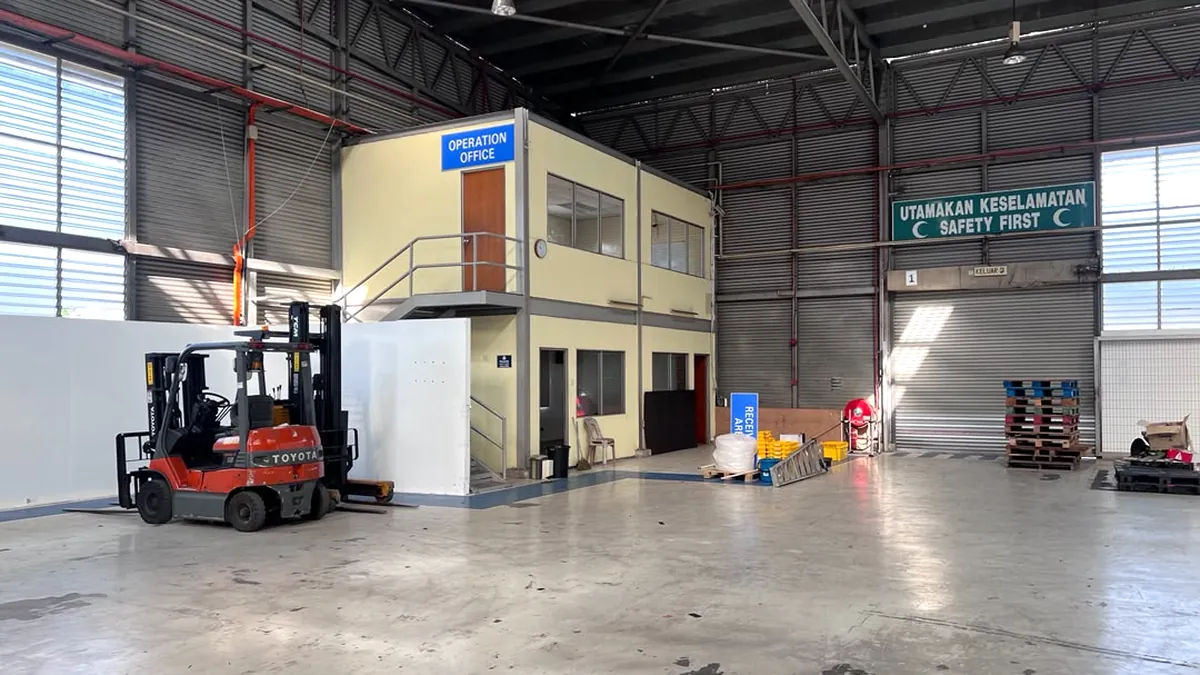
Consider what the movable property on an industrial premises actually is. Machines. Racking. Stock. A forklift. Finished goods waiting to go out. On an owner occupied factory those belong to the person who owes the money, which is tidy enough.
On a leased factory they belong to the tenant.
So a tenant can be paying rent on time every month, owing nothing to anybody, and still have enforcement arrive at their door over a bill that was never theirs to pay. Working out afterwards who owes what, and recovering it from a landlord who has already failed to pay a council, is a separate and much slower problem than having your line stopped.
If you are taking an industrial tenancy, this is a question to ask before signing and not after: show me a current assessment statement for the property. A landlord with nothing to hide produces it in a day. One who cannot, or will not, has told you something.
Who is liable, and who actually pays
These are two different questions and they get collapsed constantly.
Liability runs to the registered proprietor. The state looks to the holder of the land for quit rent. The council looks to the owner for assessment. That does not change because a tenancy says something else.
Who funds it is a matter of contract. Plenty of industrial tenancies, particularly longer ones and anything structured as a triple net arrangement, put both charges on the tenant. That is perfectly normal and perfectly enforceable between the two of them.
What it does not do is move the statutory liability. If the tenancy says the tenant pays and the tenant does not, the authority still proceeds against the owner and the property. The owner then has a claim against the tenant, which is a different process with a different timescale and a different likelihood of recovery.
For a buyer the practical version is short. Read what the tenancy says about outgoings, then verify independently whether the charges have actually been paid, because the agreement tells you who was supposed to and only the statements tell you who did.
On an empty building, both keep running
Neither charge pauses because nobody is using the building. Quit rent is owed because the land is held, not because it is occupied. Assessment is rated on what the property is worth or could let for, not on whether anyone is actually in it.
On a unit that has stood empty for years with an owner who stopped engaging, that accumulates quietly, and it is one of the reasons a long vacancy is worth asking questions about rather than treating as a discount. Some councils will consider a remission for a genuinely unoccupied property, but it is an application with conditions, not an automatic suspension, and the policy is the council's own.
Before you buy, or before you sign
- Get a current quit rent statement from the state land office for the state the land is in
- Get a current assessment statement from the local council for that area, covering both halves of the year
- Check which state you are in. Rates, due dates and whether parcel rent is in force all vary by state, and Selangor is not Johor
- On a strata industrial unit, establish whether you are paying parcel rent direct or whether the master lot quit rent is being covered through maintenance charges
- Read the tenancy on outgoings, then verify payment independently rather than taking the clause as evidence
- Ask when the property was last revalued for assessment. A revaluation can move the bill substantially without anything about the building changing
- Have the solicitors obtain and apportion both on completion. This is routine, but routine is not the same as automatic
What this page is, and what it is not
This is the shape of the two charges and the questions they raise on an industrial property. It is not a calculation, and it cannot be, because the rate, the basis of valuation and the due dates belong to a particular state and a particular council.
Anything turning on liability, on a tenancy clause, or on a notice that has already been served is a question for a solicitor, and quickly, because the timelines in both Acts run whether or not anybody has opened the envelope.
Related
- Empty is not a discount, it is a question, where arrears on a vacant building are one of the five reasons
- Leasehold or freehold, check the geran not the flyer, because quit rent is a function of holding the land
- Industrial, commercial or residential, and what your title actually permits
- Terrace, semi-D, detached, and what counts as industrial property
- Versi Bahasa Melayu: cukai tanah, cukai taksiran dan cukai pintu
Frequently asked questions
Is cukai taksiran quit rent or assessment?
Assessment. Cukai taksiran and cukai pintu are two names for the same charge, levied by your local council under the Local Government Act 1976 and based on the value of the property. Quit rent is the other one, called cukai tanah, and it is a land charge paid to the state land office under the National Land Code. If the bill came from a council it is assessment. If it came from the Pejabat Tanah it is quit rent.
Is cukai pintu the same as quit rent?
No, and they are not even collected by the same body. Cukai pintu is another name for cukai taksiran, the council assessment, usually billed twice a year. Quit rent, cukai tanah, is annual and goes to the state. People conflate them because both arrive once or twice a year looking like routine paperwork, but they sit under different Acts and the consequences of ignoring each are different.
Is cukai petak the same as quit rent?
Cukai petak is parcel rent, which is quit rent restructured for strata. Instead of one quit rent bill on the master lot, each parcel is billed separately by the land office for its own share. It applies only in states that have brought it into force and only to strata titles, so it rarely touches a landed industrial lot. If you hold an individual title to a factory, you pay cukai tanah, not cukai petak.
Who pays quit rent, the landlord or the tenant?
The registered proprietor is liable to the authority, so in a landlord and tenant arrangement that is the landlord. A tenancy agreement can shift who actually funds it, and on many industrial tenancies it does, but that is a contract between two private parties. It does not move the statutory liability. If the tenant agreed to pay and then does not, the state still pursues the owner, and the owner sues the tenant separately.
What happens if you do not pay quit rent in Malaysia?
Quit rent for a calendar year falls due at the start of that year and is treated as in arrears from 1 June. The state may then serve a notice under section 97 of the National Land Code, in Form 6A, demanding payment within three months. Paying the full sum demanded inside that window ends it. Ignoring it opens the door to forfeiture under section 100, after which the land reverts to the state. The sums are small. The consequence is not.
What happens if you do not pay assessment?
The council acts against the property and what is standing on it. Under section 148 of the Local Government Act 1976 it can issue a warrant of attachment and seize movable property on the premises. If that does not cover the arrears it can go to the Registrar of the High Court under section 151, and the property can be sold at public auction under section 149 if the arrears and costs are not settled. Courts have held the council must work through the attachment stage before moving to a sale.
Can a council seize a tenant's machinery for the landlord's unpaid assessment?
This is the question industrial tenants should ask and almost never do. A warrant of attachment under section 148 is executed against movable property found on the premises, and on a leased factory the movables on the premises are usually the tenant's: machines, racking, stock, forklifts. A tenant who pays rent faithfully can still find enforcement arriving over a bill that was never theirs. If you are taking a tenancy, ask the landlord for a current assessment statement before you sign, and keep asking.
Do unpaid quit rent and assessment pass to a new owner?
The arrears attach to the property, which is why they matter on anything that has been empty or neglected. In practice they are dealt with on completion, with the solicitors obtaining current statements from the land office and the council and apportioning the figures between seller and buyer. The mistake is treating that as automatic. Ask for both statements before you agree a price, not after.
How is assessment calculated on an industrial property?
Councils rate on either annual value, which is the estimated yearly rent the property could fetch, or improved value, depending on the council. A rate is then applied to that figure. For an industrial property this means the assessment follows what the building could let for, so a larger or better specified building carries a larger bill, and a revaluation can move it even though nothing about the building changed. The rate and the basis are the council's, so the only reliable figure is the one on the bill.
Where can I check quit rent and assessment on a property?
Quit rent from the state land office for the state the land sits in, and assessment from the local council for that area. Most states and the larger councils now have online enquiry by title or account number. For a purchase, do not rely on a portal screenshot or on what the seller says. Have your solicitor obtain formal statements from both, because those are the figures that will be apportioned on completion.
References
- Laws of Malaysia, Attorney General's Chambers. The National Land Code governs quit rent, including the section 97 notice in Form 6A and the forfeiture provisions at section 100. The Local Government Act 1976 governs assessment, including the warrant of attachment at section 148 and the sale provisions at sections 149 and 151. As with the other articles on this site, I was not able to open these from my own machine, so I am sending you to the source rather than quoting it as read
- Your state land office, the Pejabat Tanah dan Galian for the state the land sits in, for quit rent rates, due dates and a current statement. Rates and procedure are set by each state and differ between them
- Your local council, for the assessment rate, the basis of valuation used and a current statement. Whether a council rates on annual value or improved value, and what remission is available on an unoccupied property, is the council's own policy
- Board of Valuers, Appraisers, Estate Agents and Property Managers, for the register of licensed valuers, if the question is whether an assessment valuation is defensible
Note on this article. It explains, in general terms and as at 14 October 2026, the difference between quit rent and assessment on an industrial property in Peninsular Malaysia and the questions each raises. Rates, due dates, valuation bases and remission policy are set by individual states and councils and are not reproduced here. No property, owner, tenant or figure is described. I am not a solicitor, a licensed valuer or a tax agent, and nothing on this page is legal, valuation, tax or financial advice. Liability, tenancy obligations and any notice already served are questions for a solicitor.