Three years is the line. Under the National Land Code, a letting for a term not exceeding three years is a tenancy exempt from registration. A term exceeding three years is a lease, and it is registrable on the title using the statutory form. The word printed on the cover of your document decides nothing. The term decides everything.
A tenancy is a contract. A registered lease is an interest in land. That difference is invisible for as long as the landlord stays the same, and it becomes the whole question on the day the building is sold.
The stamp duty scale on lettings changed with effect from 1 January 2025, and the old RM2,400 deduction from annual rent went with it. Most of the templates and calculators circulating online still print the old figures.
Rent on commercial and industrial premises came into the service tax net on 1 July 2025. Whether it lands on your invoice depends on the landlord's registration status rather than on the building.
And if you are holding an unstamped agreement signed between 2023 and 2025, there is a window closing on 31 December 2026 in which the late stamping penalty is remitted automatically once the duty is paid. That is the voluntary disclosure programme, and it is covered below. Nothing here is legal or tax advice, and the agreement in front of you is the only one that matters.
The line is three years, and almost nobody signs across it by accident
Ask around an industrial estate what the difference is between a tenancy and a lease and you will mostly get answers about length, or formality, or whether a solicitor drew it up. None of those is the test.
The test is in the National Land Code. A letting for a term not exceeding three years is a tenancy exempt from registration, which is the phrase section 213 uses. A letting for a term exceeding three years is a lease, granted under section 221, and a lease is registrable: it goes onto the register document of title and it stays there until it expires or is removed.
So the document you are being asked to sign is not a tenancy because it says Tenancy Agreement at the top. It is a tenancy because the term is three years or less. Call the same two year letting a Lease Agreement and it remains a tenancy exempt from registration, and call a seven year letting a Tenancy Agreement and it remains a lease that ought to be registered.
This is also why the three year term is so common on industrial property that people assume it is the law. It is not. It is the longest term you can grant without crossing into registration, and landlords, agents and template drafters have been drifting towards it for decades for exactly that reason. The usual shape is three years with an option to renew for a further three, which gets a tenant to six years of occupation without a single registrable instrument ever existing.
That arrangement is lawful and it is everywhere. It is also where most of the risk in this article lives.
Lease means three different things here, and only one of them is this
Before going further it is worth clearing out a confusion that wastes a lot of people's time, because the English word and the Malay word are each doing three jobs.
A lease in the sense used in this article is a letting of more than three years, granted by a proprietor to an occupier under section 221 and registrable on the title. That is the subject here.
Leasehold tenure is a different thing entirely. When somebody says a factory is leasehold, or tanah pajakan, or asks what happens when the 99 years run out, they are talking about how the state granted the land in the first place, not about an occupier's letting. A building can sit on leasehold land and be let on a three year tenancy, and those two facts have nothing to do with each other. That subject has its own article, and if the expiry date on a title is what you came here for, read that one instead.
And operating or finance leasing of equipment is a third thing again, which is where most of the search results for the word come from. Forklifts, vehicles, machines. Nothing in this article applies to it.
Three meanings, one word. If a conversation about a factory keeps going sideways, this is usually why, and the fastest repair is to ask whether the person means the title or the occupation.
What registration actually buys, and it is one thing
Here is the question that separates the two, and it has nothing to do with how serious the document looks.
The landlord sells the building in year two of your three year term. What happens to you?
If what you hold is a registered lease, the answer is short. The lease is endorsed on the register document of title. Anyone who searches the title sees it. A buyer takes the land with your lease on it and cannot require you to leave before it expires. That is what registration is for. It is not a formality, it is the mechanism by which your right stops being a private arrangement and becomes something the register tells the world about.
If what you hold is an unregistered tenancy, the answer is longer and it is not entirely in your hands. Your tenancy is a contract with the person who was the owner. A purchaser who bought in good faith, for value, and without notice of your tenancy is in a strong position, and the tenant's remedy in that situation is generally a claim against the former landlord for damages rather than a right to remain in the unit. If the buyer did know, whether from the sale agreement, from a disclosed tenancy schedule, from the search, or simply from the fact that you were visibly trading there, the position changes, and a tenant may be able to resist being moved on. That is a question of evidence, and evidence is exactly what you do not want to be arguing about while a landlord's solicitor writes to you.
So the honest summary is this. An unregistered tenancy is not weak. It is unrecorded. For as long as nothing happens to the ownership of the building, the distinction is academic. The day something does happen to the ownership of the building, it is the only thing that matters.
For most industrial tenants, most of the time, a three year tenancy is the right instrument and there is nothing to fix. The ones who should think harder are the tenants spending serious money on the inside of a unit they do not own.
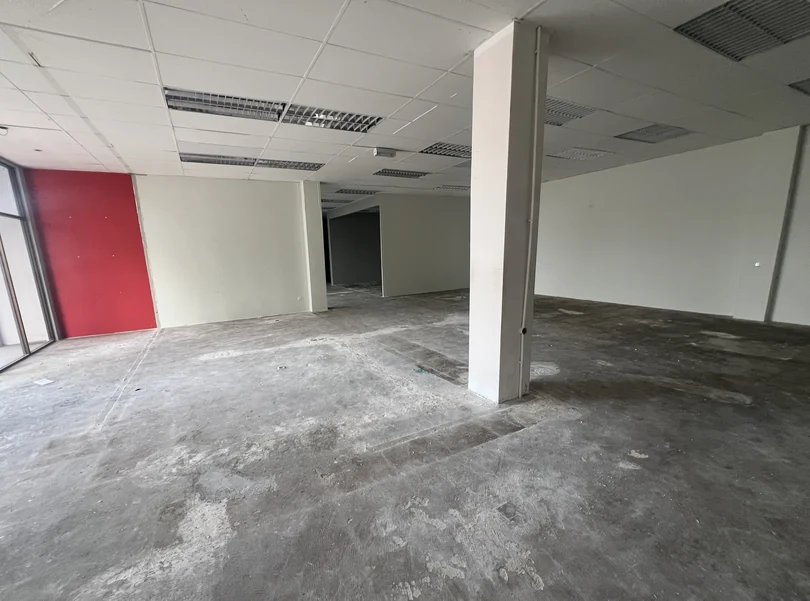
The fit out test, which is the only test that matters here
Industrial fit out is not cheap and it is not portable. Racking anchored into the slab. A compressed air ring main. Three phase distribution to machine positions. A cold room. An extraction system through the roof. Epoxy to the floor. A mezzanine. None of that comes with you.
So run the arithmetic in the direction nobody runs it. Divide what you are about to spend on the inside of the unit by the number of years you are certain of. Not the years you hope for, and not the renewal option, which is a right to ask. The years you are certain of.
If the answer is uncomfortable, you have three honest choices and only three.
Spend less. Fit out to the term rather than to the ambition. This is the choice most tenants should make and the one most often skipped, because the fit out is designed before the term is negotiated rather than after.
Get a longer term and register it. A lease exceeding three years, registered, is the instrument that matches a large capital spend. It costs more in duty and it costs a registration process, and it is the thing that actually protects the money.
Or keep the three year tenancy and protect it at the register. Which brings us to the half step almost nobody uses.
Section 316, the half step between nothing and a lease
The National Land Code contains a provision most industrial tenants have never heard of. Section 316 allows a person claiming to be entitled to the benefit of a tenancy exempt from registration to apply to the registrar for an endorsement of that claim on the register document of title.
Read what it does and does not do, because both halves matter.
It does not register your tenancy. A tenancy exempt from registration is still exempt from registration. It does not become a lease, it does not acquire a lease's characteristics, and it does not run for longer than it ran before.
What it does is put the claim where a search will find it. After that, a buyer cannot credibly say they had no notice of you. The whole bona fide purchaser without notice argument, which is the argument that costs tenants their occupation, becomes much harder to run against a claim that was sitting on the title the whole time.
It is not free, it is not automatic, and the landlord may well have something to say about it, which is itself informative. A landlord who objects strongly to an endorsement on a three year tenancy has told you something about what they expect to do with the building.
Treat it as a question to raise with a solicitor at the point where the fit out budget stops being trivial. The cost of asking is one conversation. The cost of not asking is the fit out.
The stamp duty scale changed, and a lot of the internet has not noticed
Duty on a letting is charged under Item 49 of the First Schedule to the Stamp Act 1949. The structure has been the same for a long time and it is worth understanding before any number is attached to it, because the structure is what people get wrong, not the arithmetic.
The duty is charged on the rent, not on the value of the building. You take the annual rent, or the average annual rent where it varies across the term, and the duty is levied in blocks of RM250 or part of RM250. The rate per block rises with the length of the term. A one year letting attracts the lowest rate in the table. Longer terms attract progressively higher ones. There is a separate head of charge where a lump sum, a fine or a premium is paid in addition to rent.
Two things changed with effect from 1 January 2025, and both of them are still being got wrong in public.
The scale was revised upwards for the longer bands. The rate for a letting of a year or less was left where it was. The bands above it moved.
The exemption for annual rent of RM2,400 or less was removed. Under the old treatment you deducted RM2,400 from the annual rent before applying the scale, and a letting below that figure paid nothing. That deduction is gone. Duty is now computed on the full annual rent.
On a residential letting the removal of RM2,400 is a small number. On industrial rent it is noise. The part that bites on a factory unit is the term band, because industrial rents are large enough that a change in the rate per RM250 compounds quickly, and because the band is chosen by the term you sign rather than by anything you can negotiate afterwards.
Which produces a planning point worth putting plainly. If you are weighing a three year tenancy against a longer registrable lease, the duty is not a rounding error and it should be priced before the decision, not discovered after it. A longer term costs more duty per RM250 and it costs a registration process on top. Whether that is worth paying is exactly the fit out question above, and it is a question with a number attached rather than a matter of preference.
I am deliberately not printing the rate table here. The figures circulating online are a mixture of the current scale and the pre 2025 one, often on the same page, and a stamp duty number quoted from an article is worth nothing against an assessment. Take it from LHDN or from the e stamping system itself, which is linked below, and take it on the day you need it.
Thirty days, and why an unstamped agreement is the wrong thing to be holding
A letting executed in Malaysia must be stamped within 30 days of execution. If it was executed outside Malaysia, within 30 days of first being received here.
LHDN publishes the late stamping penalty, and these figures also took effect on 1 January 2025. Stamped not later than three months after the deadline: RM50 or 10 per cent of the deficient duty, whichever is higher. After that: RM100 or 20 per cent of the deficient duty, whichever is higher.
Those are the penalties, and on a large industrial rent the percentage is the part that matters rather than the floor.
But the penalty is not the real reason to stamp on time. An unstamped instrument is not ordinarily receivable in evidence. Picture the moment you would actually need the agreement. There is a dispute about reinstatement, or about a rent review, or about whether the landlord was obliged to repair the roof. The document that settles it is the tenancy. If it was never stamped, the document you want to rely on is the one you cannot readily put in front of the court until it has been stamped and the penalty paid, which is a delay and a cost arriving at the single worst moment.
One more change worth knowing about if you are signing anything from here on. Stamp duty is moving to self assessment, and rental and lease instruments are in the first phase. Under self assessment the person liable works out the duty and submits it, rather than having it assessed for them, and the Inland Revenue Board has powers to raise an assessment later where an instrument was under assessed. In plain terms, the burden of getting the number right has moved onto you, and getting it wrong now has a tail on it.
The penalty can be nil until 31 December 2026
This is the most useful paragraph on the page and it has a date on it, so read it while it is still true.
There is a Special Voluntary Disclosure Programme for stamp duty, PKPS in Malay, under which the late stamping penalty under section 47A is remitted in full, automatically, once the duty is paid. No appeal letter, no application for remission, no argument about whether your reason was good enough. You stamp it, you pay the duty, the penalty falls away.
The terms, as published.
It covers instruments executed between 1 January 2023 and 31 December 2025 that were never submitted for stamping, or that were submitted but never paid. A tenancy signed in 2022 does not qualify. One signed in 2026 does not qualify either, because that one is simply late in the ordinary way.
It ran from 1 January 2026 and was extended on 26 June 2026 to 31 December 2026. As this is written there are about ten weeks of it left.
Both the stamping and the payment have to be completed inside the window. Submitting in late December and paying in January is the failure mode the guidance warns about, because the assessment has to issue and be paid before the programme closes. Submit early enough that the notice comes back in time.
Instruments regularised under it are not subject to audit. Instruments you did not disclose still are. Cases involving fraud are excluded.
Who this is for, in the industrial context: anyone sitting on a tenancy from the 2023 to 2025 stretch that was signed, filed and never stamped, which is more common than people admit, particularly on renewals and on short extensions that nobody treated as a fresh instrument. If that is you, the cost of acting now is the duty you always owed. The cost of waiting past 31 December is the duty plus the penalty, and the audit exposure that the programme would have closed off.
Who pays, how many copies, and where it is done now
Three practical things that are asked constantly and answered inconsistently.
Who pays the duty. The Act does not allocate it to either party. By long convention in Malaysia the tenant pays the stamp duty on a tenancy, and on an industrial letting the agreement usually says so expressly. Because it is convention rather than law, it is negotiable, and on a large unit in a soft market it does get negotiated. Read your own agreement before assuming either way.
How many copies. The duty described above is charged on the original. Duplicate or counterpart copies are charged separately at a small flat amount per copy, which is the thing people are asking about when they ask about the RM10 stamp. It is a different charge from the duty on the rent and it is not a substitute for it. A counterpart stamped for a few ringgit does not mean the instrument has been stamped.
Where it is done. Stamping is now an online process through the Inland Revenue Board's e stamping system, reached through MyTax, and the previous portal was retired at the end of 2025. Under the voluntary disclosure programme in particular, submission has to be online, and manual submission is not accepted.
The downloaded template is the wrong instrument, and here is the specific reason
More people search for a tenancy agreement in Word format than search for anything else in this subject. It is worth saying plainly why that is a bad starting point for a factory unit, and the reason is not that templates are badly drafted.
It is that a generic letting template is written for a space, and an industrial unit is not a space. It is a structure with a load capacity, an incoming supply with a kVA figure, a roof with an age, a certificate with an expiry date, a category of land use on a title, and a floor somebody is going to anchor racking into.
Five things a general template will not contain, and all five are expensive.
A reinstatement clause written for industrial fit out, which has to deal with anchors, penetrations, services and anything that took an approval to install. A split of the roof, structure and drainage, which is where the money is on an older shed. A permitted use clause tied to the express conditions on the title, rather than to a trade description. Anything about the Fire Certificate, which is annual where it applies and which your own alterations can affect. And a service tax clause, because most templates in circulation were written before July 2025.
Use a template to understand the shape of the document if you like. Do not sign one on a unit you are about to spend money inside.
Service tax on rent, which arrived in the middle of a lot of existing tenancies
Rental and leasing became a taxable service when the service tax was expanded with effect from 1 July 2025, under the group covering rental and leasing services. Commercial and industrial premises are within scope. Housing accommodation is outside it, which is why most people's first encounter with this is a landlord's letter rather than anything they had read about.
Four practical points for an industrial tenant.
It is the landlord's registration that decides it, not your building. A provider becomes liable to register once taxable turnover over a rolling twelve month period reaches the threshold, which was raised to RM1 million. A small landlord with one unit is in a different position from a company letting out twenty. Ask which one yours is, and ask in writing.
Utility recharges are treated as part of the service. Published guidance treats a landlord's recharge of utilities to the tenant as taxable even where it is recharged at cost. If your tenancy bills you for water or power through the landlord rather than through your own account, that is within the same conversation.
There are exemptions, and they have to be claimed. There is a framework for smaller tenants, and relief for subletting between registered persons in the same category, and these come with conditions and a registration step rather than applying automatically. Something you qualify for and never applied for is not an exemption, it is an overpayment.
Read who carries it in the rent clause. Many older agreements say the rent is a fixed sum and are silent on tax, and many newer ones say the rent is exclusive of any tax now or later imposed, which places it on the tenant. These are not the same sentence and they do not produce the same invoice. There was also transitional relief for contracts without a price revision clause, which is a reason to know what your own agreement says rather than to assume the worst or the best.
The rate has moved since the expansion started. I am not quoting a current figure for the same reason I am not quoting the duty scale. Confirm the rate, the threshold and the exemptions with the Royal Malaysian Customs Department, and have the landlord put their registration status in writing before the first invoice arrives rather than after.
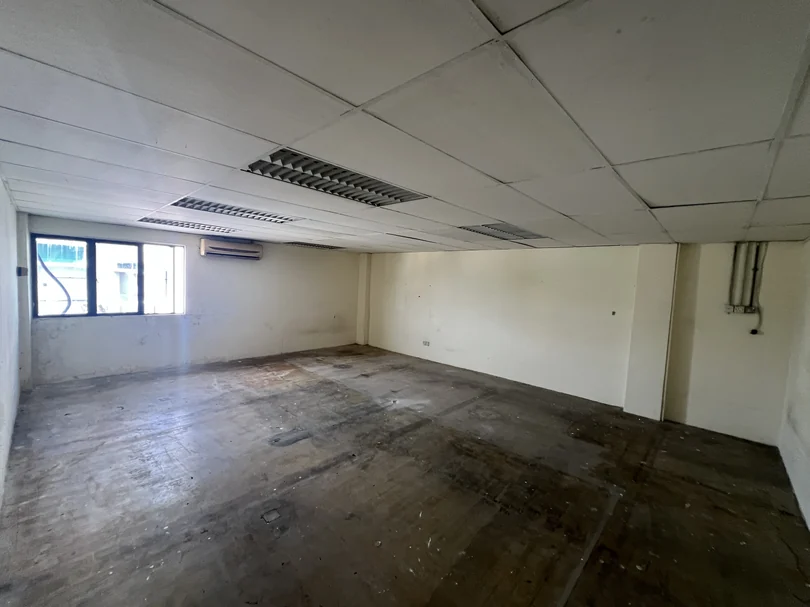
The clauses an industrial tenant should not sign without reading
What follows is not a template and it is not drafting. It is the list of places where industrial tenancies in Malaysia actually go wrong, in the order I would read them.
1. The term, and what the renewal option really is
Read the term and then read the renewal clause beside it. An option to renew at a rent to be agreed is not an option, it is a right to have a conversation. If the renewal matters to your business case, the clause needs a mechanism: a stated rent, a stated cap, an index, or a valuation process with a named way of appointing the valuer. If it has none of those, treat the certain term as the term and price your fit out against that.
2. Reinstatement, and what you are handing back
The clause is usually one sentence and it is one of the most expensive sentences in the document. Reinstate to original condition can mean strip out everything you installed, including things the landlord asked for, including things that improved the building, and including the mezzanine that took planning approval. Fair wear and tear excepted is doing a lot of work in a factory and means something different on an epoxy floor from what it means in an office.
Two fixes, both cheap at the start and impossible later. Agree a schedule of condition with photographs at the beginning, attached to the agreement. And agree in writing, at the point of each approval for alterations, whether that particular item is to be removed or left. Deal with it when the landlord is saying yes, not when they are saying goodbye.
3. Permitted use, and whether the title agrees with it
The tenancy says what you may use the unit for. The title says what the land may be used for. These are different documents, written by different people, and they do not automatically agree.
A permitted use clause that allows your trade does not override an express condition on the title that does not. If your process is at all specific, a coating line, food production, anything with an effluent or an emission, the permitted use clause is not the end of the enquiry. The express conditions on the title are, and they are narrower than the category of land use above them. That is covered properly in the article on title searches, and it is the first thing I would check before negotiating anything else.
4. Outgoings, and the one that reaches your machines
Quit rent and assessment are the landlord's liability as registered proprietor. A tenancy can and very often does make the tenant fund them. Funding is not liability, and the authorities pursue the liable party.
The one to understand is assessment. The Local Government Act 1976 allows a council to attach movable property found on the premises for assessment arrears, and on a let factory the movable property on the premises is yours. Machines, racking, stock, the forklift. You can be paying rent on time, owing nobody anything, and find enforcement arriving over a bill that was never yours. Ask for a current assessment statement and the latest quit rent receipt before you sign. A landlord with nothing to hide produces both in a day. That is set out in full in the article on quit rent and assessment.
5. Repair, and the difference between the roof and the roof leak
On industrial property the structure and the roof are the expensive items and they are the ones most often left ambiguous. Decide, in words, who holds the roof, the structure, the external envelope, the drainage and the hardstanding. A clause that puts the tenant in repair of the whole unit, read literally, can include the roof sheets on a building that was already twenty years old when you arrived.
Where a landlord retains the roof, there is usually a response time worth having in the clause, because a leak over a production line is not the same problem as a leak over a storeroom.
6. The certificates, and whose job they are
A Fire Certificate is annual where it is required, and it sits with the building. The CCC sits with the building. Alterations you make can affect both. Write down who applies, who pays, who renews, and what happens if a renewal is refused because of something the other party did. A tenant who installs racking that changes the fire engineering, and a landlord who never mentions that the certificate is due, are both common and neither is usually addressed in the document.
7. Alterations, and the consent you will need twice
Most agreements require the landlord's written consent to alterations. Two things are worth adding. First, that consent is not to be unreasonably withheld or delayed, because a fit out programme is a sequence and a silent landlord stops it. Second, that landlord's consent is not a building approval. A mezzanine, a structural opening, an extension to the envelope, these may need the local authority as well, and a landlord's letter does not substitute for that. The article on unapproved extensions covers what happens when that step is skipped.
8. Assignment and subletting
Industrial tenants restructure. A group reorganisation that moves the operating company can breach an assignment clause without anybody intending to assign anything. Read whether a change of control is caught, and whether sharing occupation with a group company counts as parting with possession.
9. Deposit, set off, and what the deposit is for
Note how many months are held, what it can be applied against, whether it can be applied against reinstatement, and when it is returnable. Then note whether you are entitled to set off anything at all against rent. In most industrial agreements you are not, which means a landlord's failure to repair does not entitle you to stop paying, however fair that would feel.
10. Re-entry, forfeiture, and the notice before it
Read the default clause and count the days. How long after a missed payment, what notice has to be given, and whether there is a cure period. Then read it again for the non payment defaults, because breaching a use clause or an insurance obligation can sit in the same paragraph as not paying rent and carry the same consequence.
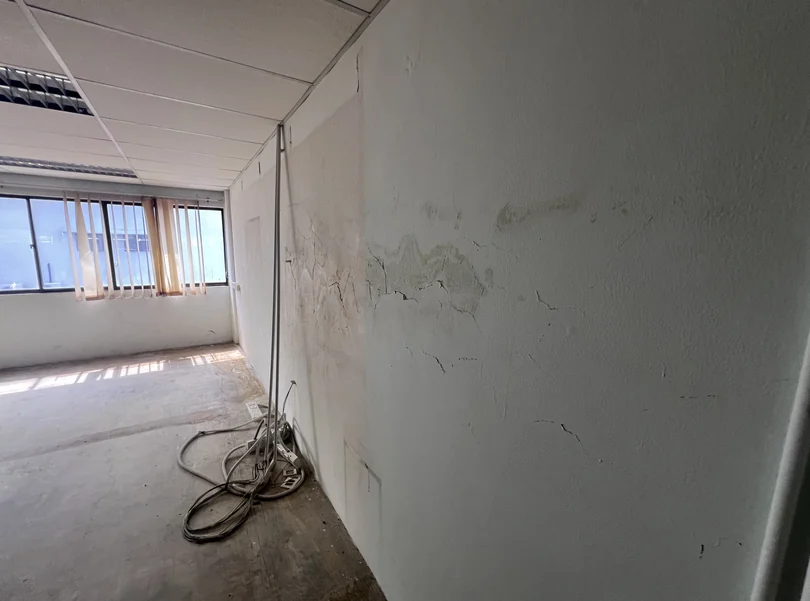
If rent goes unpaid, what the landlord can actually do
This is worth knowing from both sides, because tenants routinely overestimate how slow it is and landlords routinely overestimate what they are allowed to do themselves.
What a landlord may not do is help themselves. Recovering possession generally requires an order of the court. Changing the locks, chaining the shutter, cutting the power, removing the tenant's goods: these are the sort of self help that produces a claim against the landlord rather than a result for them.
What a landlord may do is distrain. Under the Distress Act 1951 a landlord applies to a judge or registrar for a warrant of distress for rent in arrears, limited to twelve completed months of the tenancy before the application. A bailiff then attends, may enter the premises, inventories and values goods there up to the amount owed, and notifies the tenant. If the tenant does not pay or obtain an order restraining the sale within the short window the Act allows, the goods are sold at public auction, with the proceeds going first to the bailiff's costs, then to the arrears, and any balance back to the tenant.
Certain goods are exempt, including tools and implements in defined circumstances and goods the tenant holds for dealing in the ordinary course of trade. Those exemptions are narrower than they sound and they are not a plan.
The practical reading for an industrial tenant is simple. Rent arrears on a factory unit are not a slow problem. The route exists, it is a court process rather than a landlord's whim, and at the end of it a bailiff is standing in your unit next to your machines. If cash flow is going wrong, the conversation with the landlord is worth having early, in writing, before the arrears reach the point where somebody reaches for the Act.
Before you sign, in order
Six things, and five of them are documents you can ask for before you have committed to anything.
One. A title search. Who the registered proprietor is, whether the person offering you the unit is that proprietor or has their authority, what the category and express conditions permit, and what is already endorsed on the title. A lease or a charge already registered against the land is your business, because both can outlive the person you are negotiating with.
Two. A current assessment statement and the latest quit rent receipt. For the reason in clause four above. The movable property the council can reach is yours.
Three. The certificates. The CCC or CF for the building, and the Fire Certificate where one is required, with its expiry date.
Four. The landlord's service tax position, in writing. Registered or not, and what the rent clause says about tax imposed later.
Five. A schedule of condition with photographs, agreed and attached before you take occupation. This is the cheapest insurance in the entire transaction and it takes an afternoon.
Six. The fit out arithmetic. Capital spend divided by years you are certain of. If that number does not work, the answer is a different term or a smaller fit out, and it is better to know in week one than in year three.

What this page is, and what it is not
This is the structure of letting industrial property in Peninsular Malaysia and the places where that structure usually catches people. It is not drafting, it is not a template, and it is not a view on any particular agreement.
Three warnings in particular. Rates move. The stamp duty scale changed on 1 January 2025 and the service tax position on rent has changed more than once since July 2025, which is why no rate is printed on this page. Sabah and Sarawak have their own land legislation, and the National Land Code sections cited here are Peninsular Malaysia. And the words in your agreement beat the words on this page. Whether your renewal option is enforceable, whether your reinstatement obligation covers a particular item, and whether an endorsement under section 316 is available and worth making, are questions for a solicitor reading your document, not questions a general article can answer.
Related
- The flyer is marketing, the geran is the deal, for the search that tells you who you are actually dealing with and what the title permits
- One tax is on the land, the other is on the building, which sets out the movable property point in full
- Industrial, commercial or residential, and what your title actually permits, for the gap between a permitted use clause and an express condition
- The extension is built, the approval is not, for what a landlord's consent does not cover
- CF or CCC, and the fire certificate that is separate from both
- What to look at before the agreement, not after
- Versi Bahasa Melayu: sewa atau pajakan unit kilang
Frequently asked questions
What is the difference between a tenancy and a lease in Malaysia?
The term decides it, not the wording on the cover. Under the National Land Code a letting for a term not exceeding three years is a tenancy exempt from registration, defined at section 213. A term exceeding three years is a lease, granted under section 221, and it is registrable on the title. That one line does a great deal of work. A tenancy is a contract between you and the landlord. A registered lease is an interest in the land itself, recorded on the register document of title, which is why it behaves differently when the building changes hands.
Does a tenancy of three years or less have to be registered?
No. That is what exempt from registration means. It is not a loophole and it is not second class, it is the design. A three year tenancy is valid, enforceable and completely normal, and the overwhelming majority of industrial lettings in Malaysia are exactly that. What it does not do is appear on the title by itself, which matters only in the situations where the title is what somebody is reading, and the main one of those is a sale of the building.
What is Form 15A used for?
Form 15A is the statutory form used to register a lease of alienated land under the National Land Code. It is presented at the land office or registry with the duty paid and the registration fee, and once registered the lease is endorsed on the register document of title. A tenancy of three years or less does not use Form 15A, because it is not registered at all. The separate route for a tenancy is an endorsement of claim under section 316, which is a different thing and does a smaller job.
What happens to my tenancy if the landlord sells the factory?
It depends on what the buyer knew and on what is on the title. A registered lease is endorsed on the register, so a buyer takes the land with the lease on it and cannot ask the tenant to leave before it expires. An unregistered tenancy is a contract with the former owner. If the buyer purchased in good faith, for value, without notice of it, the tenant's remedy is generally against the old landlord in damages rather than a right to stay. If the buyer knew of the tenancy, the position is different again. This is one of the few places where the paperwork and the practical outcome genuinely diverge, and it is worth a solicitor's view before a long fit out.
What is section 316 of the National Land Code?
Section 316 lets a person claiming to be entitled to the benefit of a tenancy exempt from registration apply to the registrar for an endorsement of that claim on the register document of title. It is not registration of the tenancy and it does not convert a tenancy into a lease. What it does is put the claim where anyone searching the title will see it, so a prospective buyer can no longer say they had no notice of you. For a tenant who is spending real money fitting out a unit on a three year term, it is the cheap half step between doing nothing and negotiating a registrable lease.
How much is stamp duty on a factory tenancy agreement in Malaysia?
The duty is charged under Item 49 of the First Schedule to the Stamp Act 1949, on the annual or average annual rent, in blocks of RM250 or part of RM250, at a rate that rises with the term. The scale was revised with effect from 1 January 2025 and the old RM2,400 deduction from annual rent was removed at the same time. A very large number of templates, blog posts and online calculators still print the pre 2025 figures, which is the single most common reason a tenancy comes back under assessed. Take the current rate from LHDN or from the e stamping system itself rather than from a calculator you found, and remember that the duty is on the rent for the whole term, so the band you fall into is decided by the term you sign.
When must a tenancy agreement be stamped and what is the penalty if it is late?
Within 30 days of execution if it was executed in Malaysia, or within 30 days of first receipt in Malaysia if it was executed abroad. LHDN publishes the late stamping penalty as RM50 or 10 per cent of the deficient duty, whichever is higher, where the instrument is stamped not later than three months after the deadline, and RM100 or 20 per cent of the deficient duty, whichever is higher, after that. Those penalty figures took effect on 1 January 2025. The practical consequence of leaving it is larger than the penalty: an unstamped instrument is not ordinarily receivable in evidence, so the agreement you would be relying on in a dispute is the one you cannot easily put in front of the court until it has been stamped and the penalty paid.
Is service tax charged on factory or warehouse rent in Malaysia?
Rental and leasing became a taxable service under Group K when the service tax was expanded with effect from 1 July 2025, and commercial and industrial premises are within scope. Housing accommodation is outside it. Whether tax is actually charged on your rent turns on the landlord, not on the building: the provider registers once taxable turnover over a rolling twelve months reaches the threshold, which was raised to RM1 million. Published guidance also treats a landlord's recharge of utilities as part of the taxable service, and provides for exemptions that have to be applied for rather than assumed, including a route for smaller tenants. The rate has moved since the expansion began. Ask the landlord for their registration status and read the rent clause to see who carries the tax, and confirm the current rate with the Royal Malaysian Customs Department rather than with a tenancy template.
Can my landlord lock me out or seize my machines if I fall behind on rent?
Not on their own authority. Recovery of possession generally requires an order of the court, and changing the locks or putting a chain on the shutter is the sort of self help that produces a claim against the landlord rather than a solution for them. There is a statutory route, which is a warrant of distress under the Distress Act 1951, applied for from a judge or registrar, under which a bailiff may enter, inventory and ultimately auction goods on the premises to cover rent in arrears, limited to twelve completed months. Certain categories of goods are exempt. The point for a tenant is that the process is real, it is quick once it starts, and it reaches movable property sitting in your unit, so rent arrears on an industrial tenancy are not a slow problem.
Who pays quit rent and assessment on a rented factory?
Liability sits with the registered proprietor. A tenancy can decide who funds the cost, and on industrial property it very often puts both on the tenant, but it cannot move who the authority is entitled to pursue. That distinction has teeth on assessment in particular, because the Local Government Act 1976 allows a council to attach movable property found on the premises for assessment arrears, and on a let factory the movable property on the premises belongs to the tenant. So ask for a current assessment statement and the latest quit rent receipt before signing, not after.
Does a tenancy agreement have to be stamped in Malaysia, and is it valid if it is not?
It has to be stamped, and it is still valid if it is not. Those two statements sit together and the distinction matters. An unstamped tenancy is not void, and the parties are still bound by what they agreed. What section 52 of the Stamp Act 1949 does is make an unstamped instrument inadmissible in evidence while it remains unstamped. So the agreement exists, it binds you, and on the day you need a court to look at it you cannot put it in until the duty and any penalty have been paid. That is why people discover the problem at the worst possible moment, in the middle of a dispute, rather than when they signed.
Can the late stamping penalty be waived?
Right now, yes, for a defined set of instruments. The Special Voluntary Disclosure Programme for stamp duty, PKPS, remits the section 47A late stamping penalty in full and automatically once the duty is paid, with no appeal letter required. It covers instruments executed between 1 January 2023 and 31 December 2025 that were never stamped or never paid. It opened on 1 January 2026 and was extended on 26 June 2026 to run to 31 December 2026, and both the stamping and the payment have to be completed inside that window. Instruments regularised under it are not subject to audit, and fraud cases are excluded. Once it closes the ordinary penalty applies again, so this is a dated answer and worth confirming with LHDN on the day.
Who pays the stamp duty on a tenancy agreement, the landlord or the tenant?
The Stamp Act does not allocate it. By long convention in Malaysia the tenant pays the duty on a tenancy, and most industrial tenancy agreements say so expressly. Because it is convention rather than statute, it is a negotiable term like any other, and it does get negotiated on larger units. The practical point is to read what your own agreement says rather than to assume, and to remember that whoever has agreed to pay it, the instrument still has to be stamped within 30 days of execution.
What is the RM10 stamp people talk about on a tenancy agreement?
That is the separate flat charge on a duplicate or counterpart copy, not the duty on the rent. The duty described elsewhere on this page is charged on the original instrument by reference to the annual rent and the length of the term. Copies beyond that are charged a small flat amount each. People conflate the two constantly, and the consequence is believing an agreement has been stamped when only a counterpart was. Confirm both figures through LHDN e stamping rather than from a template.
Can I use a downloaded Word template for a factory tenancy?
You can, and it is a poor idea on an industrial unit, for a specific reason rather than a general one. A generic letting template is written for a space. A factory unit is a structure with a floor loading, an incoming supply, a roof with an age, a Fire Certificate where one applies, and a category of land use on the title. A general template will not have a reinstatement clause written for industrial fit out, will not split the roof and structure, will not tie permitted use to the express conditions on the title, will say nothing about the Fire Certificate, and if it predates July 2025 will say nothing about service tax on rent. Use one to understand the shape of the document. Do not sign one on a unit you are about to spend money inside.
References
- Laws of Malaysia, Attorney General's Chambers. The National Land Code for section 213, the definition of a tenancy exempt from registration, section 221, the grant of a lease, and section 316, endorsement of a claim to the benefit of a tenancy. Also the Stamp Act 1949 and its First Schedule, the Distress Act 1951 and the Specific Relief Act 1950. As with the other articles on this site, I was not able to open these from my own machine, so I am sending you to the source rather than quoting them as read
- The Malaysian Bar, on the difference between a lease and a tenancy, which sets out the three year line, the effect of registration, and the position of an unregistered tenancy against a purchaser with and without notice. The three year threshold, the section 213 definition and the section 316 route in this article are taken from there
- Lembaga Hasil Dalam Negeri, stamp duty penalty page, for the 30 day stamping deadline and the late stamping penalties quoted here, which that page records as taking effect on 1 January 2025. This is the source for the only ringgit figures printed in this article
- LHDN e stamping, for the current Item 49 rates and for stamping itself. Take the rate here rather than from any article, including this one. Stamping is submitted online through this system, reached from MyTax
- BDO Malaysia, on the extension of the stamp duty voluntary disclosure programme, and The Star, 27 June 2026, reporting the extension to 31 December. These are the source for the programme dates used above: announced for 1 January to 30 June 2026, extended on 26 June 2026 to 31 December 2026, covering instruments executed between 1 January 2023 and 31 December 2025
- KPMG Malaysia, on penalty remission under the voluntary disclosure programme, for the conditions: online submission only, duty and payment both inside the window, audit protection for regularised instruments, fraud excluded
- Richard Wee Chambers, on the stamp duty amendments in the Finance Act 2024, for the revision of the Item 49(a) scale with effect from 1 January 2025, the removal of the RM2,400 exemption, and the phased move to self assessment with rentals and leases in the first phase
- Royal Malaysian Customs Department, MySST, for the service tax on rental and leasing services, the registration threshold, the published guide and the exemption routes. The rate has changed since the expansion took effect on 1 July 2025, so take it from here
- Skrine, on relief for the distressed landlord, for the warrant of distress procedure under the Distress Act 1951, the twelve month limit, the categories of exempt goods, and the requirement for a court order before recovering possession
- A solicitor practising in the state concerned, for the agreement itself, for whether an endorsement under section 316 is available and worth making, and for anything turning on the wording of a renewal, reinstatement or default clause
Note on this article. It explains, in general terms and as at 19 October 2026, how letting industrial property works in Peninsular Malaysia and where the structure commonly catches tenants. No stamp duty rate and no service tax rate is printed here, deliberately. The Item 49 scale was revised with effect from 1 January 2025 and the service tax position on rent has moved since 1 July 2025, and a figure quoted second hand is worth nothing against an assessment. The voluntary disclosure programme described here is dated and it closes on 31 December 2026, on the published position at the time of writing. If you are reading this after that date, treat that section as history and confirm the current position with LHDN. The only ringgit figures on this page are the late stamping penalties, taken from the Inland Revenue Board's own penalty page. Sabah and Sarawak have their own land legislation and the sections cited are Peninsular Malaysia. The photographs are my own, taken on a visit to a let unit standing empty between tenancies, and are cropped so that no building, business, person or vehicle is identifiable. No property, lot, landlord, tenant or agreement is described. I am not a solicitor, a tax agent or a licensed valuer, and nothing on this page is legal, tax, financial or valuation advice.