The unit is only half the question. A shop lot can have the right frontage, the right depth and the right rent, and still be the wrong address for your trade. The category of land use on the title, the floor you intend to occupy and what operates next door all sit outside the tenancy agreement, and any one of them can stop a licence.
The licence belongs to the address, not to the shop. Kuala Lumpur City Hall states that a premises licence is tied to the address and cannot be moved elsewhere. The outgoing tenant's licence does you no good, and yours is applied for in your own name, after you have usually already signed.
So ask the licensing question before the rent question. It is the cheapest hour of the whole exercise, and it is the one nobody spends.
What do you check before signing a shop lot tenancy?
Six things, and only the last two are about the building itself.
- The category of land use and the express condition on the title. This decides what the building may lawfully be used for, and it is not changed by the fact that a shop has traded there for twenty years
- Whether your trade can be licensed at that address at all. Some trades are confined to industrial lots. Some are barred from being next to particular neighbours
- Which floor you will occupy. Several trades are restricted to the ground floor, and the restriction is in the licence conditions, not the tenancy
- Parking, and whether you are required to rent a bay. Some councils make this a condition of the licence rather than a convenience
- The rear lane and the drains. Neither is yours, both are your responsibility to keep clear from the day you take the keys
- The building's CCC or CF. Several licence categories will not be issued without it
If one to three fail, the rent is irrelevant. You will be paying for a unit you cannot legally open in.
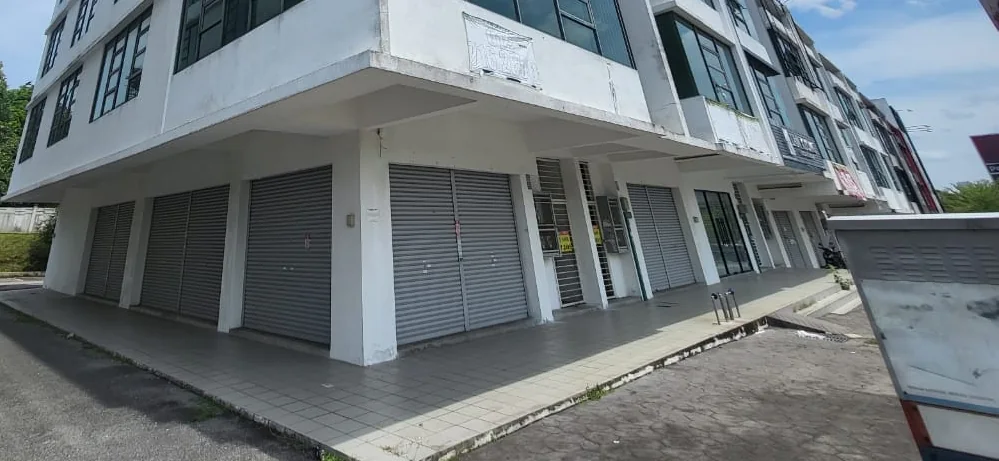
Shop lot, shoplot or shophouse, and does the spelling matter
In ordinary Malaysian use these are the same building. You will see it written shop lot and shoplot, called a shophouse, and in Malay rumah kedai or lot kedai. The spelling makes no legal difference at all.
Where people do draw a line, shophouse tends to mean the older type where the floor above was built as living accommodation over the business, and shop lot tends to mean the modern row where the upper floors are let separately as offices or storage. That distinction is about how the building was designed, not about what you are allowed to do in it. What governs that is the category of land use and the express condition endorsed on the title, and those are worth reading before anything else.
The licence belongs to the address
This is the part that surprises people who have only rented residential property. A premises licence is granted to a named business for a named address, for a specified trade. Kuala Lumpur City Hall is explicit that the licence is tied to the address and cannot be transferred to another location. The council in Port Dickson states the same thing about an advertisement licence, that it cannot be transferred to another party.
Two consequences follow. The outgoing tenant's licence is worth nothing to you. And the council can refuse your application on grounds that have no connection whatsoever to the condition of the unit you have just agreed to rent.
Fees are worth knowing too, because some of them scale with the floor area you take. Kuala Lumpur City Hall charges the premises licence per square metre, and the rate depends on the trade: around RM3 per square metre for food and beverage and general trade, and around RM50 per square metre for health and beauty. A larger unit is not simply more rent. On the wrong licence category it is also materially more licence fee, every year.
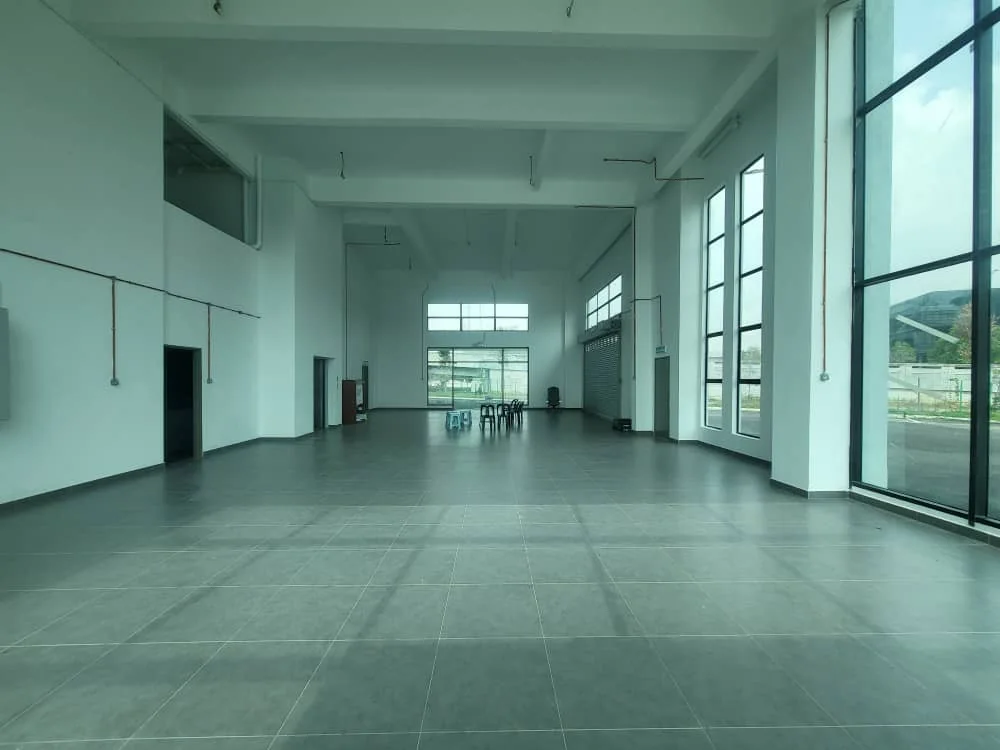
Which floor you are on changes what is allowed
This catches people constantly, because the tenancy agreement will cheerfully let you take the first floor of a shop lot for a trade the council will not licence above the ground floor.
Kuala Lumpur City Hall does not permit entertainment premises in a shophouse above the first level, and also requires entertainment premises to sit at least 100 metres from schools, hospitals, institutions and places of worship, to be soundproofed, and to keep noise outside to no more than 5 dBA. Petaling Jaya City Council does not allow pet sales on the first floor, and bars pet premises from being next to a clinic or a restaurant.
Some trades are not permitted in a shop lot at all. Petaling Jaya City Council confines vehicle workshops, printing, and the sale or storage of used goods to industrial lots, in those words: lot industri sahaja dibenarkan. If that is your business, a shop lot is the wrong search, however good the frontage looks.
Several categories also require planning permission, kebenaran merancang, before the licence can issue. In Petaling Jaya that covers kindergartens, childcare centres, private schools, higher education, hotels and car washes, and it covers any alteration, extension or change in the use status of the land or building. The same council requires the building's occupation certificate, the CCC or CF, for kindergartens, childcare centres, schools, higher education and hotels.
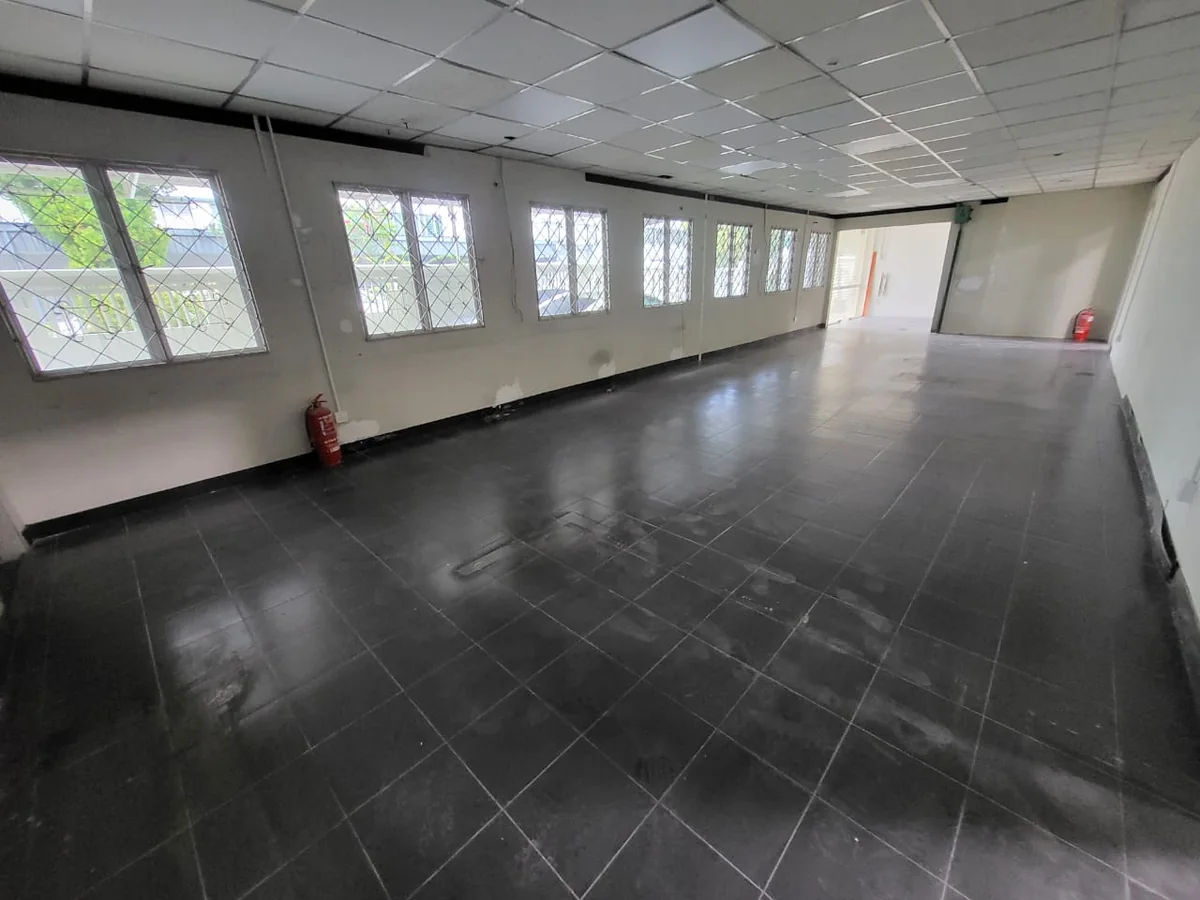
The rear lane is not yours, and it is still your problem
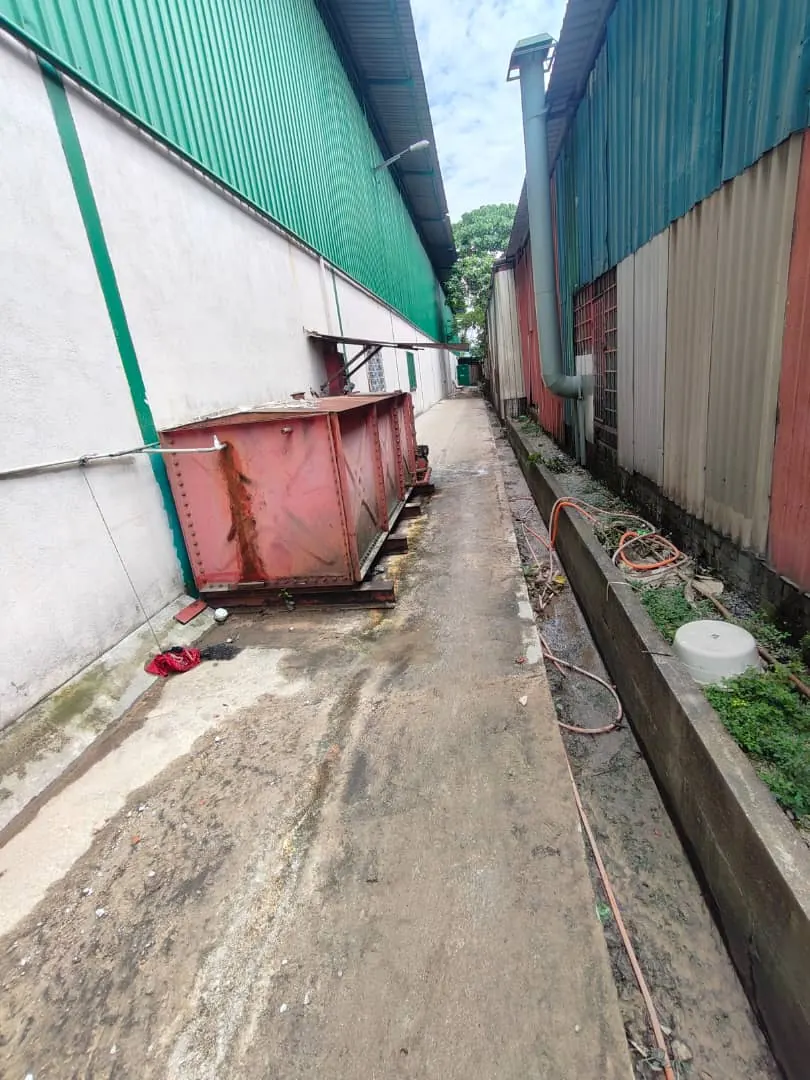
Behind almost every row of shop lots is a back lane. It is normally public reserve. You cannot build on it, you cannot fence it off, and you cannot use it as storage, whatever the previous occupier was doing.
Petaling Jaya City Council makes this a licence condition in plain terms: do not store items or obstruct the walkway at the front or the rear of the premises, and do not close, damage or pollute the public drains at the front or the rear without the council's permission. The council also sets where your bin goes and limits you to two 240 litre wheeled bins.
Walk the lane before you sign, not just the shop. A rear lane piled with a previous tenant's leavings becomes your enforcement notice, and clearing it is a cost nobody put in the budget.
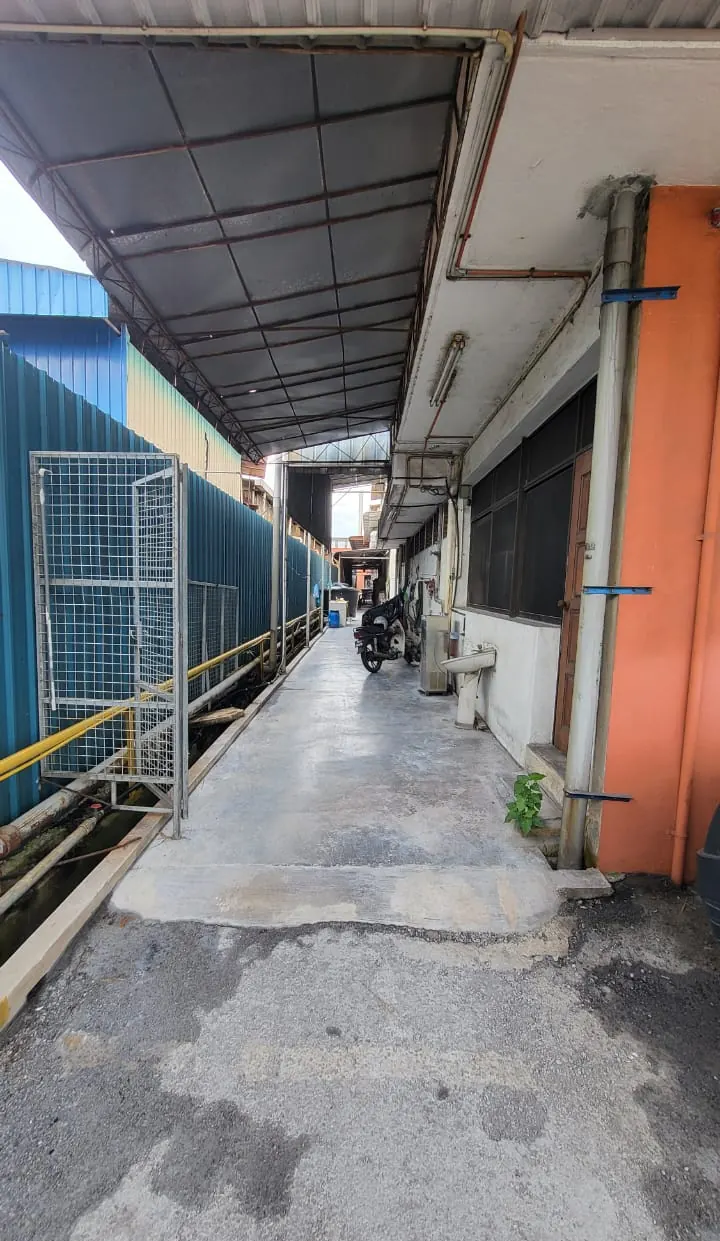
Where the water goes
The gap between two blocks is where you find out whether the drainage was thought about. Look for the fall of the channel, whether it runs clear or stands, and what has been laid across it over the years.
If you intend to cook, this stops being cosmetic. A food premises needs a grease trap, and the council's health and environment department sets the requirement along with the tiling. A unit that has never held a kitchen will not have one, and installing one is building work on somebody else's building, which means the landlord's written consent and possibly a structural permit before you start.
The five foot way, parking, and the bay you may have to rent
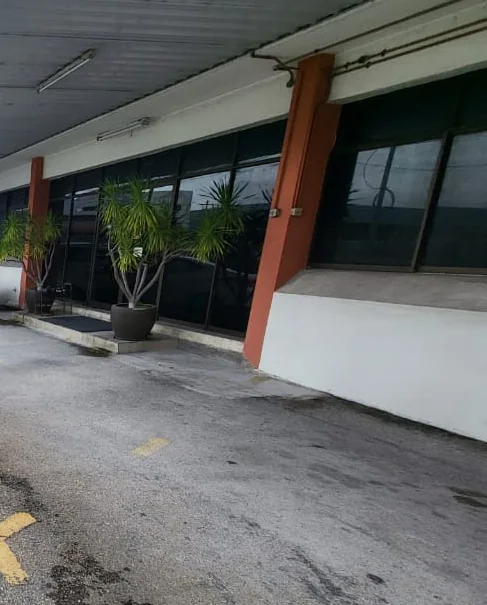
The covered walkway across the front of a shop lot row is a public passage. It is not an extension of your shop, and the same obstruction rule that covers the rear lane covers the front.
Parking is the one that costs money. Petaling Jaya City Council's conditions provide that where the business requires parking, the operator rents a parking bay in front of the premises for a year. Vehicle service centres have further conditions again, including a ban on a permanent ramp and a requirement to rent a special bay at the public parking entrance. None of this appears in the tenancy, and all of it is annual.
Your sign is a second licence
In most council areas the signboard is licensed separately from the premises, although some councils issue the two as one composite licence. It is not a formality.
Kuala Lumpur City Hall requires the signboard artwork to be verified by Dewan Bahasa dan Pustaka, gives priority to Bahasa Melayu, caps an upright double sided sign at seven feet by three feet and permits it only at the first level. The sign may not overhang the pedestrian walkway or cover the windows and facade, and the licence reference number goes bottom left with the company name bottom right. The council in Port Dickson goes further on language and requires Bahasa Malaysia to be at least ten per cent larger than any other language on the sign, with a Dewan Bahasa dan Pustaka certificate of approval submitted with the application.
Order the sign after the licence, not before. A sign that has to be remade because the Malay was wrong or the proportions were off is a cost with no upside.
If you are buying rather than renting
Most of the above still applies, because your tenant will face it. Two things change.
The first is that you are buying the title, so read the category of land use and the express condition yourself rather than taking the listing's word for it. A shop lot advertised for a use the title does not permit is a problem you are buying, not one you are inheriting.
The second applies if you are not Malaysian. A foreign interest may not acquire property valued under RM1,000,000 per unit, and commercial property acquired by a foreign interest at RM1,000,000 or more must be registered in the name of a local company rather than an individual. State consent under section 433B of the National Land Code is a separate requirement again, and the approval levy is commonly 2 per cent of the purchase price or RM20,000, whichever is higher. One number has also just changed: from 1 January 2026 the transfer stamp duty for non-citizen individuals and foreign owned companies is a flat 8 per cent, doubled from 4 per cent. On a RM1 million shop lot that is RM80,000 rather than RM40,000.
What to bring when you view
- A tape, and the depth of the unit written down rather than estimated
- The title details, so you can check the category of land use and the express condition before you get attached to the place
- Your intended trade, described the way the council describes it, not the way you describe it
- A walk down the back lane and a look at the drains, after rain if you can manage it
- A look at the neighbours on both sides and directly above, because several licence conditions turn on who they are
- The question of whether the building has its CCC or CF, asked of the landlord in writing
Related reading
- Industrial, commercial or residential, and what your title permits
- CF or CCC, and which one your building should have
- A tenancy is a promise, a lease is on the title
- What a commercial landlord actually asks for up front
- A foreigner can buy, but not in their own name
Frequently asked questions
What should I check before signing a shop lot tenancy in Malaysia?
Six things, in this order. The category of land use and the express condition on the title, because that decides what the building may legally be used for. Whether the premises licence for your trade can actually be issued at that address. Which floor you intend to occupy, because several trades are restricted to the ground floor. The rear lane and the drains, which you must keep clear even though they are not yours. Parking, because some councils require the operator to rent a bay in front of the premises. And whether the building has its CCC or CF, which some licence categories ask for.
Does a business licence come with the shop lot?
No. The licence is issued to a business for a specific address, and it does not transfer with the tenancy. Kuala Lumpur City Hall states plainly that a premises licence is tied to the address and cannot be moved to another location. The previous tenant's licence is of no use to you. You apply in your own name, and the application can be refused on grounds that have nothing to do with the condition of the unit.
Can I run my business on the upper floor of a shop lot?
It depends on the trade. Kuala Lumpur City Hall does not permit entertainment premises in a shophouse above the first level. Petaling Jaya City Council does not allow pet sales on the first floor, and bars pet premises next to a clinic or a restaurant. Several trades are confined to industrial lots entirely, among them vehicle workshops, printing and the sale or storage of used goods. Ask which floor and which neighbours before you ask about the rent.
Who is responsible for the back lane behind a shop lot?
Not you, and that does not let you off. The back lane is normally a public reserve, so you cannot build on it, fence it or treat it as your storage. Petaling Jaya City Council's licence conditions require that you do not obstruct the walkway at the front or the rear of the premises, and that you do not close, damage or pollute the public drains at either end without the council's permission. A rear lane full of a previous tenant's rubbish is your problem from the day you take the keys.
What is the difference between a shop lot and a shophouse?
In ordinary use in Malaysia they mean the same building, and you will see shop lot, shoplot and shophouse used interchangeably, with rumah kedai in Malay. If a distinction is being drawn, shophouse usually describes the older type where the upper floor was built as living accommodation above the business, and shop lot describes the modern row where the upper floors are let as offices or storage. What matters legally is not the word but the category of land use and the express condition on the title.
Do I need a separate licence for my signboard?
Yes, in most council areas it is a separate licence from the premises licence, although some councils will issue them as one composite licence. Kuala Lumpur City Hall requires the signboard artwork to be verified by Dewan Bahasa dan Pustaka, gives priority to Bahasa Melayu, limits an upright double sided sign to seven feet by three feet and permits it only at the first level. The sign may not hang over the pedestrian walkway or cover the windows and facade.
References
- Premises licence tied to the address, licence categories, per square metre fees and signboard conditions, Jabatan Pelesenan dan Pembangunan Perniagaan, Dewan Bandaraya Kuala Lumpur
- Premises conditions, trades confined to industrial lots, planning permission and CCC requirements, parking bay and rear drain conditions, Syarat Keperluan Dokumen dan Premis bagi Permohonan Lesen Tred, Perniagaan dan Perindustrian, Majlis Bandaraya Petaling Jaya
- Advertisement licence conditions, Dewan Bahasa dan Pustaka approval and the Bahasa Malaysia sizing rule, Iklan Premis Perniagaan, Majlis Perbandaran Port Dickson
- RM1,000,000 floor, local company registration for commercial property and the RM20 million threshold, Garis Panduan Perolehan Hartanah, in force 13 July 2022, Kementerian Ekonomi
- Section 433B state consent and the 2 per cent or RM20,000 approval levy, Azmi & Associates, The Legal 500
- Flat 8 per cent transfer stamp duty for non-citizens and foreign owned companies from 1 January 2026, iProperty Malaysia
This article is general information about inspecting and licensing commercial premises. It is not advice on a specific property, and it does not constitute a listing or an offer. Licence conditions differ between local authorities, so confirm with the council for your address.