Decide one thing before you discuss price: vacant possession, or subject to the existing tenancy. Those are two different purchases with two different values, two different completion mechanics and two different sets of risk. A lot of industrial deals never say which one they are until the solicitors meet.
A sale does not end a tenancy. A registered lease is endorsed on the title and binds you. An unregistered tenancy binds you if you knew about it, and the law is more complicated if you did not.
The deposit is the thing people forget. The tenant paid it to the seller. At the end of the term the tenant will ask you for it. If it was not accounted for on completion you will pay it twice.
And some liabilities follow the land rather than the seller. Outstanding assessment is the one that reaches into the unit and touches the tenant's machines. Nothing here is legal, tax or valuation advice.
The first question is not the price
It is this. Are you buying the building with the tenant in it, or are you buying the building empty?
Say it out loud early, because the two are priced differently and behave differently.
Subject to tenancy means you are buying an income stream attached to a building. The tenant stays, the rent becomes yours from completion, and the terms of their agreement become your terms whether you like them or not. You cannot renegotiate a rent that was fixed two years ago, you cannot change a reinstatement clause that was drafted badly, and you cannot remove an option to renew that the seller granted.
Vacant possession means the seller has to deliver the building empty. That is a promise about something the seller may not fully control, because it depends on a third party leaving. If the tenancy has eighteen months to run, vacant possession on completion in three months is not a term, it is a hope, unless somebody has already agreed with the tenant how it happens and who pays for it.
The middle case is the one that causes the arguments. The seller markets a building as available, the buyer assumes empty, the tenant assumes they are staying, and nobody has written down which it is.
So the first thing to establish is not what the building is worth. It is which building you are buying.

What transfers, and what does not
This is where buyers get surprised, because the mental model of buying a house does not survive contact with a let building.
What transfers to you. The reversion, which is the ownership with the tenancy sitting on it. The right to receive rent from completion. The landlord's obligations under the tenancy, including repair, quiet enjoyment, and whatever the seller promised about the roof. The benefit of the tenant's covenants. And any option to renew the seller granted, which is now your problem to honour.
What does not transfer automatically. The deposit, unless it is dealt with. Rent already paid in advance for a period after completion, unless it is apportioned. Arrears owed to the seller for periods before completion, which remain the seller's to chase unless the agreement says otherwise. And any side arrangement between the seller and the tenant that was never written down, which transfers in practice because the tenant will expect it, and does not transfer in law because you never agreed to it.
That last category is worth a paragraph of its own. On older industrial lettings there is very often an understanding. Rent held flat in exchange for the tenant doing the roof. A month forgiven after a flood. Permission to put a container in the yard. None of it is in the agreement. All of it will be presented to you as established practice on about day ten.
Ask the seller directly, in writing, whether anything has been agreed with the tenant that is not in the tenancy document. A seller who says no in writing has given you something to point at later. A seller who goes quiet has told you to go and ask the tenant.
What the title tells you about the tenant, which is usually nothing
Do the title search first, for all the reasons in the article on title searches. But understand what it will and will not show you about occupation.
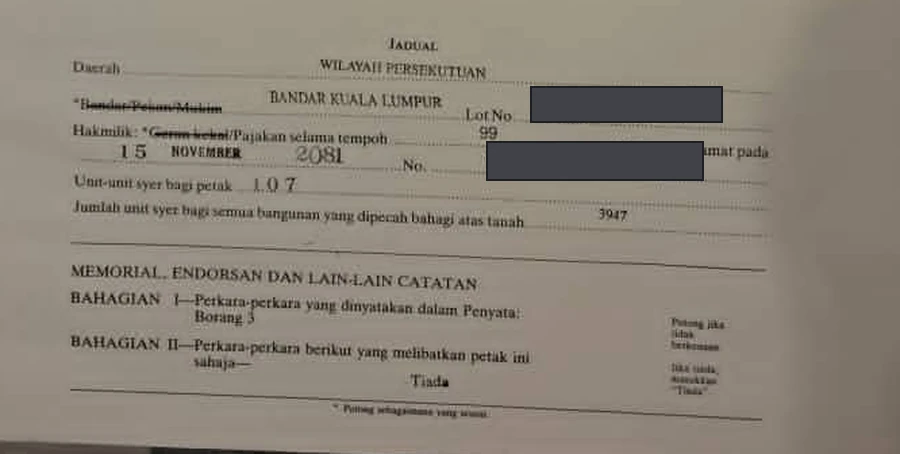
A registered lease will be on the title. A letting of more than three years is registrable, and once registered it is endorsed on the register document of title. You will see it, you will see its term, and you will take the land subject to it.
A tenancy of three years or less will not be. It is exempt from registration, which means the register is silent about it. The overwhelming majority of industrial lettings in Malaysia are exactly this, so on most tenanted factories the title tells you nothing at all about the person actually in the building.
Unless somebody made a claim under section 316. A person claiming the benefit of a tenancy exempt from registration can apply to have that claim endorsed on the title. It is uncommon, and when you find one it is informative: a tenant who did that was advised, took the trouble, and intends to stay. The previous article sets out what that endorsement does and does not achieve.
So the endorsements section of the title is the first place to look and the last place to stop. If it is blank, that is not evidence that the building is empty. It is evidence that the register was not asked.
The documents to ask for, and what each one is really for
Ask for all of these before you make an offer, not after. Every one of them exists already, and a seller who cannot produce them has told you something.
One. The tenancy agreement itself, every page, with the stamp certificate. Not a summary, not the first page, not a term sheet. The stamp certificate matters for its own reason, which is further down this page.
Two. Every variation, side letter and renewal. Industrial tenancies accumulate these. The rent in the original agreement is frequently not the rent being paid.
Three. A rent record for the last twenty four months. Bank statements or receipts, not a schedule the seller typed. You are buying a payment history, and a tenant who pays late every month is a different asset from one who pays on time.
Four. The deposit record. How much, when it was paid, what it covers, and whether any of it has already been applied against anything.
Five. A current assessment statement and the latest quit rent receipt. For the reason in the arrears section below.
Six. The CCC or CF, and the Fire Certificate with its expiry date. These sit with the building and they become your problem on completion. The certificates article covers what each one is.
Seven. Any correspondence with the tenant in the last twelve months. This is the one sellers least like producing and it is the most useful. Complaints about the roof, requests for rent relief, warnings about arrears, notices about alterations. It is the actual state of the relationship you are buying.
Eight. Written confirmation of anything agreed outside the document. Discussed above.
Nine. The landlord's service tax position. Discussed below.
And then, separately and carefully, consider asking to meet the tenant. A seller who refuses outright is not necessarily hiding something, since an unsettled tenant is a risk to their sale. But the tenant is the only party who will tell you what the building is actually like, and whether they intend to renew.
The deposit, which is where this goes wrong most often
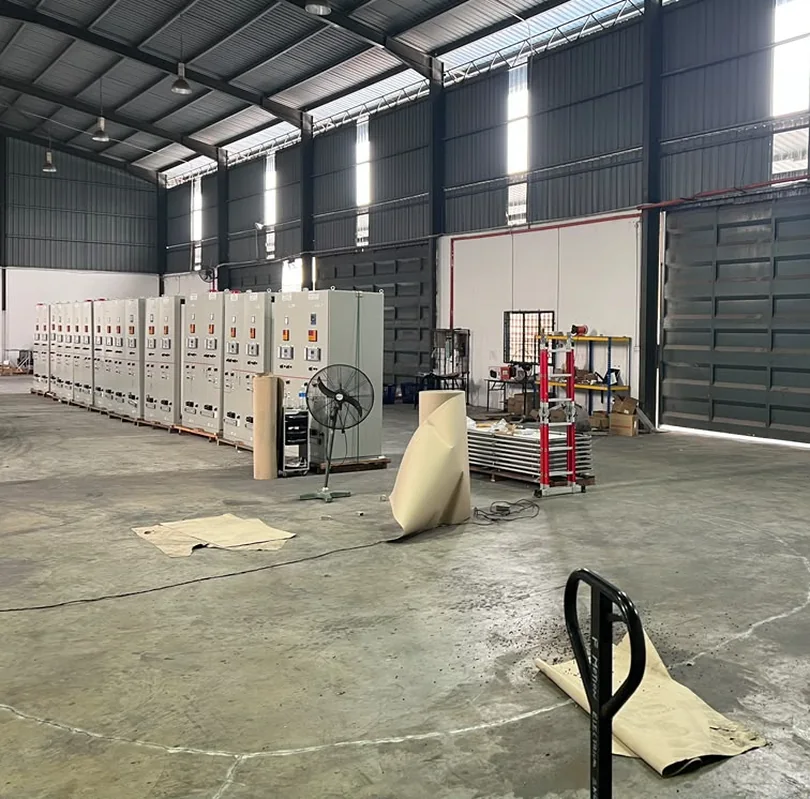
The tenant paid a deposit to the seller. Often several months of rent, sometimes with a separate utilities deposit on top. At the end of the tenancy the tenant will ask for it back.
They will ask you, because by then you are the landlord.
If the completion statement did not deal with it, you are in an unpleasant position. The tenant is entitled to it under an agreement you inherited. The seller has it and has moved on. You are the one standing in front of the tenant.
The fix is simple, mechanical, and routinely forgotten. The deposit is transferred to you on completion, as an adjustment in your favour on the completion statement. The seller is holding money that belongs to a third party. That money follows the obligation, and the obligation is coming to you.
Two refinements worth insisting on. Get the figure confirmed by the tenant, not only by the seller, because the two numbers are not always the same. And establish in writing whether any of the deposit has already been applied, for example against an earlier arrear, since a deposit that is nominally three months and actually one and a half months is a different thing.
Rent, outgoings, and the date everything is cut at
Completion falls in the middle of a month and in the middle of a half year of assessment. Somebody has to split it.
Rent. Industrial rent is usually paid monthly in advance. If completion is on the fifteenth, the seller has already received the whole month and the back half of it is yours. That is an apportionment in your favour and it belongs on the completion statement.
Outgoings. Quit rent, assessment, insurance, and on a strata unit the maintenance charge and sinking fund contribution, are apportioned as at the agreed date, conventionally the date vacant possession is delivered. The seller proves they are paid up to that date and the balance is adjusted.
And somebody has to tell the tenant where to send the money. This sounds trivial and it is the single most common cause of a missed first month. The tenant has a standing instruction pointing at the seller's account. After completion they need a written notice, from the seller and the buyer, confirming the change of ownership and the new payment details, with the date it takes effect. Get it drafted before completion rather than after, and get it sent the same day.
A tenant who keeps paying the seller for two months because nobody wrote to them has not defaulted. They have done exactly what they were told to do, by the only landlord they had been introduced to.
What you inherit that is not in the contract
Some liabilities attach to the seller. Some attach to the land, and those are the ones that matter, because they arrive after you own it.
Quit rent. Payable to the state land office and charged on the land. It is printed on the face of the title, so you know the annual figure before you ask anybody. Unpaid quit rent leads, at the far end, to forfeiture. Get a receipt for the current year and make the apportionment explicit.
Assessment. This is the one to take seriously, and the reason is in the quit rent and assessment article. The Local Government Act 1976 allows a council to attach movable property found on the premises to cover arrears. On a let factory the movable property on the premises belongs to your tenant. So an unpaid assessment bill from before you bought the building can produce enforcement that lands on a tenant who owes nobody anything, in a building you have just acquired, over a bill you never saw.
That is not a theoretical sequence. It is why the assessment statement is on the document list above and not in a footnote.
Condition and defects. You buy the building as it stands, and the tenancy may oblige you as landlord to repair the roof and the structure. A seller who has been deferring roof work for three years is selling you a liability with a rent attached. The defects article is the checklist for that, and a tenanted building is harder to inspect, not easier, because somebody's stock is in the way.
Consent, the retention, and the duty on the transfer
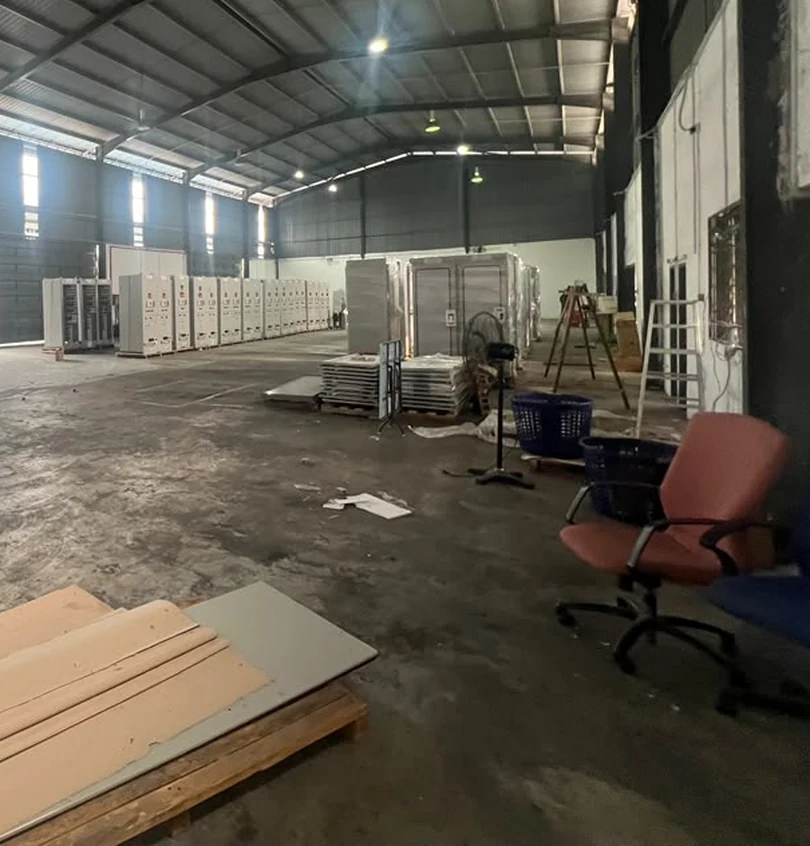
Three things that set the calendar and the cash on completion.
Consent to transfer. If the title carries a restriction in interest, and on leasehold industrial land it very often does, the transfer needs State Authority consent. That is an application with its own fee and its own timetable sitting in the middle of your completion period. Consent is usually given. Usually is not a date, and a three month completion signed without building the application into it is how parties end up arguing about a deadline that was never achievable. This is covered properly in the title search article.
The RPGT retention. Real Property Gains Tax is the seller's tax, not yours, but the mechanism runs through your side. Under section 21B of the Real Property Gains Tax Act the purchaser retains part of the consideration and remits it to the Inland Revenue Board, and both parties file returns within 60 days of the disposal. Practitioner guidance puts the ordinary retention at three per cent of the purchase price, with a different retention where the disposer is not a citizen or permanent resident. Confirm the rate and the forms with LHDN rather than from any article, including this one.
Stamp duty on the transfer. The memorandum of transfer attracts ad valorem duty on a banded scale. I am not printing the bands here, for the same reason I printed no letting rates in the last article: the scale has moved and a number quoted second hand is worth nothing against an assessment. Take it from LHDN e stamping on the day. What is worth saying is that this is a real cost on an industrial consideration and it should be in your figure before you offer, not discovered at the solicitor's.
If the tenancies were never stamped, you are buying an income you cannot prove
This follows directly from the last article and it is sharper on the buying side.
An unstamped tenancy agreement is not void. The parties are bound by it. But under section 52 of the Stamp Act 1949 an unstamped instrument is not admissible in evidence while it remains unstamped.
Apply that to a purchase. You have bought a building for a price justified by its rent. The tenant stops paying, or disputes the renewal, or says the rent is lower than the seller told you. The document that settles it is the tenancy agreement. If it was never stamped, you cannot readily put it in front of a court until the duty and any penalty have been paid, and the duty and penalty are now a cost you did not price.
So ask for the stamp certificate, not the agreement. The certificate is the proof. And check the renewals too, because a short extension that nobody treated as a fresh instrument is exactly the thing that ends up unstamped.
There is a timing point here that is live as this is written. The voluntary disclosure programme that remits the late stamping penalty in full runs to 31 December 2026 and covers instruments executed between 1 January 2023 and 31 December 2025. If the tenancies you are about to inherit fall in that range and were never stamped, it is worth establishing before completion who is going to regularise them and when, because after that date the penalty comes back. The previous article sets out the terms.
Whether you are inheriting a service tax obligation
Rental and leasing became a taxable service when service tax was expanded with effect from 1 July 2025, and commercial and industrial premises are within scope. Whether tax is actually charged turns on the landlord's registration rather than on the building, and the registration threshold is based on taxable turnover over a rolling twelve months.
Two consequences for a buyer.
Check whether the seller charges it, and on what basis. If the rent you have been shown includes or excludes tax changes what the building actually yields.
Check your own position after you buy. If you already let other property, adding this building to your portfolio may take you across the threshold even though the seller was under it. The question is about your turnover, not the seller's, and it is one to put to your tax agent before completion rather than after the first invoice.
Rates and thresholds here have moved more than once since the expansion began, so confirm the current position with the Royal Malaysian Customs Department.
Before you make an offer
Six things, in this order, and five of them are documents that already exist.
One. Decide which purchase it is. Vacant possession or subject to tenancy. Put it in the offer, not in a conversation.
Two. Search the title. Proprietor, tenure, category and express conditions, restriction in interest, and the endorsements, which is where a registered lease or a section 316 claim would be.
Three. Read the tenancy, all of it, with the stamp certificate. Then the variations, then the renewals.
Four. Get the assessment statement and the quit rent receipt. Before you price it.
Five. Get the rent record and the deposit record. From the bank, not from a schedule.
Six. Work out your own tax position. The duty on the transfer, the retention you must make, and whether this building takes you over a service tax threshold.
What this page is, and what it is not
This is the shape of buying a let industrial building in Peninsular Malaysia and the places that shape catches people. It is not conveyancing and it is not tax advice.
Three warnings. Rates move. No stamp duty rate and no service tax rate is printed here, deliberately, and the RPGT retention figure is reported from practitioner guidance rather than from the Act, so confirm it. Sabah and Sarawak have their own land legislation, and the provisions cited are Peninsular Malaysia. And the words in the agreements beat the words on this page. Whether a particular tenancy binds you, what your completion statement should contain, and what consent your title requires, are questions for a solicitor reading your documents.
Related
- A tenancy is a promise, a lease is on the title, which is the other half of this subject, read from the occupier's side
- The flyer is marketing, the geran is the deal, for the search and the five fields that decide whether a transfer can complete
- One tax is on the land, the other is on the building, for the arrears that reach the tenant's machines
- The repair is cheap, the cause is not, for inspecting a building you cannot empty
- CF or CCC, and the fire certificate that is separate from both
- Empty is not a discount, it is a question, for the opposite case
- Versi Bahasa Melayu: beli kilang yang sudah ada penyewa
Frequently asked questions
Can I buy a property in Malaysia that already has a tenant in it?
Yes, and on industrial property it is common. What you are buying is the reversion, which is the ownership with the tenancy sitting on it, plus the right to receive the rent from completion. The tenancy does not end because the building changed hands. The important thing is that the sale agreement says plainly whether you are buying subject to the existing tenancy or with vacant possession, because those are two different purchases at two different prices with two different sets of risk.
Does the tenancy end when the property is sold?
No. A registered lease is endorsed on the register document of title, so a buyer takes the land with it and cannot require the tenant to leave before it expires. A tenancy of three years or less is exempt from registration and does not appear on the title, and the position then depends on what the buyer knew. A buyer who had notice of the tenancy, whether from the sale agreement, a tenancy schedule, the search or simply from the fact that a business was visibly trading there, is in a very different position from one who genuinely did not. Either way, buying a building and expecting the occupier to disappear at completion is not how it works.
What is the difference between buying with vacant possession and buying subject to tenancy?
Subject to tenancy means the tenant stays, the rent becomes yours, and the terms of their agreement bind you, including any option to renew the seller granted. Vacant possession means the seller must deliver the building empty on the agreed date, which depends on a third party actually leaving. If the tenancy still has a long term to run, vacant possession on a short completion is a promise about something the seller may not control, so the agreement needs to say who is responsible for achieving it, by when, and what happens if it is not achieved.
Who holds the tenant's deposit after the property is sold?
Whoever the completion statement says, and this is the most commonly missed item in a tenanted sale. The tenant paid the deposit to the seller, but at the end of the term the tenant will ask the landlord of the day, which by then is you. The deposit should be transferred to you on completion as an adjustment in your favour. If it is not, you can end up refunding money you never received. Confirm the amount with the tenant as well as the seller, and establish in writing whether any of it has already been applied against an earlier arrear.
Do I have to honour the existing tenancy agreement?
Where the tenancy binds you, yes, on its existing terms. You cannot unilaterally change a rent that was fixed, remove a renewal option the seller granted, or rewrite a repair obligation the seller accepted. This is why the whole agreement, every variation and every side letter should be read before you price the building rather than after. It is also why undocumented arrangements between seller and tenant matter: the tenant will expect them to continue, and you never agreed to them.
What happens to rent that was paid in advance?
It is apportioned at completion. Industrial rent is usually payable monthly in advance, so if completion falls mid month the seller has already received rent covering a period after you become the owner. That portion belongs to you and should appear as an adjustment on the completion statement. The same exercise is done in the other direction for quit rent, assessment, insurance and, on a strata unit, maintenance and sinking fund contributions.
Can I increase the rent after I buy the building?
Not during the current term, unless the agreement itself provides a mechanism such as a stated increase, an index or a review. You stepped into the seller's position, which means you got the seller's rent along with the seller's building. The point at which rent can be revisited is the end of the term or the exercise of a renewal, and if the agreement says renewal is at a rent to be agreed then that is a negotiation rather than a right. Price the building on the rent you are actually buying, not on the rent you think it should command.
Who is liable for assessment arrears from before I bought the building?
Practically, this becomes your problem, which is why a current assessment statement is one of the first documents to ask for. The council looks to the owner of the day, and the Local Government Act 1976 allows a council to attach movable property found on the premises to cover arrears. On a let factory the movable property on the premises belongs to your tenant. So an unpaid bill from before your ownership can produce enforcement that lands on a tenant who owes nothing, in a building you have just bought. Settle it on completion with an apportionment and proof of payment, not with an assurance.
What is the RPGT retention and do I have to pay it?
Real Property Gains Tax is the seller's tax, but the collection mechanism runs through the buyer. Under section 21B of the Real Property Gains Tax Act the purchaser retains part of the consideration and remits it to the Inland Revenue Board, and both parties file returns within 60 days of the disposal. Practitioner guidance puts the ordinary retention at three per cent of the purchase price, with a different retention where the disposer is not a citizen or permanent resident. It is credited against the seller's liability and any excess is refunded to them. Confirm the current rate and the correct forms with LHDN.
Do I need State Authority consent to buy a tenanted factory?
You need it if the title carries a restriction in interest, which on leasehold industrial land it very often does. That is an application with its own fee and its own timetable, and it sits inside your completion period. It does not usually stop a transaction, but it does insert a government decision into the middle of one, so the completion period has to be written around it rather than hoped through. Read the restriction on the title itself before agreeing a completion date.
What if the existing tenancy agreement was never stamped?
Then you have bought an income you may struggle to prove. An unstamped agreement is not void and the parties are still bound by it, but under section 52 of the Stamp Act 1949 it is not admissible in evidence while it remains unstamped. In a dispute about rent, renewal or reinstatement, the document you need is the one you cannot readily put before a court until the duty and any penalty are paid. Ask for the stamp certificate rather than the agreement, and check the renewals as well as the original. There is also a voluntary disclosure programme running to 31 December 2026 that remits the late stamping penalty for instruments executed between 1 January 2023 and 31 December 2025, so if the tenancies fall in that window, settle before completion who regularises them.
How does the tenant know to start paying rent to me?
Somebody has to tell them, in writing, and it is astonishing how often nobody does. The tenant has a standing instruction pointing at the seller's account. A joint notice from the seller and the buyer confirming the change of ownership, the new payment details and the effective date should be drafted before completion and sent on the day. A tenant who keeps paying the seller for two months because no one wrote to them has not defaulted, they have followed the only instruction they were ever given.
References
- Laws of Malaysia, Attorney General's Chambers. The National Land Code for registration of leases, tenancies exempt from registration at section 213 and endorsement of a claim at section 316; the Stamp Act 1949, including section 52 on admissibility; the Real Property Gains Tax Act, including section 21B; and the Local Government Act 1976. As with the other articles on this site, I was not able to open these from my own machine, so I am sending you to the source rather than quoting them as read
- The Malaysian Bar, on the difference between a lease and a tenancy, for the effect of registration and the position of an unregistered tenancy against a purchaser with and without notice
- VCC Law, guide to selling secondary market property in Malaysia. This is the source for the section 21B retention, the 60 day filing period and the apportionment of outgoings at delivery of vacant possession. It is practitioner guidance rather than the Act, so confirm the rate with LHDN
- LHDN e stamping, for the ad valorem duty on a memorandum of transfer and for the stamping of the tenancies you are inheriting. Take the rate here, not from any article
- Lembaga Hasil Dalam Negeri, stamp duty penalty page, for the 30 day stamping deadline and the late stamping penalties, and BDO Malaysia on the extension of the voluntary disclosure programme to 31 December 2026
- Royal Malaysian Customs Department, MySST, for service tax on rental and leasing services, the registration threshold and the current rate
- A solicitor practising conveyancing in the state concerned, for the sale agreement, the completion statement, the consent application and the reading of the tenancies you are taking over
Note on this article. It explains, in general terms and as at 20 October 2026, what is involved in buying a let industrial building in Peninsular Malaysia. No stamp duty rate and no service tax rate is printed here, deliberately, and the Real Property Gains Tax retention percentage is reported from practitioner guidance rather than from the Act. The voluntary disclosure programme referred to closes on 31 December 2026, so treat that paragraph as dated. Sabah and Sarawak have their own land legislation and the provisions cited are Peninsular Malaysia. The photographs are my own, taken on a visit, and are cropped so that no building, business, person or vehicle is identifiable. The title reproduced here is shown with its lot number and title number removed, and no owner, property, tenant or transaction is identified. I am not a solicitor, a tax agent or a licensed valuer, and nothing on this page is legal, tax, financial or valuation advice.